The Americans Are Gone. Will Iraq’s Militias Disarm?
On September 30, the US completed its military withdrawal from Iraq, ending a 12-year-long mission to combat ISIS that began in 2014. The date was also meant to be the deadline for disarming the largely Iranian-backed militias known as the Popular Mobilization Forces (PMF), but Prime Minister Ali al-Zaidi has now pushed that cutoff back to June 30, 2027. MEI Distinguished Diplomatic Fellow Amb. (ret.) Robert S. Ford joins hosts Alistair Taylor and Matthew Czekaj to discuss what the US military withdrawal means for Iraqi security and the nature of the bilateral relationship going forward. They also speak about what it will take for Baghdad to bring the PMF militias to heel, and how Iraq may navigate the post-Iran war era.
Jordan’s Economy Weathers Iran War’s Shocks and Finds New Opportunities
In the summer of 2003, King Abdullah II told Bloomberg Jordan sits “between Iraq and a hard place,” a play on words designed to describe the kingdom’s challenging environment to an American audience amid the US-led Iraq war to the east and the lingering Palestinian-Israeli conflict to the west. Jordan is grappling with a much “harder place” today.
Proponents of the war with Iran have taken recent increases in crude-oil flows through the Strait of Hormuz as proof that the US strategy is finally working. President Trump is so confident in this that he recently rejected a seven-day plan, set forward by Iran’s foreign ministry, to end the war and open the strait. The United States is “winning tremendously,” Trump boasted.
Beyond Iraq’s National Elections: Planning a New Phase in American Policy
This Commentary is an adaptation of a longer piece published by the Institute for the Theory and Practice of International Relations at the College of William and Mary on February 25, 2010.
Writing on Culture: The Missing Factor in Discussions on the Middle East
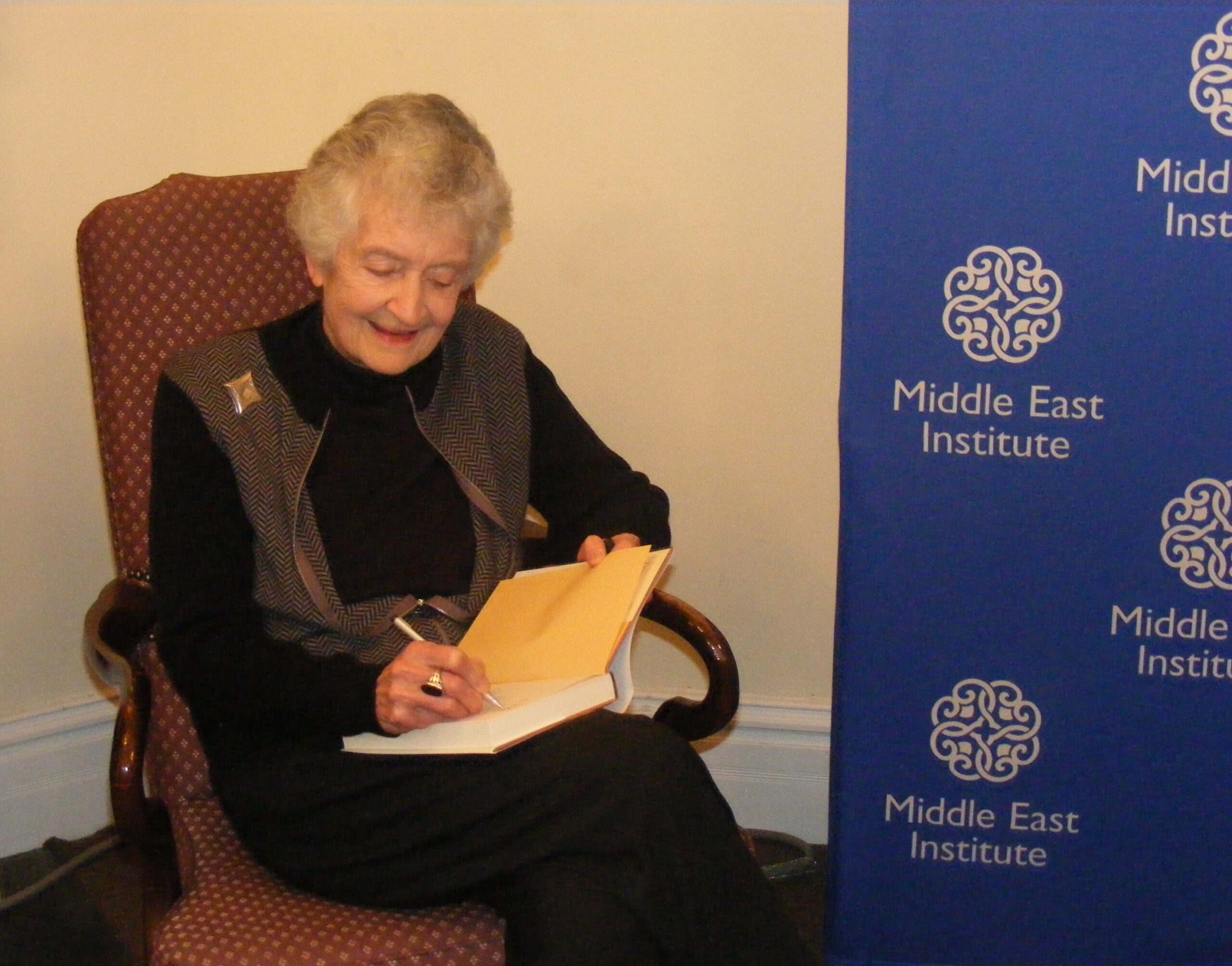
The Middle East Institute is proud to host MEI scholar Andrea Rugh for a discussion about Middle Eastern culture and her most recent book, Simple Gestures: A Cultural Journey Into the Middle East. Since US involvement in Iraq and Afghanistan, the importance of culture has become all too clear. Yet, although most scholars agree on its importance, few address culture in ways that provide better understanding to audiences who might benefit, such as policy makers, the media and the American public.
This Op/Ed was published first on February 3, 2010 by McClatchy Tribune.
The bipartisan Kerry Lugar Bill provides a multi-year, super-sized economic aid program to the people of Pakistan. This is the right approach to improved US-Pakistan relations. The majority of Pakistanis distrust the US because they believe we favor military dictators over civilian democrats and are quick to abandon promised economic aid programs once we have achieved our security goals.
The Khamenei-Ahmadinejad Regime and the Challenge of the Iranian Opposition
The Middle East Institute is proud to host Iranian scholars Ali Alfoneh and Alex Vatanka for a discussion about the ongoing unrest in Iran and the implications for the stability and future of the Islamic Republic. With the Green Movement having proved its staying power, some scholars and analysts are starting to predict the beginning of the end for the regime of Supreme Leader, Ali Khamenei, while others dismiss the idea as wishful thinking and argue that the Islamic Republic is here for the long-term.
The convergence of multiple crises in an already vulnerable environment has left Yemen and aid agencies at a crossroads. The context has become an extremely complex and challenging one within which to reduce hunger, malnutrition, and fragility. Yet it is precisely because of these challenges that humanitarian intervention is vital to keep struggling populations from tipping into utter disaster.
Sri Lankan Migration to the Gulf: Female Breadwinners – Domestic Workers
Several waves of Sri Lankan migration have taken place since the country gained independence in 1948. Beginning in the mid-1950s, wealthy, educated, English-speaking elites have migrated to Commonwealth countries such as Australia and the United Kingdom. In addition, since the upsurge in ethnic hostilities in the early 1980s, Tamil-speaking Hindu migrants have left the country, with many settling in Canada. In contrast with these permanent migrants, since 1976 a growing number of Sri Lankans have become migrant workers.
Millions of people around the world have left their home countries in search of employment. In 2005, there were 191 million migrants, or about 3% of the world’s population, living in other countries.[1]Today, that number has grown to about 200 million. An estimated one person in 35 is an international migrant. Almost all countries are affected by international migration. The Gulf countries are no exception.
How many Indians work abroad? We have no answer to this question even today. However, available evidence indicates that the state of Kerala in India has the highest number of emigrants in the Gulf countries.1
A Lexicon of Migrants in the United Arab Emirates (UAE)
The millions of foreign nationals working in the Gulf are often lumped together as “migrant workers,” but this is misleading. The population of foreign workers in the UAE, for example, is complex and heterogeneous. One layer of that complexity is manifested by the lexicon used by migrants to identify other migrants.
Migrant Workers in Kuwait: The Role of State Institutions
The treatment of migrant domestic workers is one of the defining stories told about the Arab Gulf states. Every year hundreds of news media and human rights reports detailing migrant domestic workers’ experiences of exploitation and abuse circulate globally. The narratives of these accounts are remarkably consistent. They often begin with the story of an impoverished woman from the global South, who, in order to improve the situation of her family, migrates to the oil-rich Gulf states in search of work and a more prosperous future.
Malayali Migrant Women's Perceptions of the Gulf States
Studies of Gulf women migrants focus on the most noticeable or “problematic” categories — domestic workers and the sex trade — and are generally policy-driven short surveys, using data collected in the Gulf itself.
The oldest peer-reviewed publication dedicated to the study of the modern Middle East, MEI’s flagship journal covers politics, society, and culture in the region.