In recent weeks, the Iran-backed Houthis have fired missiles and drones deep into Saudi Arabia, striking high-profile targets, including Riyadh’s airport and Aramco’s headquarters. The attacks follow a rapid Houthi offensive in September to seize key parts of Yemen’s Red Sea coast, which Saudi-backed government forces are now trying to roll back. Fatima Abo Alasrar, an affiliated scholar at MEI and non-resident scholar at the Arab Gulf States Institute, joins hosts Alistair Taylor and Matthew Czekaj to unpack the latest phase of the conflict. They discuss what the Houthis want, Riyadh’s calculus and search for allies, and how this campaign ties into Iran’s confrontation with the United States.
Special Episode: Saudi Oil After the East-West Pipeline Attack
Saudi Arabia’s East-West pipeline is back in operation after a drone attack from Iraq, blamed on Iran-backed militias, shut it down for nearly two weeks. The pipeline is the kingdom’s main way to export oil while the Strait of Hormuz is closed, so the shutdown dealt another blow to global energy markets. How vulnerable is this route, and what does that mean for the kingdom and the world economy? This episode of Middle East Focus features a recent MEI Virtual Briefing in which Director of Communications Zeina Al-Shaib is joined by MEI Senior Fellow Colby Connelly and MEI Affiliate Yesar Al-Maleki. They examine the new geopolitical risks facing the oil market, what further losses of global supply could mean for Saudi Arabia and the world economy, and which buffers outside the Persian Gulf could ease the pressure.
The Mecca Joint Défense Agreement: A New Geometry of Middle Eastern Power?
On August 7, 2026, Saudi Arabia, Turkey, and Pakistan signed the Mecca Joint Défense Agreement, a collective-defense pact widely compared to NATO’s Article 5. This essay argues that the comparison is misleading. Mecca borrows NATO’s language of solidarity without yet possessing NATO’s institutional machinery, and the Houthi offensive against Saudi Arabia in September 2026 provided an early and revealing test of what the agreement actually means in practice. Neither Pakistan nor Turkey automatically entered the fight on Saudi Arabia’s behalf, and Washington, despite an initial reluctance to strike directly, remained indispensable through intelligence support and a major proposed F-35 sale. Drawing on realist alliance theory — Hans Morgenthau, Kenneth Waltz, Stephen Walt, Glenn Snyder, and Steven David — and on the precedent of the Central Treaty Organization (CENTO), the essay contends that the Middle East is not dividing into rival blocs but moving from hierarchy toward a looser, overlapping geometry of hedged partnerships, in which American exclusivity is eroding considerably faster than American primacy.
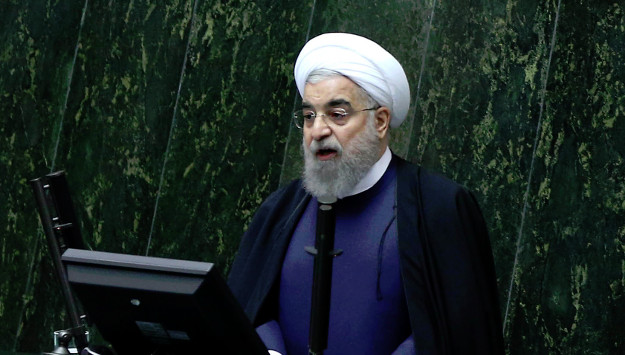
At a press conference on January 17, Iranian President Hassan Rouhani stated that “Iran would welcome working with Saudi Arabia to bring about a more stable Middle East.” He urged for “moderation” and “respect.” This message from the Iranian president is positive and should be applauded. However, the question in so many capitals around the Middle East is whether Rouhani’s posture and message of “moderation” has any bearing on the actual policies that Tehran is presently pursuing in the region.
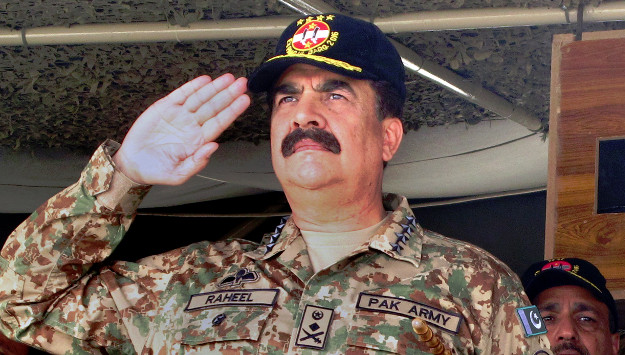
The recent announcement by Saudi Arabia that the retired Pakistani General Raheel Sharif will head a 39-member anti-terrorism coalition made of Muslim states is a matter of much concern in Tehran. Iran, which was not invited to join the coalition, regards the Saudi initiative as a regional project aimed to contain its influence.
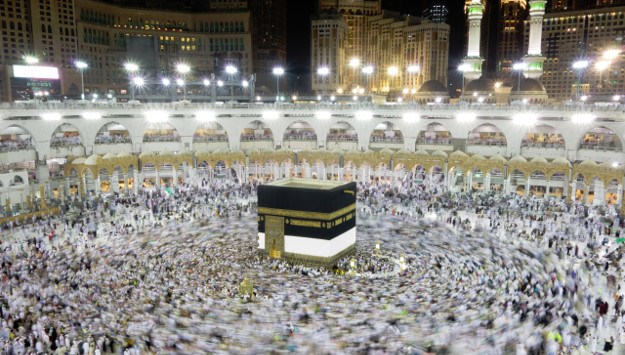
The representative of Iran’s Supreme Leader on Hajj [pilgrimage] affairs has announced that Tehran will shortly dispatch a delegation to Saudi Arabia. This latest development has come about following Iran’s decision not send any pilgrims to Saudi Arabia in 2016. Riyadh had earlier sent an invitation to Iran for talks to be held to resolve differences that exist in this context.
Saudi Interest in the Red Sea Islands of Tiran and Sanafir Grows as Its Security Interests Expand
Notwithstanding Egypt’s political and judicial contretemps, the Egyptian parliament is expected to vote soon in favor of the return of Tiran and Sanafir islands to Saudi Arabia. The decision, after months of controversy in Egypt, will fulfill the April 2016 agreement reached between Egyptian president Abdel Fattah al Sisi and Saudi King Salman bin Abdul Aziz Al Saud that formally acknowledged Saudi sovereignty over the two small islands and provided for their return to Riyadh’s control.
Iran Continues Efforts to Subvert Saudi Arabia from within
In fresh evidence that the government of Iran continues its efforts to undermine Saudi stability and security from within, a Saudi court has convicted a Saudi businessman of plotting with the government of Iran to instigate sectarian strife and threaten Saudi social stability, according to a report in al-Sharq al-Awsat.
Saudi Female Conservationist Fights to Preserve Islamic Heritage
The Middle East’s descent into chaos has been accompanied by a growing threat to the region’s historic sites. The breakdown of states and growth in extremism have exposed these ancient sites to looting and destruction. The drivers, however, are varied. Extremist groups like ISIS profit from the smuggling of antiquities, but there are also religious motivations. Extremist movements such as ISIS and al-Qaeda, which adhere to a strictly puritanical view of Islam, perceive heritage sites, including Islamic, as a sinful distraction from faith.
Iranian Responsible for Saudi Embassy Attack Claims Iran Government Gave “Green Light”
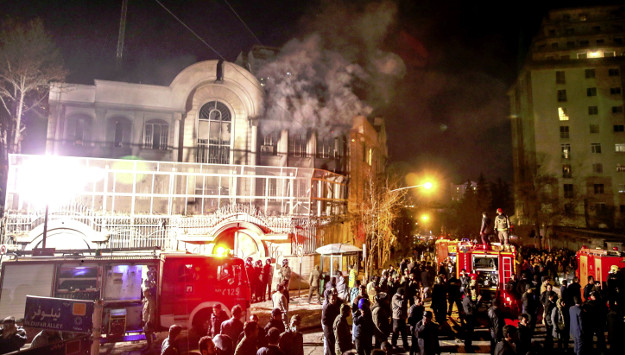
Iranian extremist cleric Hassan Kurdmihan, the confessed mastermind of the January 2016 attack on the Saudi Embassy in Tehran, is heard in a leaked tape recording telling his followers that the attack was “carried out upon a green light from the government and the regime,” according to a December 18 report in al-Arabiya. Kurdmihan can also be heard in the leaked calls directing members of the Iranian Basij and the Islamic Revolution Guards Corps (IRGC) to burn and destroy the Embassy and seize documents inside. The leaked recordings have been attributed to the Iranian opposition Green Mov
Toward a Regional Framework for the Middle East: Takeaways from other Regions
Regional Cooperation Series
This Policy Paper is part of the Middle East Institute’s Regional Cooperation Series. Throughout 2016, MEI will be releasing several policy papers by renowned scholars and experts exploring possibilities to foster regional cooperation across an array of sectors. The purpose is to highlight the myriad benefits and opportunities associated with regional cooperation, and the high costs of the continued business-as-usual model of competition and intense rivalry.
UAE's Siding with Saudi Arabia in Diplomatic Row Unsettles Iran
Diplomatic relations between Iran and the United Arab Emirates are going through another rough patch as the latter recently submitted a letter to the United Nations General Assembly, expressing concern over Iran’s “expansionist” policies in the region.
When Osama bin Laden carefully recruited a number of Saudis to carry out the 9/11 attacks, his intention was to drive a wedge between his two enemies, the United States and the Saudi government. Fifteen years after the attacks, the JASTA legislation appears to be doing just that.
The oldest peer-reviewed publication dedicated to the study of the modern Middle East, MEI’s flagship journal covers politics, society, and culture in the region.