This article is part of a collection of short essays written by the Fellows of the Middle East Institute to explore aspects of the ongoing war with Iran. The intent of the collection is to help readers see new and unexpected elements of the dynamics and impact of the ongoing hostilities and to think harder, deeper, and broader about the implications of the conflict.
Turkey: Ankara’s Nuclear Ambitions in the Post-Iran War Environment
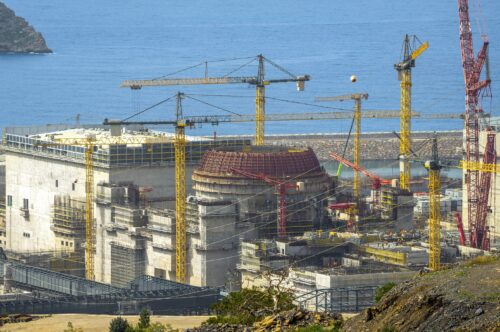
In February 2026, Turkish Foreign Minister Hakan Fidan suggested that shifting international dynamics could push Turkey to acquire nuclear weapons. That rhetoric, combined with Turkey’s civilian nuclear energy and research programs and its indigenous surface-to-surface missile development projects, has fueled concerns that these capabilities could eventually form the backbone of a Turkish nuclear weapons program.
When the US and Israel launched military action against Iran on February 28, 2026, it set in motion a chain of events that saw violence spread across the Middle East. Yet as the region found itself engulfed in conflict, Syria has experienced its most peaceful months in 15 years, and the government in Damascus appears determined to stay its course toward recovery.
In this week’s Monday Briefing, MEI experts Charles Lister, Gerald Feierstein, W. Robert Pearson, and Marvin G. Weinbaum provide analysis on recent and upcoming events including the escalating deterrence between Israel and Iran, Pompeo’s pressure to resolve the Gulf crisis, Turkey’s increasing isolation, and the Pashtun protests in Pakistan.
Turkey’s snap elections and issues in U.S. relations
MEI’s Gonul Tol and Amb. Robert Pearson join Paul Salem to discuss the domestic political scene heading into Turkey’s snap presidential and parliamentary elections in early June and the state of its relations with the United States after the departure of Secretary of State Rex Tillerson and pending arrival of Mike Pompeo.
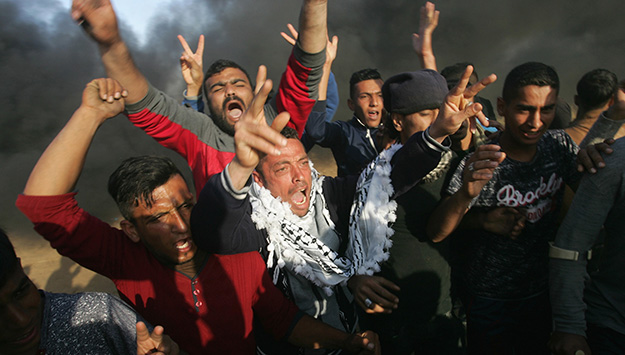
In this week’s Monday Briefing, MEI experts Gonul Tol, Paul Salem, Nathan Stock, Alex Vatanka, Gerald Feierstein, and Marvin G. Weinbaum provide analysis on recent and upcoming events including upcoming snap elections in Turkey, Lebanon’s Free Patriotic Movement party, protests in Gaza, the future of the Iran nuclear deal, Yemeni peace talks, and the ISKP attack on Shiite Hazaras.
Amb. Robert Ford and Charles Lister join host Paul Salem to discuss last week’s U.S. airstrikes in Syria in response to the Assad government’s ongoing use of chemical weapons, what the Trump administration is signaling about America’s plans there, and the escalating standoff between Israeli and Iranian forces in the country.
In this week’s Monday Briefing, MEI experts Charles Lister, Gonul Tol, Paul Salem, Alex Vatanka, and Marvin G. Weinbaum provide analysis on recent and upcoming events including the Syria strikes, Turkey’s Assad paradox, the Arab League summit, EU’s view of the Iran nuclear deal, and clashes along the Afghanistan-Pakistan border.
Iranian-backed Iraqi militia group to Trump: “We’re waiting for you in Syria”
The leader of an Iranian-backed Iraqi militia group has warned that his forces are ready to fight American troops in Syria, Arab media reported. Akram al-Kaabi, the secretary-general of Harakat al-Nujaba, made the comments in response to President Donald Trump’s announcement about imminent missile strikes to punish the regime of Bashar al-Assad for the latest chemical attack in Homs Governorate. Kaabi lashed out at Trump’s remarks on Syria and accused the US president of trying to undo the recent gains of the Assad regime and its allies.
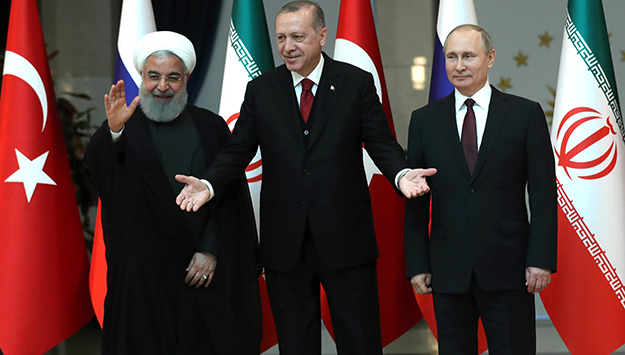
Just last week, Turkey’s President Recep Tayyip Erdogan hosted his Russian and Iranian counterparts in Ankara for talks to end the Syrian civil war. The summit of the three leaders was a strong display of unity against a backdrop of rising tensions between them and the United States. The underlying message was that the three countries were calling the shots in Syria, and that President Donald Trump’s announcement that the U.S. would be pulling out soon was right on the spot.
In this week’s Monday Briefing, MEI experts Robert S. Ford, Gerald Feierstein, Randa Slim, and Alex Vatanka provide analysis on recent and upcoming events including the chemical attack on Douma, Sheikh Tamim’s Tuesday meeting with Trump, Lebanese parliamentary elections, Moroccan and Algerian tension over Western Sahara, and Iran and India’s strategic partnership.
The leaders of Russia, Iran and Turkey held a high-profile summit in Ankara this week, their second such summit in six months. Are we seeing the formation of a new security axis in the region, and if so, where would that leave the United States? MEI’s Gonul Tol and Alex Vatanka join host Paul Salem to discuss.
In this week’s Monday Briefing, MEI experts Paul Salem, Bilal Y. Saab, Marvin G. Weinbaum, and Charles Lister provide analysis on recent and upcoming events including the latest violence in Gaza, Gulf Shield-1 military drills, the Taliban’s resistance to peace, and the approaching Syria summit in Ankara.
Trump announces “mission aborted” in Syria – Paul Salem
In a speech on Thursday, President Donald Trump reversed his administration’s policy on Syria, declaring “we’re coming out of Syria very soon. Let the other people take care of it now.”
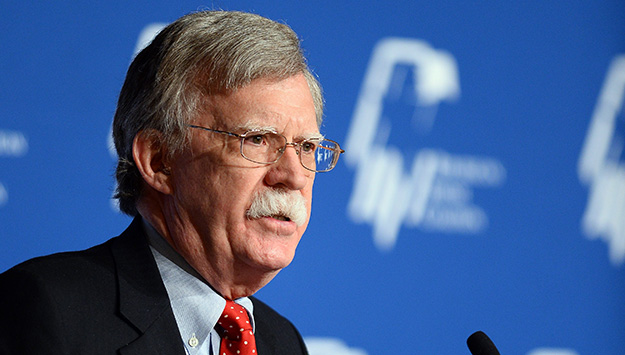
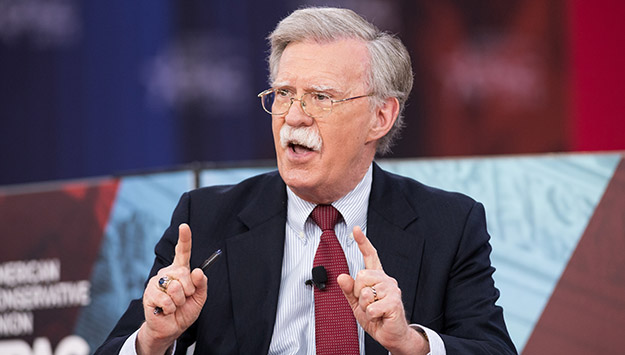
In this week’s Monday Briefing, MEI experts Paul Salem, Bilal Y. Saab, Gerald Feierstein, Gonul Tol, and Ibrahim al-Assil provide analysis on recent and upcoming events including the appointment of John Bolton to national security advisor, the Houthi missile attack on Riyadh, Egypt’s regressive referendum, the Yemeni war’s third anniversary, EU-Turkey diplomacy, and the worsening crisis in Ghouta.
The oldest peer-reviewed publication dedicated to the study of the modern Middle East, MEI’s flagship journal covers politics, society, and culture in the region.