This article is part of a collection of short essays written by the Fellows of the Middle East Institute to explore aspects of the ongoing war with Iran. The intent of the collection is to help readers see new and unexpected elements of the dynamics and impact of the ongoing hostilities and to think harder, deeper, and broader about the implications of the conflict.
Turkey: Ankara’s Nuclear Ambitions in the Post-Iran War Environment
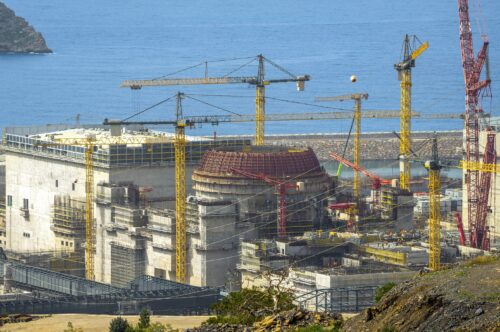
In February 2026, Turkish Foreign Minister Hakan Fidan suggested that shifting international dynamics could push Turkey to acquire nuclear weapons. That rhetoric, combined with Turkey’s civilian nuclear energy and research programs and its indigenous surface-to-surface missile development projects, has fueled concerns that these capabilities could eventually form the backbone of a Turkish nuclear weapons program.
When the US and Israel launched military action against Iran on February 28, 2026, it set in motion a chain of events that saw violence spread across the Middle East. Yet as the region found itself engulfed in conflict, Syria has experienced its most peaceful months in 15 years, and the government in Damascus appears determined to stay its course toward recovery.
Tehran Celebrates Arsal "Victory" as Sign of Hezbollah’s Growing Power
From Tehran’s view, Hezbollah’s military operation against Nusra Front militants on the outskirts of the Lebanese town of Arsal near the Syrian border signifies Hezbollah’s growing political and military influence in Lebanon and the broader region. “There was more cooperation between Hezbollah and the Lebanese Army in the battle of Arsal than at any time in the past. And this cooperation signifies fundamental changes in Lebanon’s political sphere.
I.R.G.C. Outlet: Seizure of al-Sukhnah Helps Regime Operations in Raqqa and Deir Ezzor
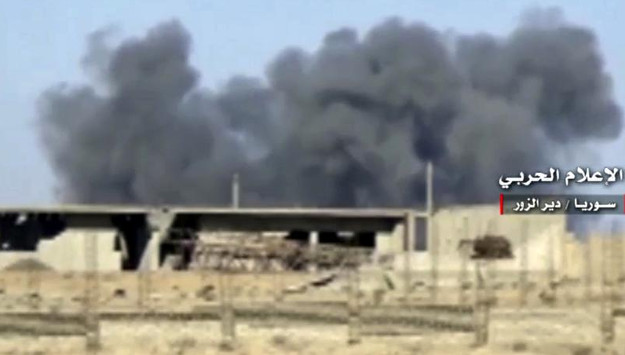
The recent seizure of al-Sukhnah region in Syria’s Homs Governorate has prepared the ground for the Syrian Army and its foreign allies to advance toward and capture the oil-rich Deir Ezzor Governorate, according to
One of the most revealing moments of the recently concluded Ramadan TV season occurred in the new Egyptian series, Don’t Turn Off the Sun. A newly-wedded young wife finds out that her husband is having an affair with his male friend; a liaison that ultimately leads to the dissolution of their marriage. The most telling aspect of what was potentially perceived as a provocative move from the series’ makers was the fact that it didn’t stir any controversy at all.
Iran-Backed Iraqi Militia Group Vows to Fight with Hezbollah against Israel
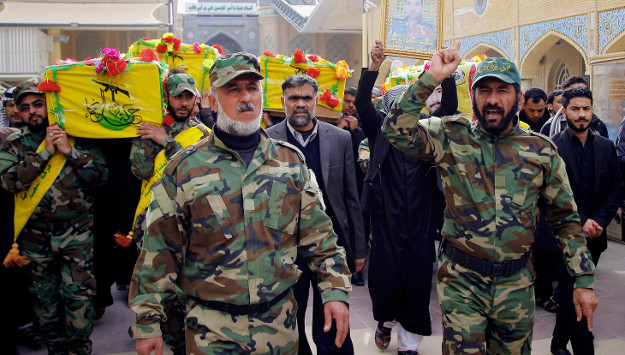
Harakat al-Nujaba, an Iranian-supported Iraqi militia group, has announced that it will support the Lebanese Hezbollah in the fight against the “occupying Zionist regime” of Israel, Fars News Agency, which is affiliated with the Islamic Revolution Guards Corps (I.R.G.C.) reports.
Gaza Three Years after the War: Ten Critical Observations
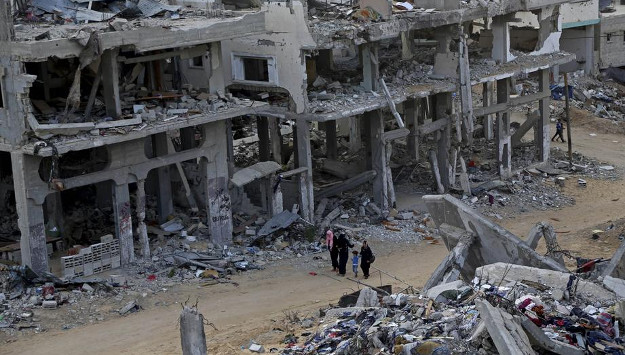
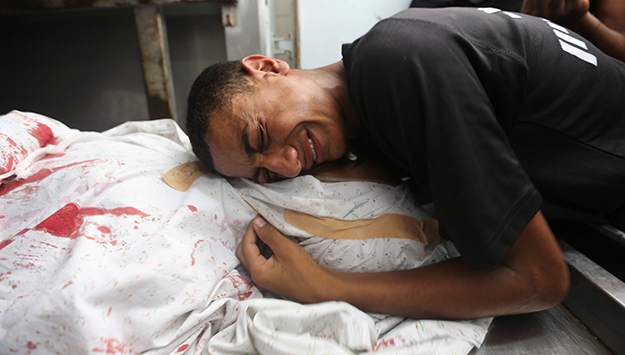
Three years ago this summer, on July 8, Israel launched the deadliest attack on the Hamas-run Gaza Strip; the third in less than six years. The war lasted 51 days on end and left in its wake an unprecedented human carnage and caused massive destruction to Gaza’s already frail economy and failing infrastructure. Three years later, Gaza has not recovered. If anything, things have gotten worse; much worse.
Astana Experts Meet in Tehran and Turkey Holds Naval Exercises with Qatar | Monday Briefing
In this week’s Monday Briefing, MEI experts Randa Slim, Gerald Feierstein, Gonul Tol, and Jean-François Seznec provide analysis on recent and upcoming events including next steps in the Syrian conflict de-escalation process, General Zinni’s mission to the Gulf, Qatari-Turkish relations, and crude oil informal cooperation.
Damascus Asks Tehran to Play Major Role in Syria’s Rebuilding, Economic Revival
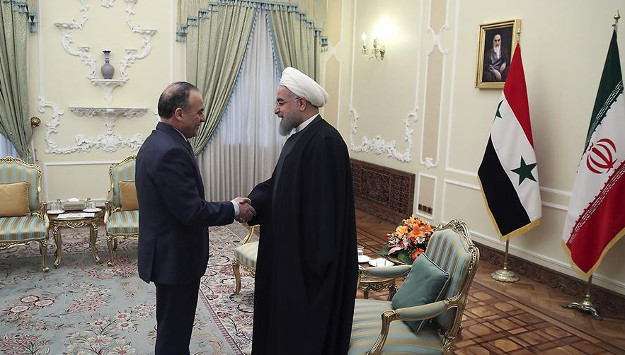
The Syrian government greatly appreciates Tehran’s unwavering support in “the fight against terrorism” over the past years and now wants Iran to play an active role in the war-torn country’s reconstruction and economic development, Syria’s Prime Minister Imad Khamis said in a meeting with Iranian Parliament Speaker Ali Larijani on Sunday.
My day job is as a Professor of Israel Studies at the University of Maryland; every fall I teach a large course entitled “Fundamental Questions of the Israeli/Palestinian Conflict.” A few years ago I was lecturing about the 1973 Yom Kippur War and explained that, as I see it, the war was essentially as a draw, in which Egypt and Israel both lost and won.
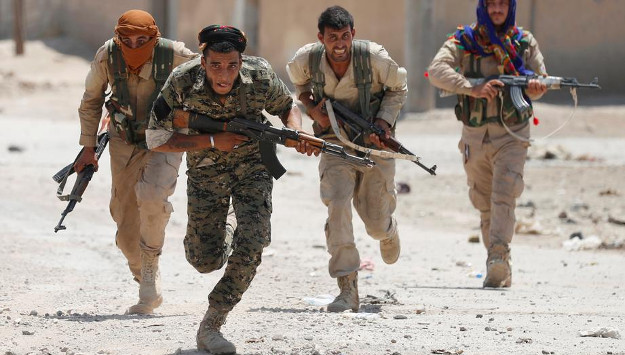
The Danger of Conflict Between the Syrian Regime and Y.P.G.
Both the Trump and Obama administrations have made defeating ISIS the United State’s number one priority in the Middle East. In Syria, this focus led the United States to support the Kurdish People’s Protection Units (Y.P.G.) against ISIS. One of the major contributing factors behind this decision was that the Y.P.G. was not actively hostile to the Syrian regime, unlike the Syrian opposition. U.S. support for the Y.P.G.
Netanyahu's Shrewd Political Game Behind Jerusalem Violence
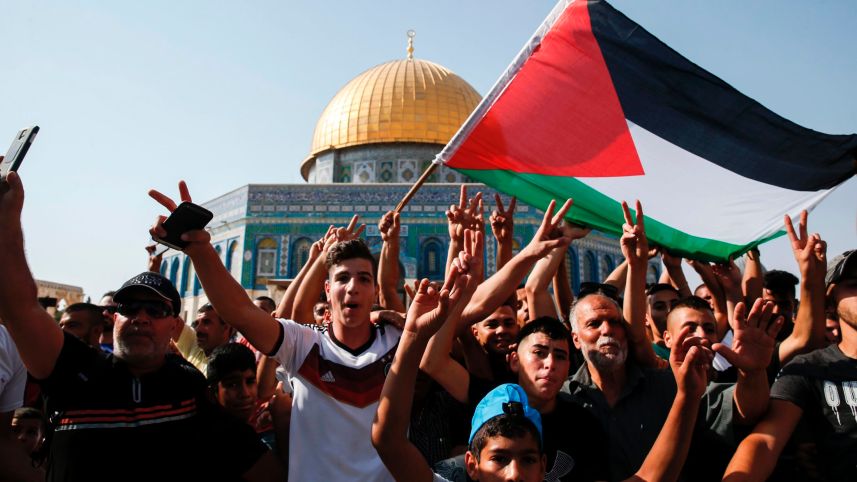
Jerusalem’s Old City is a tinderbox that could set off a regional conflagration. This is a demonstrably true statement: when Ariel Sharon, then an opposition politician, stood surrounded by security guards on the steps in front of the Dome of the Rock in September 2000, and proclaimed that it would remain in Israeli hands forever, the consequence of his populist blustering was the Second Intifada.
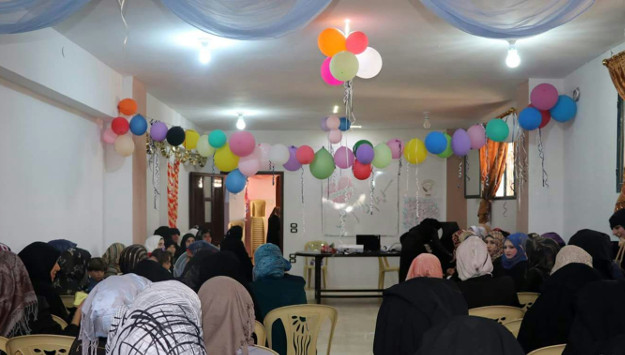
In the middle of the main market in Idlib City, during one of the busiest days of the year, Eid day, Amal, a local resident, was stopped by the Islamic police. She was chastised because of her refusal to wear the required long dark coat, the mantou. Instead of looking down or profusely apologizing, Amal shot back at the Islamic police that is affiliated with Jaish al-Fatah, “No one has anything to do with what I wear!
Red Sea Islands Deal Undermines Arab Peace Initiative
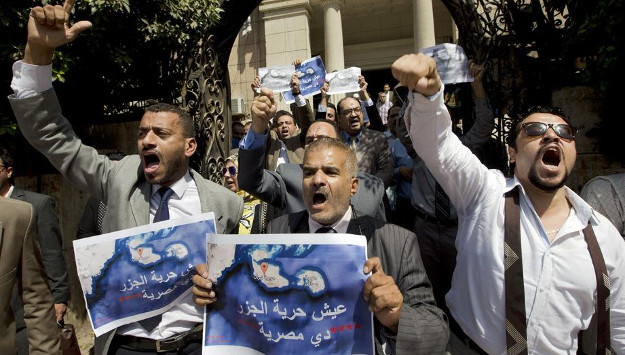
The Saudi-led Arab Peace Initiative is losing its value in the wake of Egypt’s decision to return the Red Sea islands of Tiran and Sanafir to Saudi Arabia, and the latter’s participation as a security guarantor of the Egypt-Israel peace treaty.
Last month, the Egyptian parliament, bucking widespread public and institutional opposition, acknowledged Saudi sovereignty over the islands.
Most attention has focused on the dispute over sovereignty, which has been under Egyptian administration for more than half a century. But the real significance of the deal lies elsewhere.
The oldest peer-reviewed publication dedicated to the study of the modern Middle East, MEI’s flagship journal covers politics, society, and culture in the region.