This article is part of a collection of short essays written by the Fellows of the Middle East Institute to explore aspects of the ongoing war with Iran. The intent of the collection is to help readers see new and unexpected elements of the dynamics and impact of the ongoing hostilities and to think harder, deeper, and broader about the implications of the conflict.
Turkey: Ankara’s Nuclear Ambitions in the Post-Iran War Environment
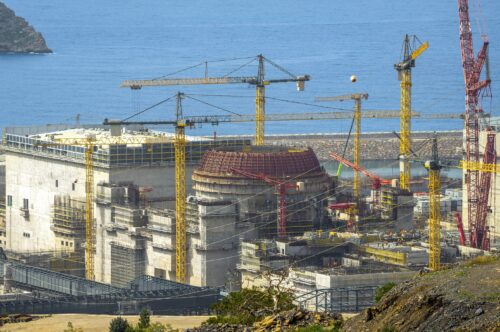
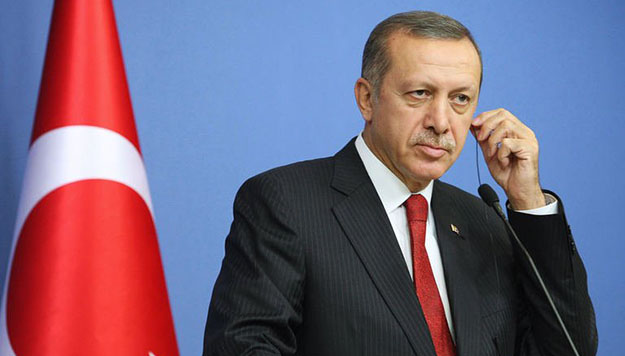
In February 2026, Turkish Foreign Minister Hakan Fidan suggested that shifting international dynamics could push Turkey to acquire nuclear weapons. That rhetoric, combined with Turkey’s civilian nuclear energy and research programs and its indigenous surface-to-surface missile development projects, has fueled concerns that these capabilities could eventually form the backbone of a Turkish nuclear weapons program.
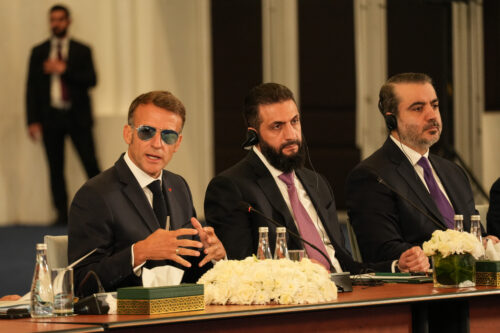
When the US and Israel launched military action against Iran on February 28, 2026, it set in motion a chain of events that saw violence spread across the Middle East. Yet as the region found itself engulfed in conflict, Syria has experienced its most peaceful months in 15 years, and the government in Damascus appears determined to stay its course toward recovery.
Author Stephen Cohen on the India-Pakistan Conundrum
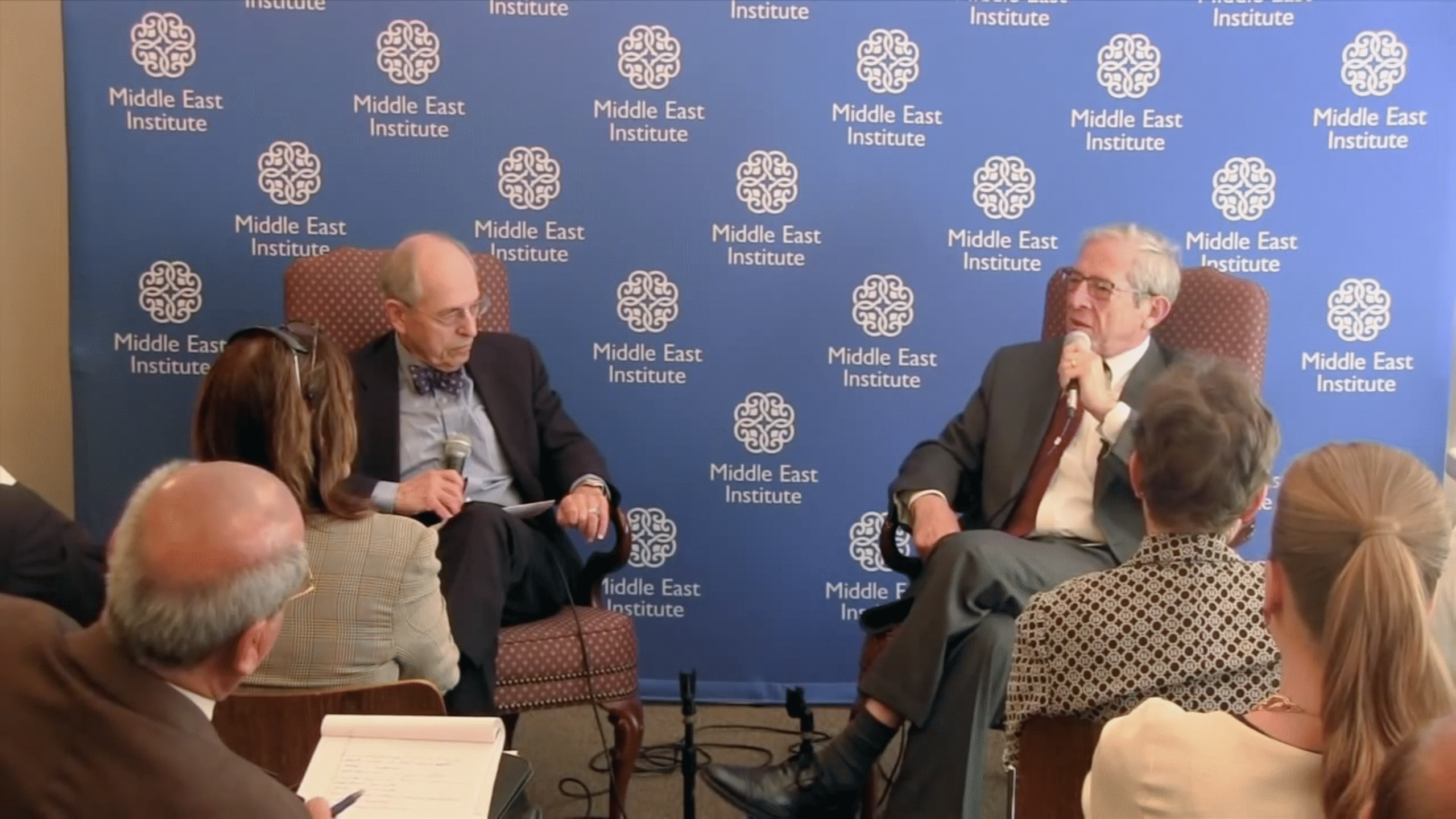
The Middle East Institute is proud to host author and Brookings senior fellow Stephen P. Cohen for a reading and discussion of his book, Shooting for a Century: The India-Pakistan Conundrum (Brookings Institution Press, 2013). In his latest book, Dr. Cohen explores one of the most intractable conflicts in modern history and examines the parallels with the ongoing Israeli-Palestinian conflict, observing how nuclear weapons, minority and victim psychology, and outside powers come into play in both regions. Widely regarded as one of America’s foremost experts on South Asian affairs, Dr.
The openly difficult relationship between Saudi Arabia and Muslim Brotherhood chapters across the region has become a salient feature of Middle East politics since the advent of the “Arab Spring.” This mutual mistrust has increased in the wake of the Kingdom’s recent support for the military takeover in Cairo and the generals’ subsequent repression of the Brotherhood there. But how is the Islamist organization affected by this dynamic in Syria, where the Muslim Brothers and the Saudis both battle against Bashar al-Assad?
History weighs heavily on any political movement, and the Muslim Brotherhood in Syria is no different. Over eight decades, the group has adapted to survive. This malleability has kept the Brotherhood, or Ikhwan, alive as an independent organization, but historical experiences have changed it in profound ways and are helping to marginalize it during the current crisis.
Gulf Governments Offer Financing for U.S. Strike on Syria
Like pieces fitting together in a jigsaw puzzle, Arab governments – presumably from the oil-rich Gulf Cooperation Council – offered to finance a U.S. military strike on Syria, according to comments made by Secretary of State John Kerry during testimony September 4 with the House Foreign Affairs Committee. In an exchange with Representative Ileana Ros-Lehtinen (R-FL) on the potential cost of U.S. military action in Syria, Kerry said,
The Iraqi Factor in the Syrian Crisis: Catalyst or Inhibitor?
Iraqis who cast their votes in postponed local elections in Anbar and Nineveh on 20 June had a lot on their plates. Beyond issues relating to the provision of services locally, the last weeks before the elections saw massive protests against the central government in Baghdad. The many angry slogans on display included calls for greater autonomy for the Sunni-majority areas of Iraq as well as expressions of solidarity with the mainly Sunni Syrian opposition movement.
The sun is beating down and it isn’t even midday. Clutching the all-important paperwork that will get them coveted UN food vouchers, Syrian refugees look harried. The women pull at their children to hurry through the litter-filled yard of the sports club in the town of Bar Elias that serves as a distribution center for the UN’s hard-pressed World Food Program (WFP). Unlike their men, who head for the shade to smoke and exchange news, the women don’t dally, making for the snaking lines into a crowded hall where they will be called in groups by registration numbers.
The dramatic events of July 3, which saw the unseating of Egypt’s first and only democratically-elected government by a military coup stimulated by enormous popular demonstrations, has created a huge question mark as to the future governance of the Arab world’s largest and most important country. The ramifications and repercussions will be playing out for months and years, whatever steps are taken in the next days and weeks. However, two parties acutely affected by these events are watching with particular concern.
Randa Slim, MEI Scholar and adjunct research fellow at the New America Foundation, discusses the implications of Hezbollah's growing role in Syria for Lebanese politics and Lebanon's Shiite community.
The Middle East Institute is pleased to welcome MEI Scholar Randa Slim for a discussion on the implications of Hezbollah’s growing role in Syria for Lebanese politics and Lebanon’s Shiite community. Recently returned from a trip to the region, Slim will examine Hezbollah’s potential end game in Syria, and whether Lebanon will be able to resist being drawn into the conflict following Hezbollah’s plunge into the Syrian abyss.
The oldest peer-reviewed publication dedicated to the study of the modern Middle East, MEI’s flagship journal covers politics, society, and culture in the region.