This article is part of a collection of short essays written by the Fellows of the Middle East Institute to explore aspects of the ongoing war with Iran. The intent of the collection is to help readers see new and unexpected elements of the dynamics and impact of the ongoing hostilities and to think harder, deeper, and broader about the implications of the conflict.
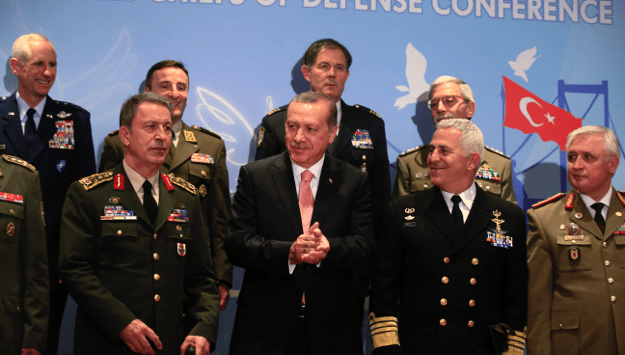
Turkey: Ankara’s Nuclear Ambitions in the Post-Iran War Environment
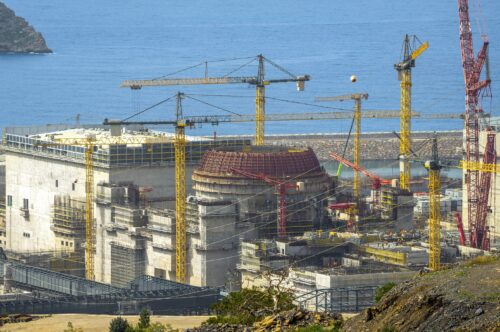
In February 2026, Turkish Foreign Minister Hakan Fidan suggested that shifting international dynamics could push Turkey to acquire nuclear weapons. That rhetoric, combined with Turkey’s civilian nuclear energy and research programs and its indigenous surface-to-surface missile development projects, has fueled concerns that these capabilities could eventually form the backbone of a Turkish nuclear weapons program.
When the US and Israel launched military action against Iran on February 28, 2026, it set in motion a chain of events that saw violence spread across the Middle East. Yet as the region found itself engulfed in conflict, Syria has experienced its most peaceful months in 15 years, and the government in Damascus appears determined to stay its course toward recovery.
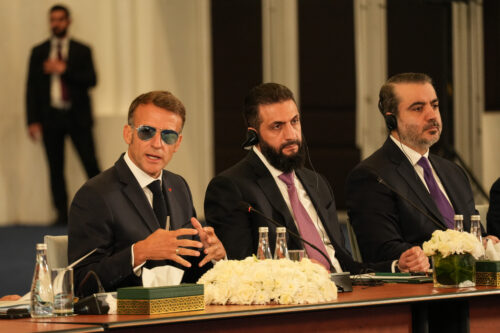
The Syrian Opposition Will Benefit from Integrating Its Civilian-Military Chain of Command
Assertions and opinions in this publication are solely those of the above-mentioned author(s) and do not necessarily reflect the views of the Middle East Institute, which expressly does not take positions on Middle East policy
This article was originally published in the December, 2012 issue of Current History
Assertions and opinions in this publication are solely those of the above-mentioned author(s) and do not necessarily reflect the views of the Middle East Institute, which expressly does not take positions on Middle East policy
This article was first published by Reuters on December 12, 2012
Assertions and opinions in this publication are solely those of the above-mentioned author(s) and do not necessarily reflect the views of the Middle East Institute, which expressly does not take positions on Middle East policy
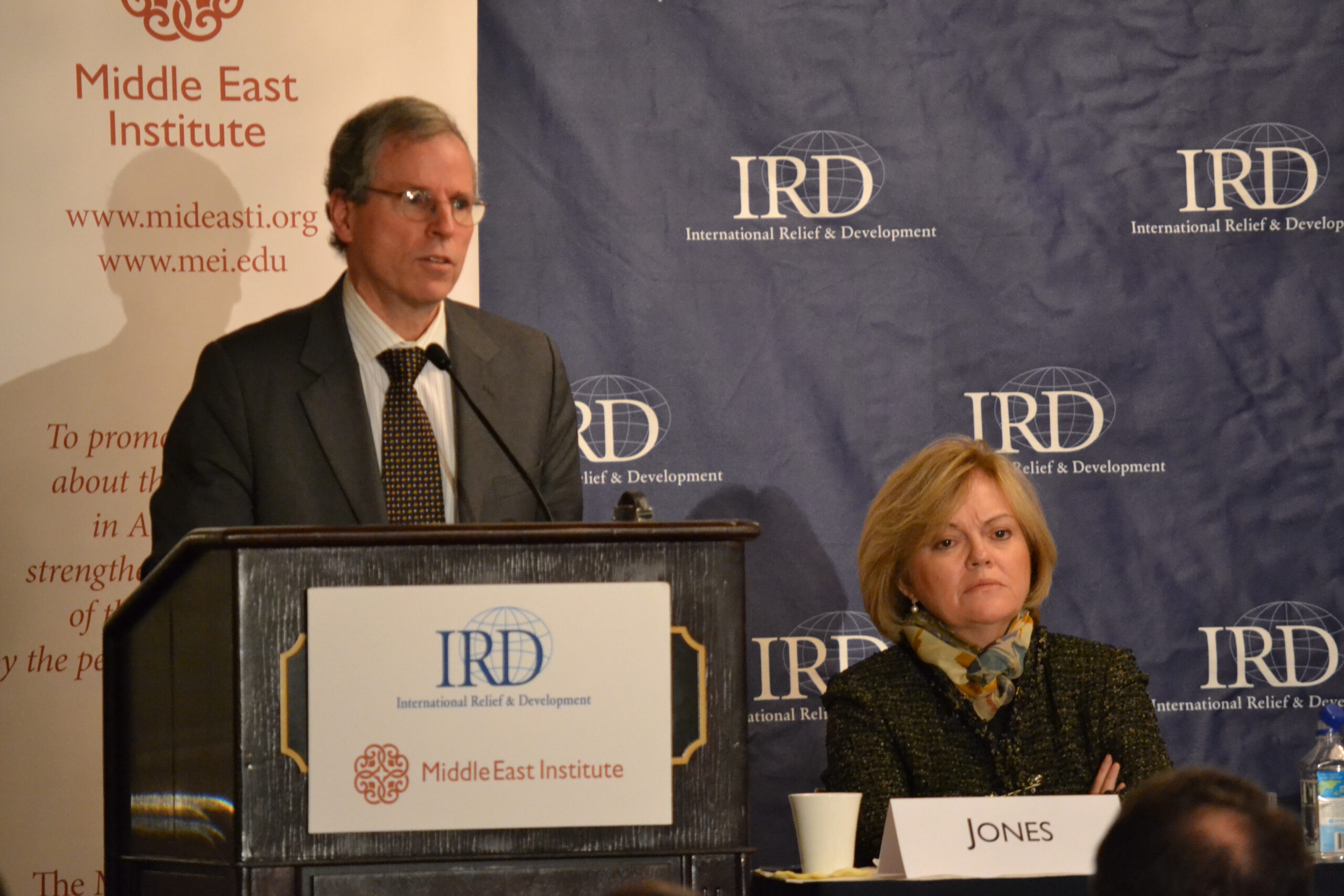
The Middle East Institute and IRD Present:Syria: Humanitarian Impact and the U.S. Response Featuring: Robert Ford, U.S. Ambassador to SyriaMark Bartolini, Director of the Office of Foreign Disaster Assistance, USAIDAlbert Cevallos, Acting Director of Democracy, Governance, & Community Development, IRDOpening Remarks by: Arthur B. Keyes, President and CEO, IRDModerated by: Amb. Deborah Jones Thursday, November 29, 20129:00am-10:30am St.
The Middle East Institute and IRD Present:Syria: Humanitarian Impact and the U.S. Response Featuring: Robert Ford, U.S. Ambassador to SyriaMark Bartolini, Director of the Office of Foreign Disaster Assistance, USAIDAlbert Cevallos, Acting Director of Democracy, Governance, & Community Development, IRDOpening Remarks by: Arthur B. Keyes, President and CEO, IRDModerated by: Amb. Deborah Jones Thursday, November 29, 20129:00am-10:30am St.
The Middle East Institute and IRD Present:Syria: Humanitarian Impact and the U.S. Response Featuring: Robert Ford, U.S. Ambassador to SyriaMark Bartolini, Director of the Office of Foreign Disaster Assistance, USAIDAlbert Cevallos, Acting Director of Democracy, Governance, & Community Development, IRDOpening Remarks by: Arthur B. Keyes, President and CEO, IRDModerated by: Amb. Deborah Jones Thursday, November 29, 20129:00am-10:30am St.
The Middle East Institute and IRD Present:Syria: Humanitarian Impact and the U.S. Response Featuring: Robert Ford, U.S. Ambassador to SyriaMark Bartolini, Director of the Office of Foreign Disaster Assistance, USAIDAlbert Cevallos, Acting Director of Democracy, Governance, & Community Development, IRDOpening Remarks by: Arthur B. Keyes, President and CEO, IRDModerated by: Amb. Deborah Jones Thursday, November 29, 20129:00am-10:30am St.
The Middle East Institute and IRD Present:Syria: Humanitarian Impact and the U.S. Response Featuring: Robert Ford, U.S. Ambassador to SyriaMark Bartolini, Director of the Office of Foreign Disaster Assistance, USAIDAlbert Cevallos, Acting Director of Democracy, Governance, & Community Development, IRDOpening Remarks by: Arthur B. Keyes, President and CEO, IRDModerated by: Amb. Deborah Jones Thursday, November 29, 20129:00am-10:30am St.
This story first appeared on NPR.com on November 15, 2012
In their long conflict, the Israelis and the Palestinians often fight just as fiercely on the propaganda front as they do on the battlefield. Social media is taking the clash to new heights with both sides taking the unprecedented steps of announcing military operations in almost real time.
The Israeli military is live-tweeting and blogging its military operation directed at Hamas militants in the Gaza Strip, and Hamas is responding in kind.
Religious & Secular Elite Cooperation: Democratization in Turkey & the Middle East
Fri, 11/9/2012 12:30 pm to 2:00 pmThe Middle East Institute’s Center for Turkish Studies and the Institute of Turkish Studies at Georgetown University are proud to present a discussion with Professor Murat Somer of Koc University in Istanbul. Somer will examine how countries with semi-democratic or authoritarian centers, such as Turkey or the Arab Spring polities, must rely on cooperation between religious and secular actors to achieve greater democratization.
Religious & Secular Elite Cooperation: Democratization in Turkey & the Middle East
Fri, 11/9/2012 12:30 pm to 2:00 pmThe Middle East Institute’s Center for Turkish Studies and the Institute of Turkish Studies at Georgetown University are proud to present a discussion with Professor Murat Somer of Koc University in Istanbul. Somer will examine how countries with semi-democratic or authoritarian centers, such as Turkey or the Arab Spring polities, must rely on cooperation between religious and secular actors to achieve greater democratization.
Religious & Secular Elite Cooperation: Democratization in Turkey & the Middle East
Fri, 11/9/2012 12:30 pm to 2:00 pmThe Middle East Institute’s Center for Turkish Studies and the Institute of Turkish Studies at Georgetown University are proud to present a discussion with Professor Murat Somer of Koc University in Istanbul. Somer will examine how countries with semi-democratic or authoritarian centers, such as Turkey or the Arab Spring polities, must rely on cooperation between religious and secular actors to achieve greater democratization.
The oldest peer-reviewed publication dedicated to the study of the modern Middle East, MEI’s flagship journal covers politics, society, and culture in the region.