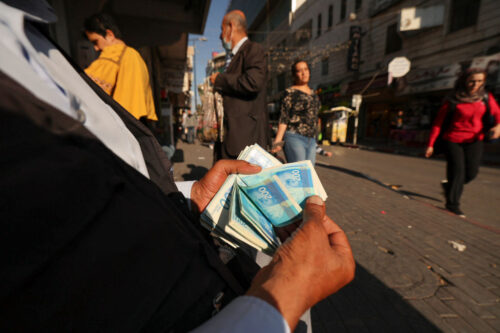
The West Bank economy is in crisis. Since the Hamas attack on Israel on October 7, 2023, Israeli policies, compounded by Palestinian Authority (PA) governance and fiscal management weaknesses, have driven the economy into free fall. The measures are imposing severe hardship on the lives and livelihoods of Palestinians; risk destabilizing the West Bank; carry spillover implications for Israel and its neighbors; and threaten to derail the US administration’s efforts to implement its 20-point plan for Gaza.
Israelis turned out in their highest numbers in decades on October 27 for the country’s first election since the Hamas attacks of October 7, 2023. Prime Minister Benjamin Netanyahu’s bloc lost 15 seats and its Knesset majority, but Gadi Eisenkot’s opposition bloc also fell short, leaving Arab parties, with a record 19 seats, potentially decisive in forming the next government. MEI Senior Fellow Natan Sachs joins hosts Alistair Taylor and Matthew Czekaj to unpack the results, the coalition math, and what comes next for Israel’s security policy, the wider region, and US-Israeli relations.
Recent Elections and What They May Mean for the Middle East
Recent elections for the Israeli Knesset and American Congress may make less of a difference in the Middle East than some people think. Elections are significant indicators of national political trends, but do not always translate into changes in national security strategies. That is likely the case now in both nations.
Israeli-Palestinian Peace: A Special Regime Option for the Old City of Jerusalem
Jerusalem will probably be the toughest issue in any future Israeli-Palestinian peace negotiations. The other three core issues – borders/settlements, security, and Palestinian refugees – will also be very difficult, but Jerusalem is at a different level. Jews, Muslims, and Christians worldwide have strong attachment to the city and its many holy sites. For Israelis and Palestinians, Jerusalem is the focal point of national, cultural, and religious identities and aspirations. Their conflicting claims are based on long history and narratives that do not accommodate the other.
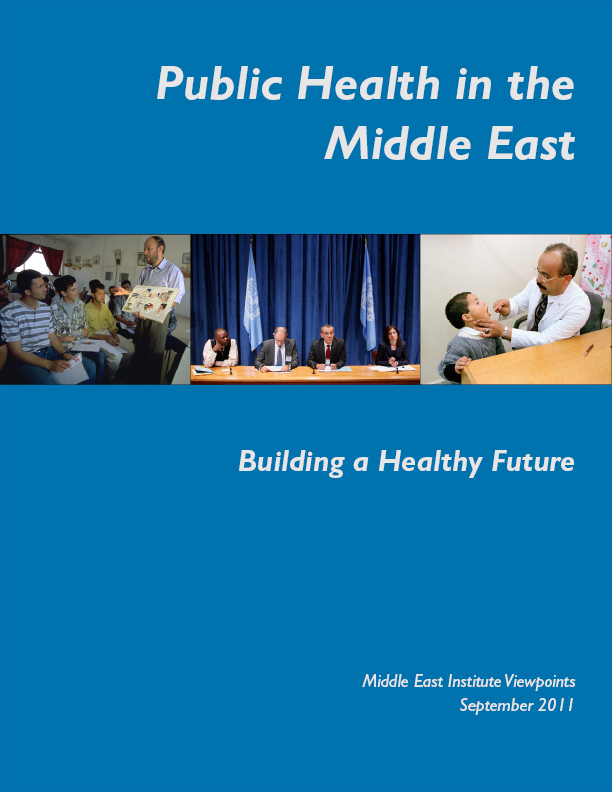
Introduction to Public Health in the Middle East: Building a Healthy Future
Originally posted September, 2011
The flow of ideas, people, and commerce across national boundaries has been occurring with breathtaking rapidity in the broader Middle East, as elsewhere. These increasingly dense exchanges have generated new threats and vulnerabilities that have tended to impact women, children, and the poorest members of society disproportionately. They also have given people more resources and opportunities with which to shape their lives and their futures.
Peace-Building through Health in the Israeli-Palestinian Conflict: The Six-Year Experience of Healing Across the Divides
Originally posted September 2011
Approximately six months ago, I asked an astute long-time American observer of the Israeli-Palestinian conflict whether we had come to the end of the road for a two-state solution. He replied that we had come to the end of that road in 1967. Putting it differently, Zhou Enlai, the premier of the People’s Republic of China under Mao Zedong, when asked what he thought of the French Revolution, reportedly replied that it was too early to tell.
Are Iran’s leaders rational actors? This question matters when justifying any decision by Israel to preempt Iran’s acquisition of nuclear weapons. An Iranian regime seen as driven to destroy the Jewish state has to be dealt with differently than one whose objectives are mediated by calculations of costs and benefits. Deterrents that would be normally expected to restrain a state would not work with an irrational Iran.
Reflections on Palestinian Unity, the Statehood Bid, and Prospects for Peace
In the wake of the February 6 announcement that Palestinian President Mahmoud Abbas will head an interim unity government there is renewed hope for political cooperation between rival parties Fatah and Hamas. The formation of the unity government however threatens U.S. aid to Palestine, as the United States has said that it refuses to send money to Hamas, which it considers a terrorist organization. The PLO's continued pursuit of statehood recognition in the UN Security Council has also isolated it from the United States even as it earned popular and international support.
The oldest peer-reviewed publication dedicated to the study of the modern Middle East, MEI’s flagship journal covers politics, society, and culture in the region.