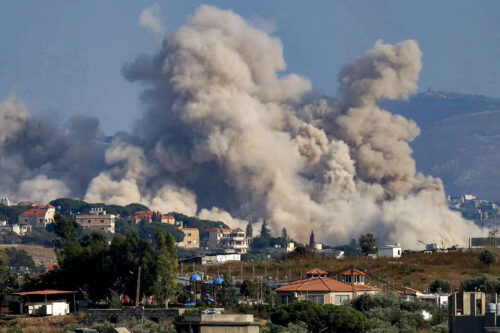
Though it has fallen out of the headlines because of the Iran war, Syria has had a dramatically consequential summer. Hosts Alistair Taylor and Matthew Czekaj are joined by MEI Senior Fellow Charles Lister to take stock of recent developments: the dissolution of the Kurdish-led Syrian Democratic Forces, Israeli strikes and the friction with Turkey they have exposed, the standoff in Sweida, as well as Damascus’s bid to turn Syria into a trade corridor between the Mediterranean and the Gulf. Is the transition consolidating or fragmenting nearly two years after the fall of the Assad regime?
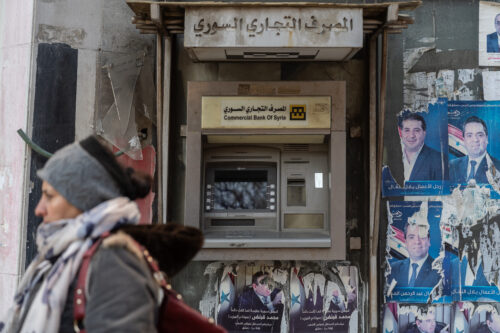
With sanctions repealed, Syrian policymakers must ensure that growing volumes of credit reach beyond the narrow political and commercial networks that have generally dominated Syrian finance. That will require a credit strategy aimed at sectors and regions historically excluded from formal finance. Syria’s specialized state banks offer an imperfect but ready-made mechanism to do so.
In many ways, the U.S.-Israeli war against Iran and the war in Gaza that preceded it seem transformative. After decades of shadow warfare, Iran and Israel have now attacked each other’s homelands directly. And Israel and the United States have joined forces in a genuinely novel way to wage war against Iran.
MEI’s Syria Initiative seeks to provide insightful and grounded research and analysis on all things Syria in order to better inform a wide range of audiences and to help sustain and shape a more meaningful policy-oriented discussion.
The Middle East Institute, The Atlantic Council, and European Institute of Peace collaborate with subject matter experts and policymakers in the US, Europe, and the Middle East to develop a holistic strategy to sustainably forge a pathway to resolving Syria’s crisis.
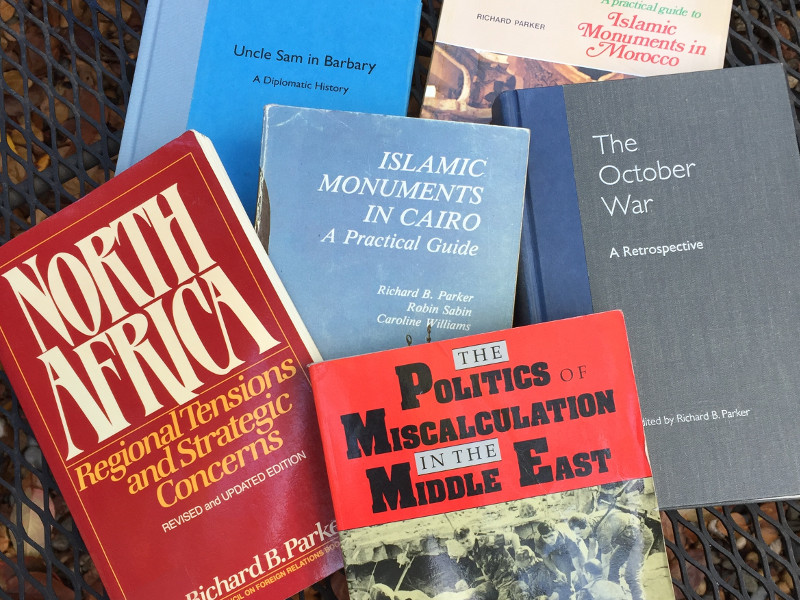
Only a few authors have works that can be found on both floors of the Oman Library at The Middle East Institute, and fewer still that have a personal connection to both the institute and the history of the region. The late Ambassador Richard B. Parker can claim this status, having served 31 years in the Foreign Service and as the third editor of The Middle East Journal. He was also a longtime MEI scholar-in-residence.
Critics of the July 14 nuclear deal with Iran railed against it on the grounds that it would embolden what they argue is Tehran’s destabilizing behavior in the Middle East. The reasoning goes like this: lifting sanctions gives Iran access to tens of billions of dollars that will flow to fund disruptive activities and lets Iran freely pursue its regional ambitions without fear of reprisals.
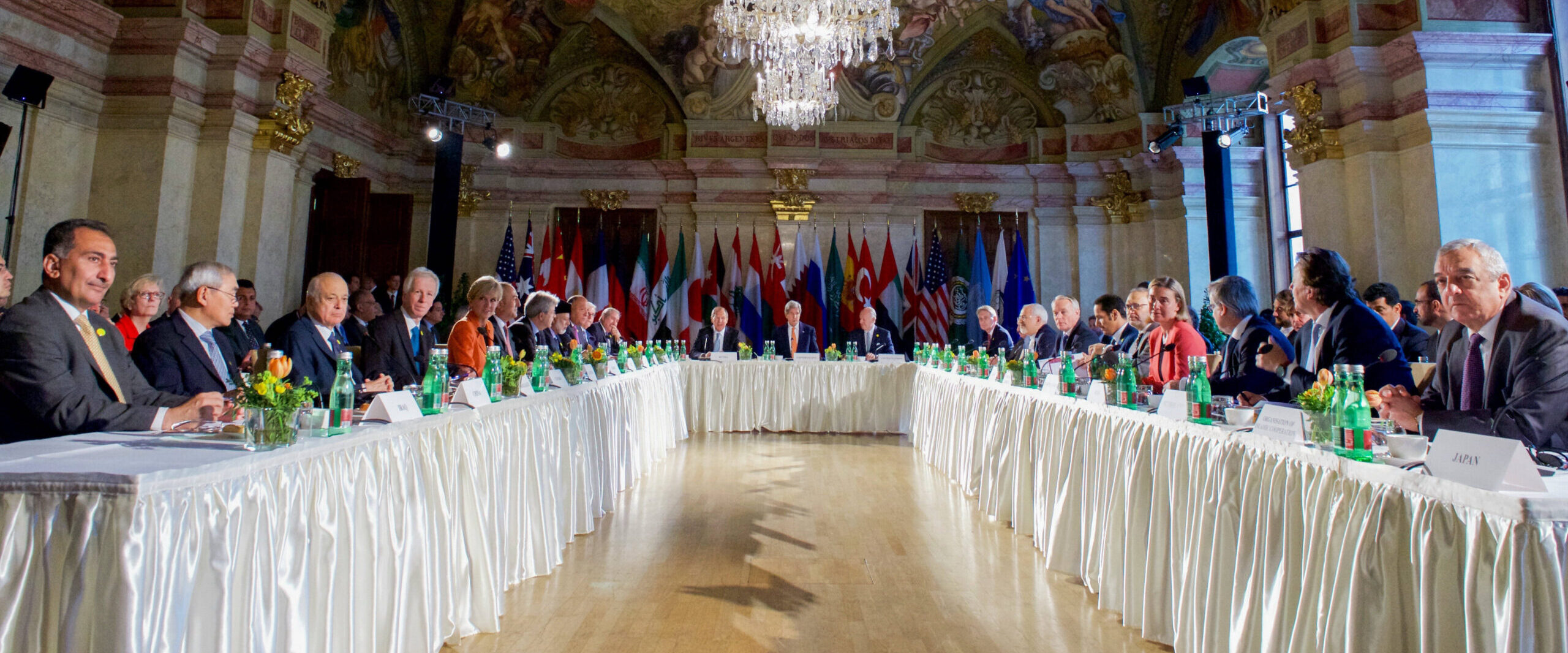
A Message to Vienna: Build a Framework, but Leave the Details to Syrians
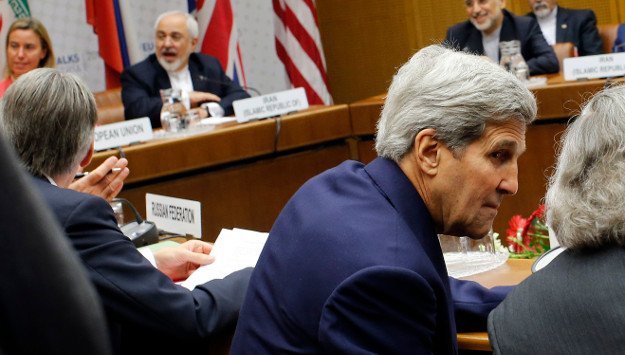
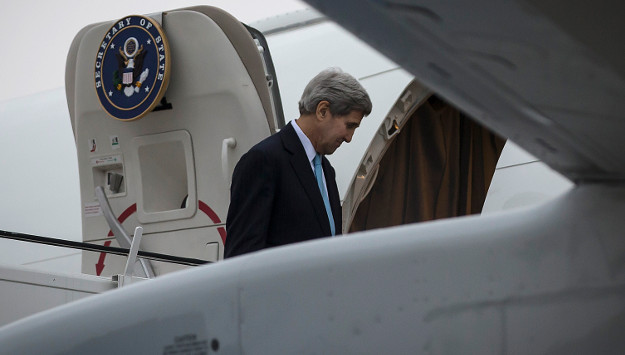
As Secretary of State John Kerry seeks to launch a new peace effort on Syria, he needs to be careful about the goals he sets and the language he uses. Getting the fundamentals wrong at the outset might scuttle the process or could ensure that whatever deal results will crumble under pressure. It will then lead to more warfare and a worsening of the refugee crisis. Moreover, it would preclude us from securing our strategic goal of mobilizing more Syrians to contain and eventually expel terrorists from Syria.
President Barack Obama has notoriously disparaged the moderate opposition as “farmers or dentists or maybe some radio reporters who didn’t have a lot of experience fighting.” The key question about the Syrian opposition is not whether it can fight — in fact many of its cadres are former Syrian army soldiers — but whether it can govern.
Recent Russian activity in Syria is not about combating the Islamic State, despite Russian claims to the contrary. Though actively fighting ISIS and thus propagating its long-stated goal of keeping Assad in power would seem to be the straightforward explanation for Russia’s recent behavior, the fact that Russian strikes are also hitting U.S.-backed, rebel-held areas demonstrates the hollowness of official discourse.
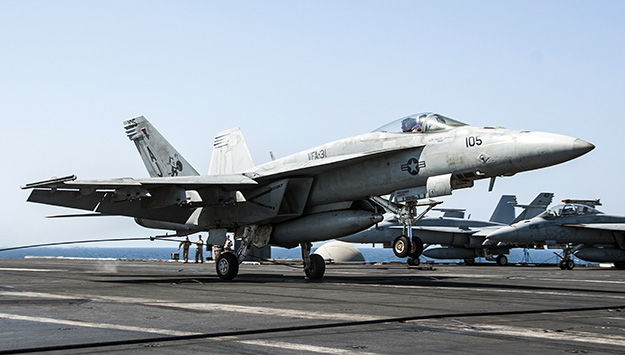
October 2015 marks the fourteenth month of formal U.S. military engagement in the struggle against the Islamic State (ISIS). The Obama administration was at first reluctant to engage U.S. military power in this struggle but then became more deliberate in its approach. U.S. involvement in the battlegrounds of Iraq and Syria has been evolving especially over the past year. This evolution has been defined and is in many ways limited by a strategy that emphasizes political change in Iraq and a broad coalition of states taking action against ISIS.
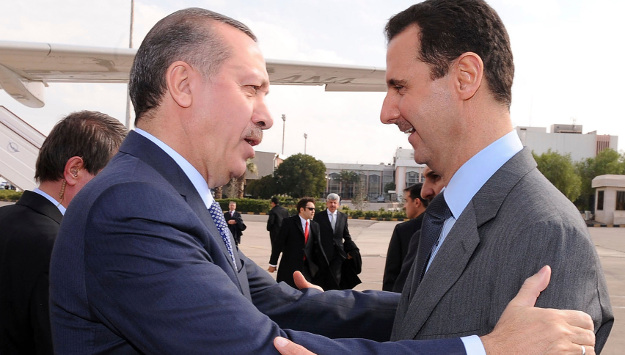
Turkish Prime Minister Ahmet Davutoglu is at the United Nations in New York, making another push for Turkey’s long-standing demand for a safe zone in northern Syria, while President Recep Tayyip Erdogan seems to have realized that it might be a long shot given recent developments.
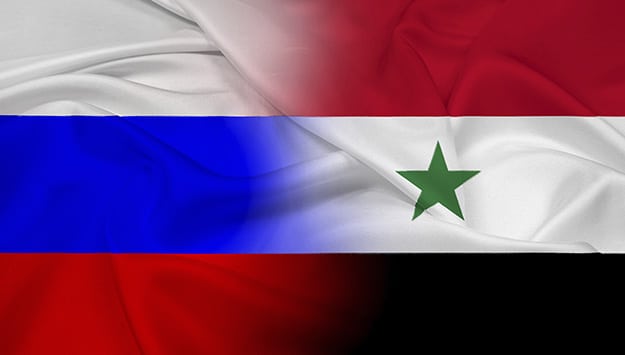
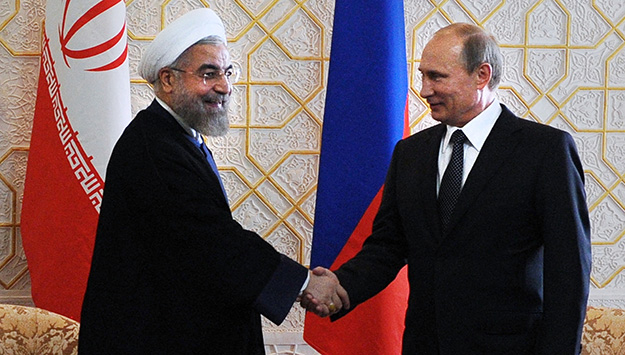
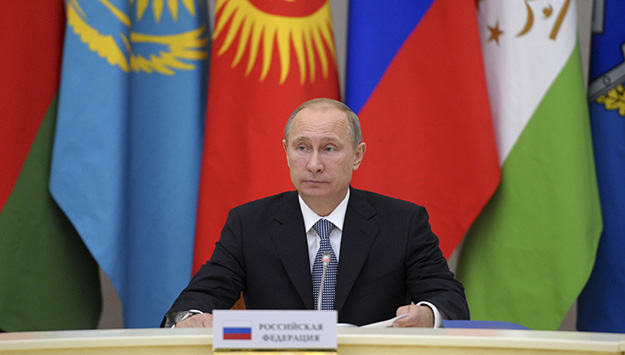
Russian President Vladimir Putin made waves leading into the UN General Assembly with new military deployments to Syria and an accord with Iran and the Iraqi government, signaling the formation of something like an alternate coalition combating ISIS. The sudden moves serve as a wakeup call not only for the United States and its allies, but also for Iran. The Russian actions are not enough to lead the Iranians to openly second-guess their support for Syria’s President Bashar al-Assad, but they are bound to raise tough questions among officials in Tehran.
Addressing Mental Health Needs among Syrian Refugees
Sana managed to escape the violence in Syria by making her way to Lebanon, but now she is alone and suffering from mood swings. She is battling eviction threats from her landlord due to her disruptive and erratic behavior. Mahmoud, another Syrian refugee in Jordan, is experiencing increasing feelings of depression, worried that he can no longer provide for his wife and three children, two of whom have learning disabilities.
The Russian escalation in Syria will create a flurry of diplomatic activity to find a political solution to the Syrian crisis and a fresh attempt to confront ISIS in Syria, but the conditions for success on both fronts are still absent. The intervention is likely to lead to further escalation of the conflict with no resolution of the political or security stalemates.
Furthermore, Russian President Vladimir Putin’s move into Syria is the result of a number of factors and will have far-reaching consequences at the international, regional, and local levels.
More Russian Aid to Assad: Chasing the Impossible Dream
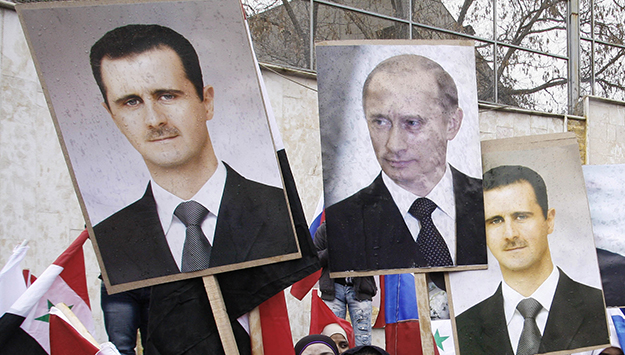
Russia’s recent increase in military aid to the Syrian government is an extension of previous Russian policy on Syria; what is different is not the thrust of Russian policy but the scale of the aid. This ramp-up carries new risks to those hoping for a real political solution to the longstanding Syrian conflict and to those hoping to see the threat of terror groups operating in Syria contained.
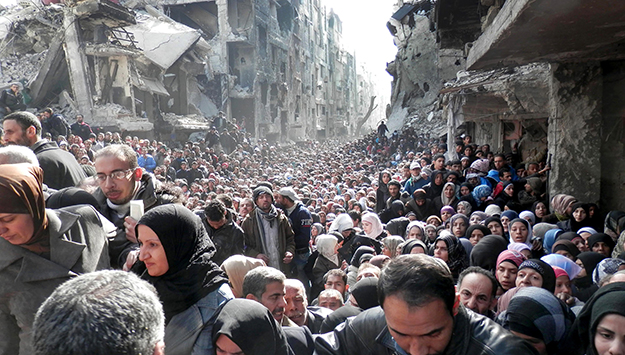
This past June, the United Nations removed Yarmouk refugee camp from a list of what it terms “besieged areas” in Syria. The reason for this shift, according to the United Nations Office for the Coordination of Humanitarian Affairs (UNOCHA), is due to the availability of humanitarian aid via drop-offs at government checkpoints in nearby suburbs.
Read the full article in the September 2015 issue of The Ripon Forum.
It will be one year this September since the U.S. president declared the formation of an international coalition to ‘degrade and destroy’ ISIS. After 6,000 air strikes, 9,000 targets struck, 10,000 fighters killed, and various battles undertaken in Iraq and Syria, the war is at a strategic stalemate.
The Kurdish PYD & the Challenge of Rebuilding a Syrian State
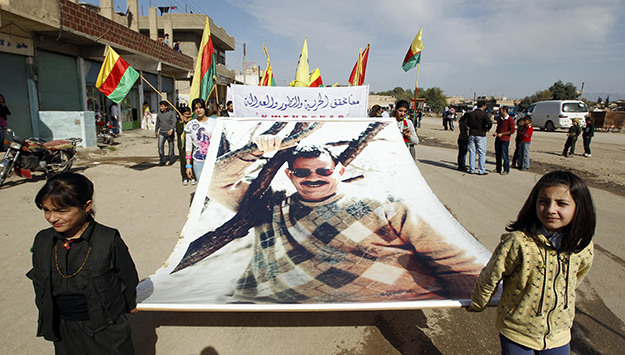
The United States’ unprecedented close air combat support to the PYD, a Syrian Kurdish political party and its associated militia, has helped the PYD drive back the Islamic State’s forces from a long strip along the Turkish border, handing ISIS its greatest defeat in Syria to date. The airstrikes have also enabled the PYD to consolidate its hold on Syrian Kurdish territories, and it has launched an ambitious autonomous governance project creating new administrations to manage local affairs.
MEI’s Syria Initiative seeks to provide insightful and grounded research and analysis on all things Syria in order to better inform a wide range of audiences and to help sustain and shape a more meaningful policy-oriented discussion. Drawing on the expertise of over a dozen renowned scholars, the Syria Program covers all aspects of Syria and its ongoing crises – from political, economic, legal, social, ethnic and religious dynamics, to conflict, insurgency and terrorism and the country’s history and possible futures.