This report explores maritime security conditions in the Mediterranean and the evolving US engagement in the region. As critical infrastructure becomes increasingly vulnerable to sabotage, freedom of navigation is undermined by conflict, and energy disputes generate tension, US policy focus on the region has become fragmented and disengaged. The authors call for a sustained American role to strengthen maritime domain awareness, allied coordination, infrastructure protection, and the capacity to respond when Mediterranean crises affect US and transatlantic interests.
The Multiple Costs of the US–Iran War – From Hormuz to Europe and South Asia: The Widening Economic and Political Geography of the Conflict
Wars are decided by those who hold military power, but their costs are increasingly borne by those who have little or no voice in the decisions that start them. The US–Iran war shows this imbalance very clearly. Its economic consequences have gone far beyond the battlefield and have disrupted energy markets, trade routes, food supplies, public finances and investment in the Gulf, Europe, Africa and Asia. The most striking feature of the conflict, however, is not only the size of the damage but its very unequal distribution.
In less than two decades, a string of offshore discoveries has turned the Eastern Mediterranean into a significant gas-producing region, making Israel an exporter, twice lifting Egypt into the ranks of liquefied natural gas (LNG) exporters, and giving Cyprus finds it has yet to bring to market. This backgrounder explores the potential and challenges of exploiting and managing LNG resources in the region.
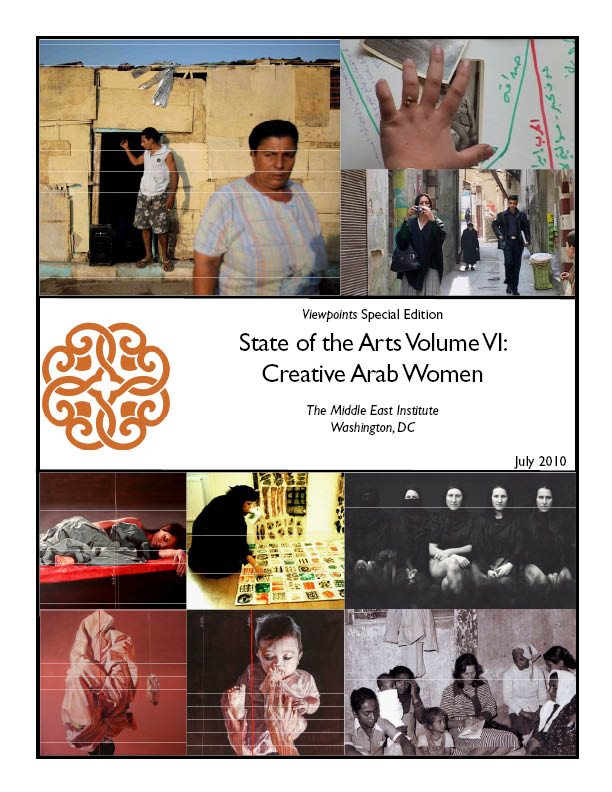
Introduction to The State of the Arts in the Middle East: Volume VI: Creative Arab Women
Creative Arab Women is the sixth edition of the MEI Viewpoints series on the State of the Arts in the Middle East. The 14 essays in this collection offer a glimpse into the rich and varied cultural output of Arab women in the region and the diaspora. Partly reminiscences and partly calls to action, they are essays of survival and empowerment that add a deeply personal dimension to the subject of the role of Arab women as cultural producers. MEI is grateful to Dr.
Throughout history, North African countries (i.e., Morocco, Algeria, and Tunisia) have experienced various forms of migration – internal and external, voluntary and forced, individual and collective, and legal and illegal.
Several months ago on a Tuesday afternoon, a local girls football team was practicing on a dirt field in Sidi Moumen, a notorious 350,000-person shantytown on the outskirts of Casablanca, Morocco. A crowd of boys had gathered along the fence. One of the boys began making comments. “Look at her touch on the ball,” he mumbled to his friend, “where did she learn to play football?” “My five-year old brother has better control,” shot back the other, slapping his friend’s hand and laughing.
Transnational Networks and Local Challenges: Iraqis in Cairo
Originally posted March 2010
It is estimated that over four million Iraqi refugees have fled to neighboring countries in the region since the 2003 war began. While migration continued after the war, the peak of this influx was witnessed particularly in and after 2006 due to the acceleration of violence in central and southern Iraq. More particularly, the majority of these refugees fled due to direct threats to their lives and their immediate families.
The oldest peer-reviewed publication dedicated to the study of the modern Middle East, MEI’s flagship journal covers politics, society, and culture in the region.