Skip to Content
Food Security in a Hotter, Drier North Africa
  • Podcast
  • Food Security in a Hotter, Drier North Africa

    This summer, brutally hot temperatures, deepening water scarcity, and spiking fertilizer costs have put North Africa’s agricultural sector under intense pressure. Host Alistair Taylor is joined by Mohammed Mahmoud, CEO and founder of the Climate and Water Initiative and lead for Middle East Climate and Water Policy at the United Nations University Institute for Water, Environment, and Health, to unpack the region’s food and water security challenges. Drawing on Mahmoud’s new report card on agricultural sustainability in North Africa, they explore the diverging picture across the region, why some countries have weathered the strain better than others, and what it will take to build a more resilient and secure food system.

    July 23, 2026

    Outlook for Sustainable Agriculture in North Africa: Report Card Assessment
  • Report
  • Outlook for Sustainable Agriculture in North Africa: Report Card Assessment

    This report assesses the future sustainability of agriculture across North Africa using a multidimensional approach that considers the dynamics of water, climate, land, and economics. To enable this assessment of sustainable agriculture across the region, the author evaluates water resources reliability, water use efficiency, agricultural land sustainability, and the food sector economy for Egypt, Sudan, Libya, Tunisia, Algeria, Morocco, and Mauritania, and provides recommendations for action.

    June 22, 2026

    The Human Cost of the Strait of Hormuz Closure
  • Podcast
  • The Human Cost of the Strait of Hormuz Closure

    When the Strait of Hormuz closed in March, fertilizer prices spiked within weeks, triggering a food security crisis across North Africa and the Sahel. Host Alistair Taylor is joined by MEI Senior Fellow Intissar Fakir to explore what it means for the region, unpack the link between food security and regional stability, and assess how the strait’s reopening could impact those affected.

    June 18, 2026

    Projects

    Food Security in the Maghreb and Sahel

    North Africa’s Power Shift: Renewable Energy Development and Energy Security

    The Role of Mid-Sized Enterprises in Fostering Growth in MENA’s Clean Energy Transition

    Filter by
    1564 Results
    Big questions for Libya in 2020
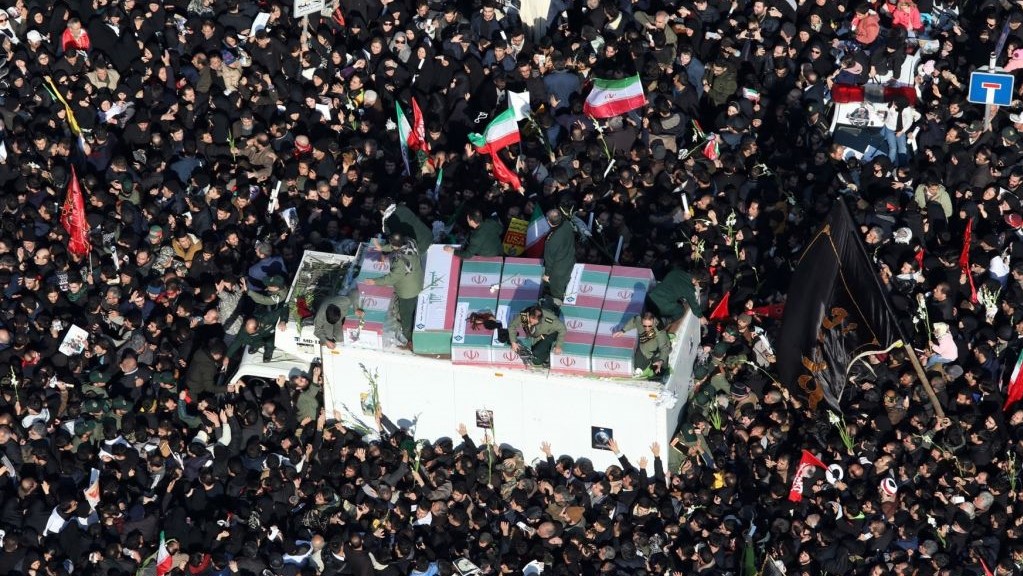
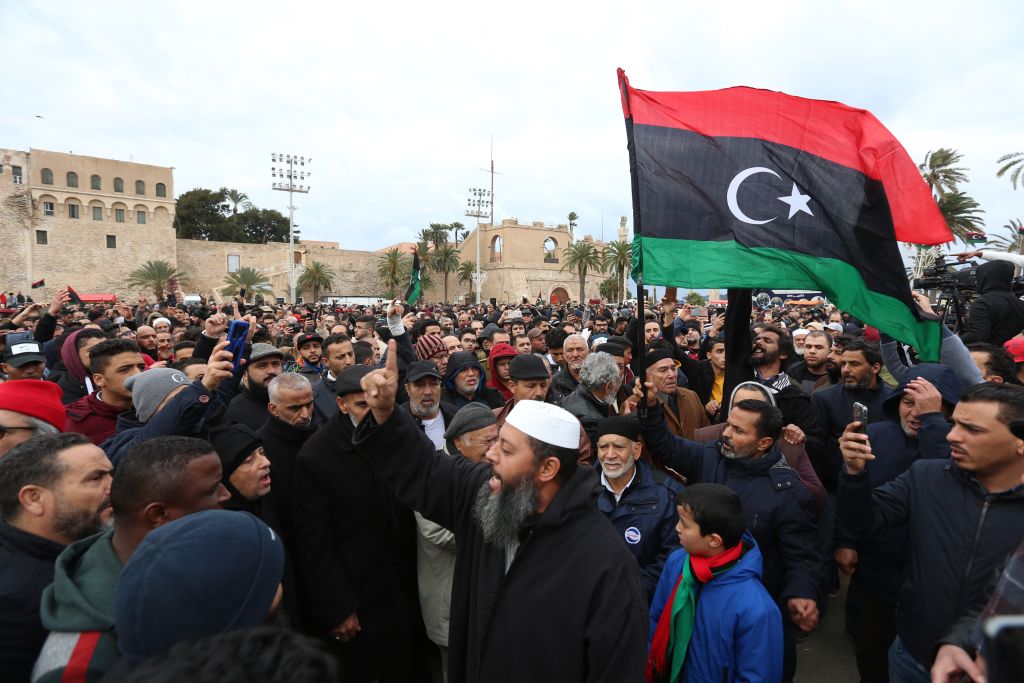
    Thousands of people gather at Martyr's Square within a funeral ceremony held after an airstrike on a military school in the south of the Libyan capital of Tripoli by jets loyal to renegade military commander Khalifa Haftar, in Tripoli, Libya on January 05, 2020.
  • Commentary
  • Big questions for Libya in 2020

    Strong U.S. leadership could still make a difference to counter the threats arising from the ongoing proxy war, but the Trump White House appears mainly to have other things on its mind.

    Algeria remains in crisis
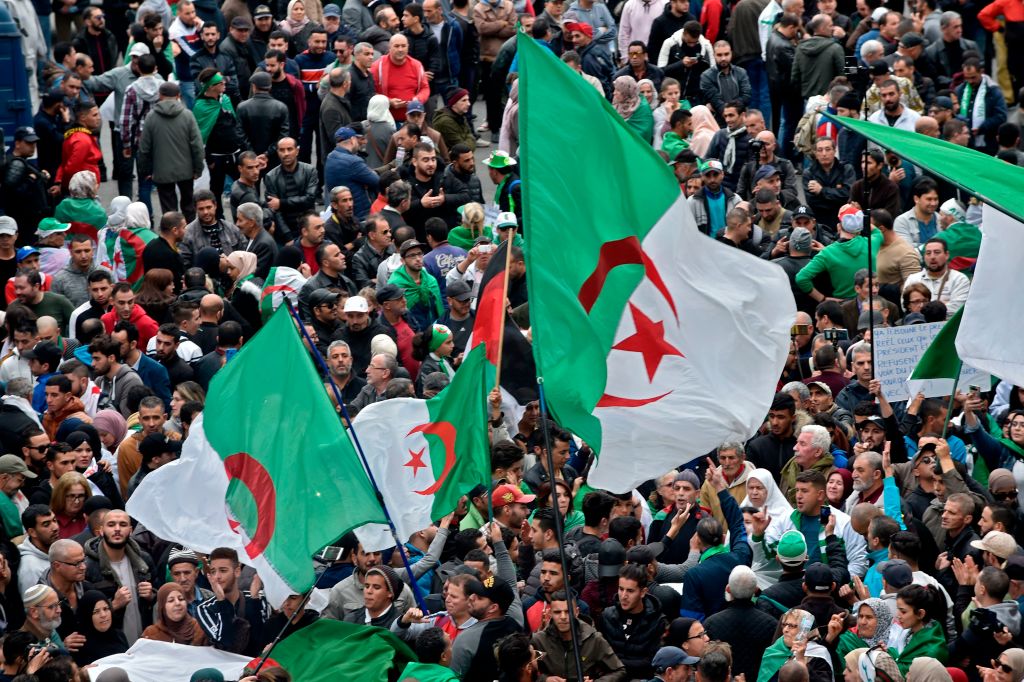
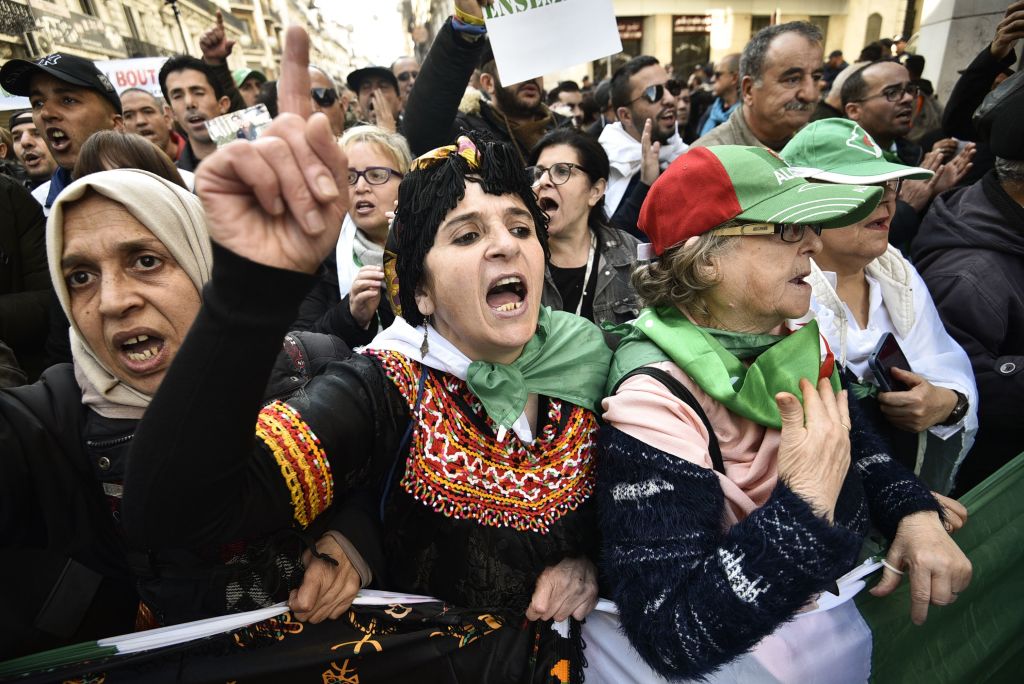
    Algerian protesters take part in an anti-government demonstration in the capital Algiers on January 3, 2020.
  • Commentary
  • Algeria remains in crisis

    The relationship between President Tebboune and the army leadership will be a major factor influencing Algeria’s evolution.

    Reviewing the Middle East in 2019
    Middle East Institute
  • Podcast
  • Reviewing the Middle East in 2019

    In our annual year in review episode, MEI experts Paul Salem, Gonul Tol, Charles Lister, Alex Vatanka, Marvin Weinbaum, and Mirette Mabrouk sit with host Alistair Taylor to discuss the key events across the region in 2019, what surprised them, and where things stand as we head into 2020.

    December 19, 2019

    Libya’s descent into civil war
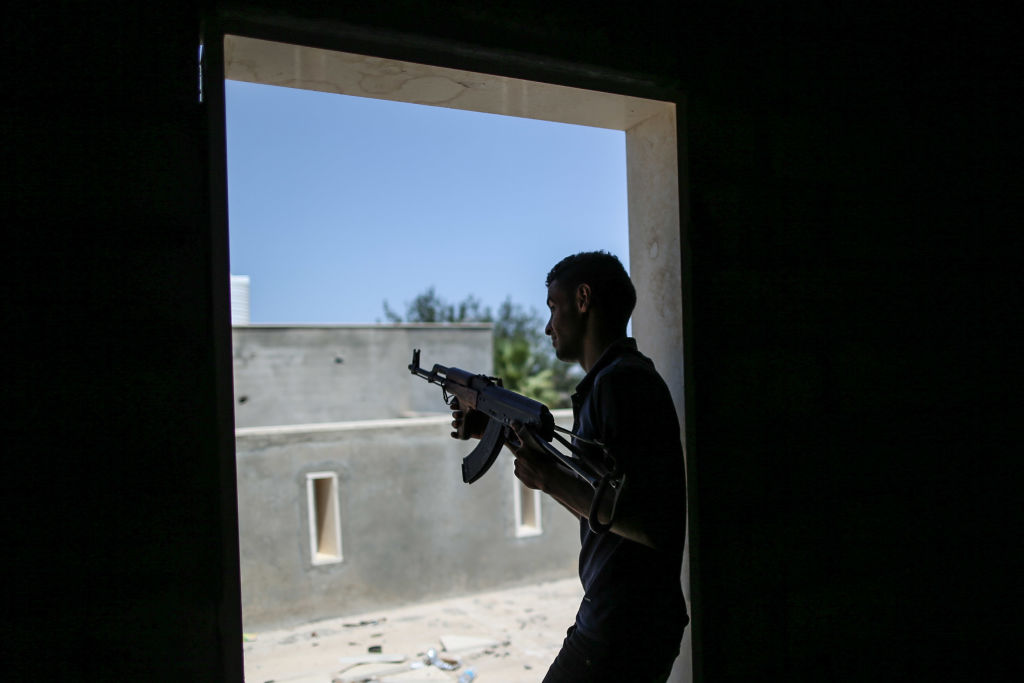
    A fighter of Libya's UN-backed Government of National Accord (GNA) of Fayez Serraj, fires his rifle during clashes with forces of the self-styled Libyan National Army (LNA) led by Libyan strongman Khalifa Haftar, at Al-Khalla frontline.
  • Commentary
  • Libya’s descent into civil war

    The question as 2019 ends is whether foreign forces supporting the conflict will rethink their commitment to military victory and instead work to secure political solutions through compromise.

    Algeria ends 2019 still in crisis
    An Algerian protester lifts a placard in the capital Algiers on December 13, 2019, as he takes part in a demonstration to reject the results of the presidential elections.
  • Commentary
  • Algeria ends 2019 still in crisis

    Newly elected President Abdelmadjid Tebboune and the Army leadership finish the year with doubtful legitimacy and remain at an impasse with a protest movement that has not yet developed visible, coherent leadership.

    Turkey doubles down on Libya
    President of Turkey, Recep Tayyip Erdogan (R) meets chairman of the Presidential Council of Libya, Fayez Al-Sarraj (L) at Dolmabahce Office in Istanbul, Turkey on November 27, 2019.
  • Analysis
  • Turkey doubles down on Libya

    On Nov. 27 the GNA signed an MoU with Turkey seeking to create a shared maritime boundary in the Mediterranean Sea between southwestern Turkey and northeastern Libya. In an overt quid pro quo, this maritime agreement was signed along with a separate MoU to expand security and military cooperation. Thus, it seems clear that Turkey was only able to persuade the GNA to agree to the maritime deal in exchange for increased security support for the GNA-aligned forces fighting the self-styled LNA in Tripoli.

    December 10, 2019

    Could a gas cartel become as powerful as OPEC?
  • Analysis
  • Could a gas cartel become as powerful as OPEC?

    The 12-country Gas Exporting Countries Forum (GECF), which held its latest meeting in Equatorial Guinea on Nov. 28, has never had OPEC’s ability to control energy prices, but that is likely to change as liquefied natural gas (LNG) transforms the gas market from a regional to a global one.  

    December 6, 2019

    Resilience amid turmoil: Russia and Sudan maintain strong ties despite political upheaval
    Russias President Vladimir Putin and the Chairman of the Sovereignty Council of Sudan, Abdel Fattah al-Burhan shake hands during a meeting on sidelines of the 2019 Russia-Africa Economic Forum at the Sirius Park of Science and Art.
  • Analysis
  • Resilience amid turmoil: Russia and Sudan maintain strong ties despite political upheaval

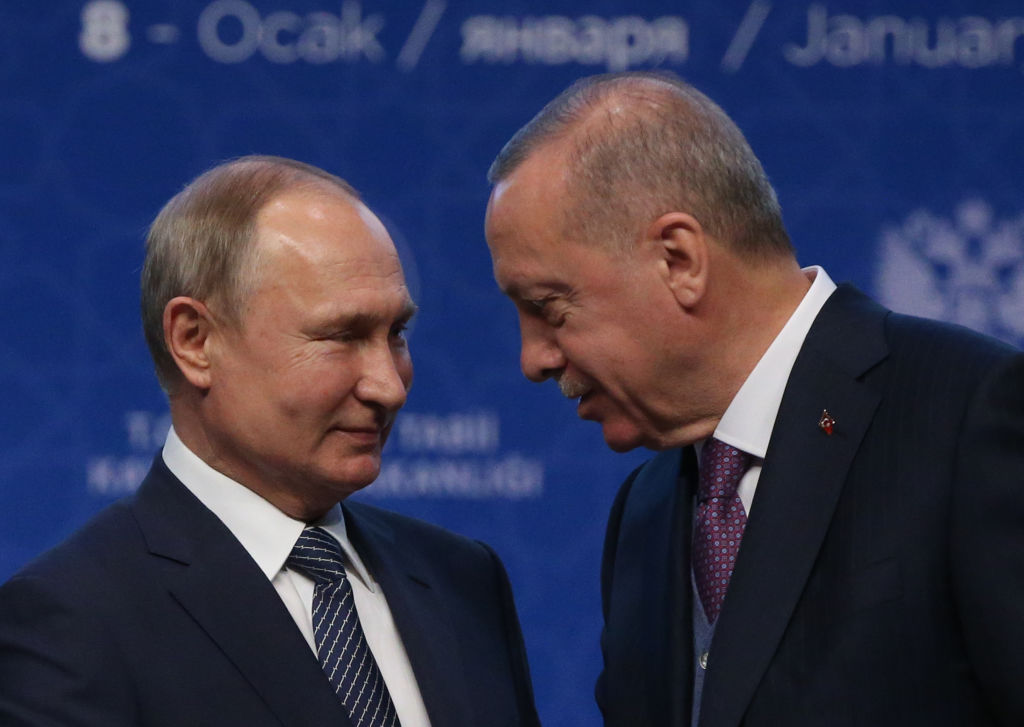
    On Oct. 23, Russian President Vladimir Putin met with Chairman of Sudan’s Sovereign Council Abdel Fattah al-Burhan in Sochi. After their meeting, Putin praised Sudan’s reliability as a Russian ally and said that the formation of the council was a critical step toward a path of “sustainable development” in Sudan. The cordial meeting between Putin and Burhan came less than one month after Russian Foreign Minister Sergey Lavrov met with Prime Minister Abdalla Hamdok on the sidelines of the UN General Assembly and underscored the resilience of the Russia-Sudan bilateral relationship.

    November 26, 2019

    Algeria: A contested presidential election
    Algerians take part in an anti-government demonstration demanding the ouster of officials who served under ex-president Abdelaziz Bouteflika as they marked the 65th anniversary of the country's fight for independence from France.
  • Commentary
  • Algeria: A contested presidential election

    There are two contests underway. One is between the five presidential candidates, who make promises without much detail or even controversy. The larger contest pits the army, which needs a high voter turnout to lend the election credibility, against the hirak, which aims to reduce turnout and limit any boost to the system’s legitimacy.

    Political fragmentation a major challenge as Tunisia’s Ennahda tries to form a government
    Leader of Nahda Movement Rachid al-Ghannouchi attends the first session and oath-taking ceremony of the Tunisian parliament after Tunisia's Supreme Election Council announced results of the parliamentary elections in Tunis, Tunisia on November 13, 2019.
  • Commentary
  • Political fragmentation a major challenge as Tunisia’s Ennahda tries to form a government

    Tunisia’s elections in October swept away many of the dominant political forces, but the Islamist Ennahda retains the largest share of seats in the new parliament. Its leader, Rachid Ghannouchi, was elected president of the parliament on Nov. 13. The Islamist party then announced on Nov. 15 that Habib Jemli, the former junior agriculture minister, should try to form the next government. Jemli, who served under Ennahda prime ministers from 2011 to 2014, has a 30-day period, renewable once, to present a cabinet able to secure a majority vote in the 217-member parliament.

    Othman & Leila Benjelloun receive 2019 MEI Visionary Award
  • Video
  • Othman & Leila Benjelloun receive 2019 MEI Visionary Award

    Philanthropists Othman & Leila Benjelloun received the 2019 Middle East Institute Visionary Award at MEI’s 73rd Annual Awards Gala on November 12 in Washington, DC.

    November 13, 2019

    Read the Middle East Journal

    The oldest peer-reviewed publication dedicated to the study of the modern Middle East, MEI’s flagship journal covers politics, society, and culture in the region.