This article is part of a collection of short essays written by the Fellows of the Middle East Institute to explore aspects of the ongoing war with Iran. The intent of the collection is to help readers see new and unexpected elements of the dynamics and impact of the ongoing hostilities and to think harder, deeper, and broader about the implications of the conflict.
Egypt: How the Iran War Has Affected Egypt’s Calculations
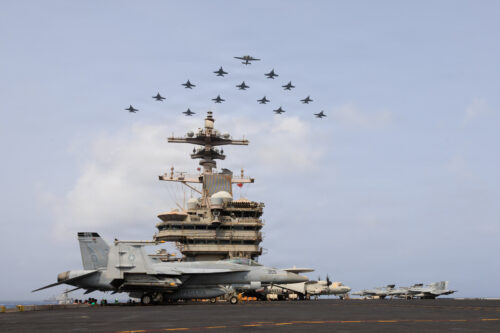
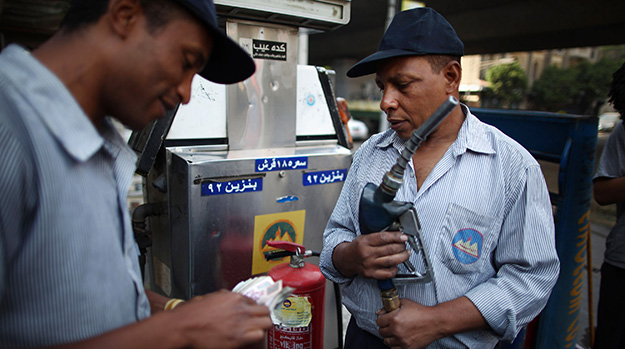
Egypt, which is not party to the war on Iran, has become a target as well as an intermediary in the conflict. As a result, the war has affected Egypt’s future calculations, particularly in three major areas: its economy, its security, and its regional alliances.
Algeria and Morocco have long been at odds, but recent diplomatic moves may signal a widening geopolitical split in North Africa. Hosts Alistair Taylor and Matthew Czekaj are joined by MEI Senior Fellow Intissar Fakir to unpack Algeria’s decision to sever diplomatic ties with the United Arab Emirates and Morocco’s warming relations with both the UAE and Israel. They also explore linkages between these diplomatic shifts and the Western Sahara conflict, Moroccan domestic concerns, particularly in light of this week’s elections, as well as broader regional stability.
It seemed like an ordinary demonstration. Clusters of banner-waving youths marched along the sun-drenched main street of Damanhour, in the heart of Egypt’s Nile Delta, on March 6. But the banners they held, featuring a large cartoonish drop of red blood beside an emphatic “No!,” were directed not at political figures but at Hepatitis C (HCV), a blood-transmitted virus attacking the liver that counts nearly 12 million Egyptians as its victims.
Shifting Allegiances: The Israel-Gaza-Egypt Triangle
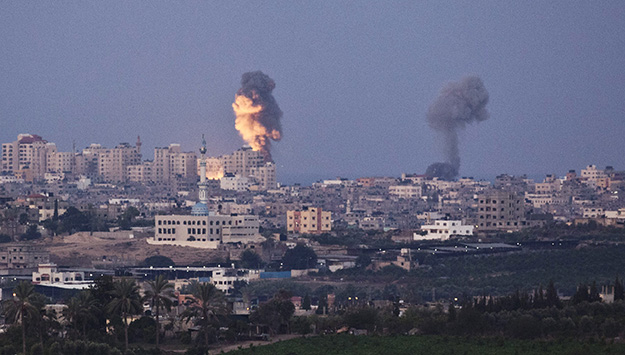
U.S. diplomatic efforts to resolve the conflict between Israel and the Palestinians have in the last year focused on relations between Israel and the Ramallah-based Palestinian Authority, led by PLO chairman Mahmoud Abbas. Yet there is arguably a far more dynamic and perilous front: one that encompasses Israel, Egypt’s lawless Sinai Peninsula, and the Gaza Strip, the latter of which is run by Hamas.
Challenges to State Building after the Fall of Qaddafi
The fall of the Qaddafi regime and the loss of the state monopoly on violence gave way to a duopoly of power in Libya whereby rudimentary “national” forces—under the control of the National Transitional Council (NTC) from March 2011 to August 2012—were established in competition with the non-state “Revolutionary Brigades,” which had borne the brunt of the military struggle against Qaddafi’s forces. Since then, the Revolutionary Brigades have increasingly sought to assert themselves in the political arena.
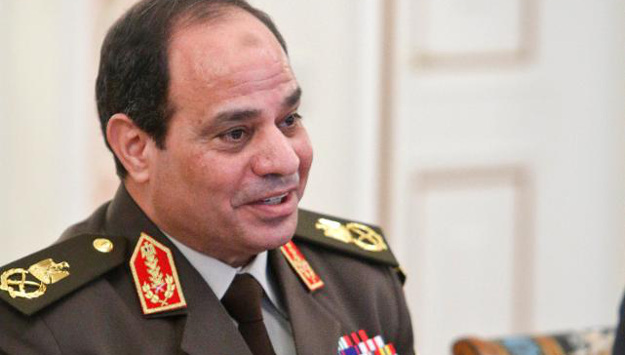
On March 26, Egyptian Field Marshal Abdul-Fattah el-Sisi resigned from the military and announced his presidential bid. What do we know of Sisi’s platform, and what kind of military leadership does he leave behind? MEI spoke with resident scholar Mohamed Elmenshawy about these and other issues.
Will any challengers take on the enormously popular Sisi?
The political crisis in Ukraine and subsequent annexation of Crimea by Russia have sent reverberations throughout the Middle East, where Western and Russian influences continue to weave a complex geopolitical web. MEI interviewed four of its scholars to produce this detailed account of the challenges the conflict poses to the region’s political, security, and economic conditions.
Libyan popular and political support for engaging the international community offers the United States and Western partners an opportunity to help stabilize a North African energy producer and encourage orderly political change. Conversely, a failure to act could have costly, long-term regional and international security consequences. Domestic political limitations to direct U.S. government engagement, along with other issues that compete for attention and resources, are constraints on a more active policy. Moreover, Libyans themselves would not tolerate a dominating U.S. role.
Bad Neighbor, Good Neighbor: Libya-Egypt Relations
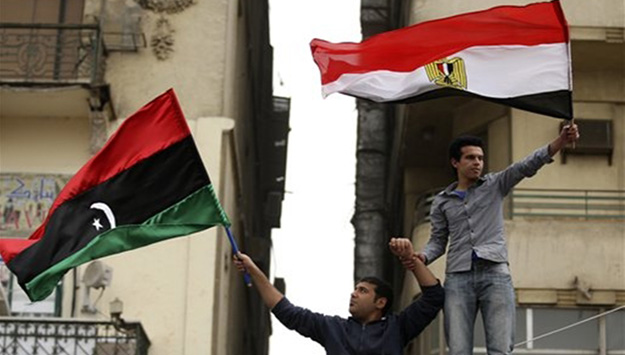
In 2011, many observers predicted that relations between Libya and Egypt would become closer after both countries underwent similar revolutions followed by attempts at democratic transition. But three years later, the realization of this prediction appears unlikely. Political realities and ideological differences have led to a relationship that is contentious at best.
Jawad Nabulsi was looking straight at the policeman the moment he was shot in the face. The black-clad officer raised the barrel of his gun, pointed it directly at Nabulsi’s eyes, and pulled the trigger.
It was 11pm on January 28, 2011. The “Friday of Rage,” as protesters called it, would later be labeled the bloodiest day in the revolution that toppled autocrat Hosni Mubarak.
Coverage of Egypt over the past three years has focused on the dramatic political events, yet it was the dire economic situation that created the pressure for the multiple uprisings. And if economic decline is not reversed over the next few years, Egypt might fall over an economic precipice that risks rendering the country eventually ungovernable. Security and political reform are urgently necessary in their own right, and will have a positive effect on the economy if achieved, but bold structural economic reform is also necessary to reverse Egypt’s downward spiral.
Libya on the Brink: Insecurity, Localism, and the State Not Back In
This essay is part of the Middle East-Asia Project (MAP) series on “’Civilianizing’ the State in the Middle East and Asia Pacific Regions.” The series explores the past and ongoing processes of Security Sector Reform (SSR) in Asia-Pacific countries and examines the steps already taken and still needed in the MENA region. See More
The oldest peer-reviewed publication dedicated to the study of the modern Middle East, MEI’s flagship journal covers politics, society, and culture in the region.