Skip to Content
Food Security in a Hotter, Drier North Africa
  • Podcast
  • Food Security in a Hotter, Drier North Africa

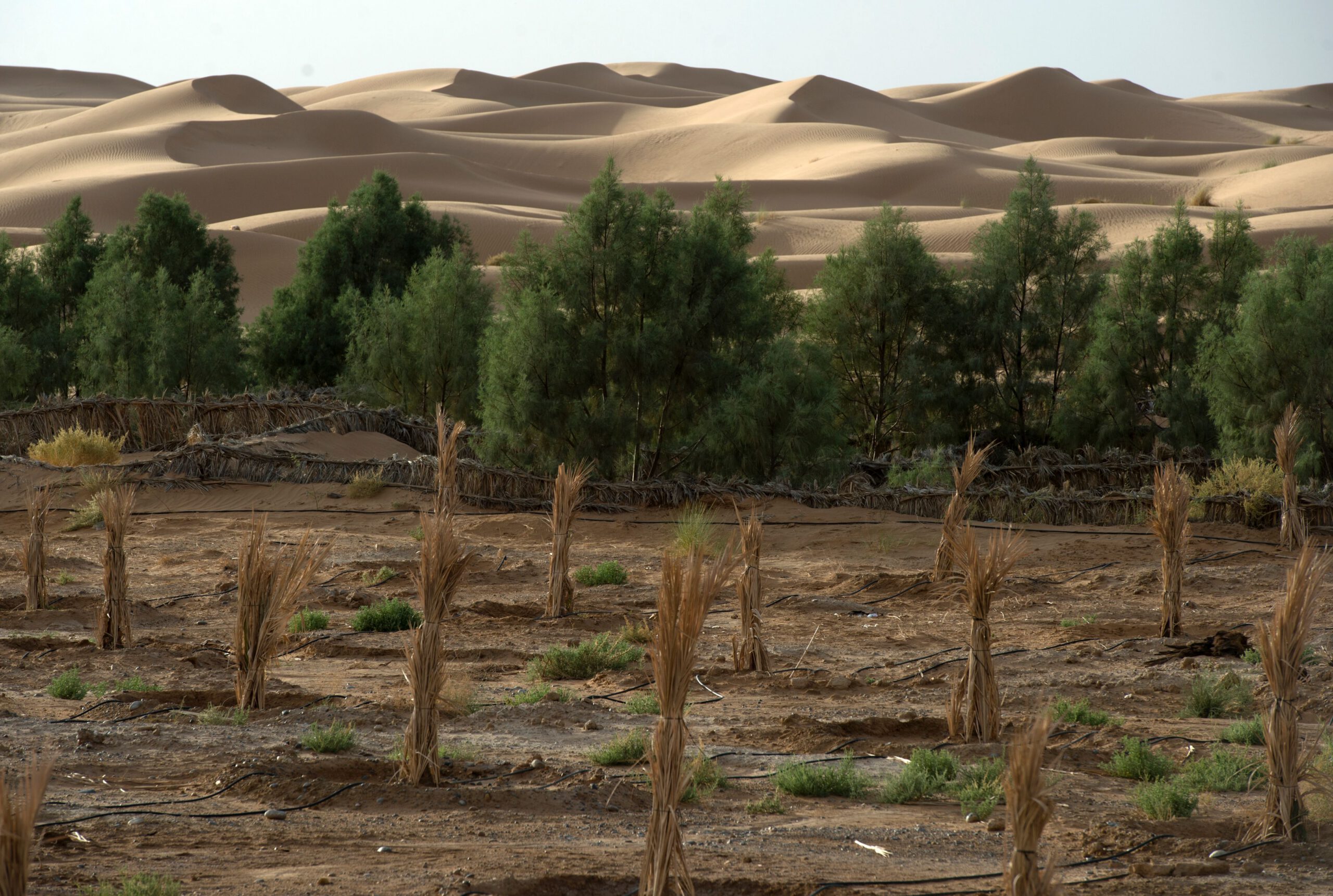
    This summer, brutally hot temperatures, deepening water scarcity, and spiking fertilizer costs have put North Africa’s agricultural sector under intense pressure. Host Alistair Taylor is joined by Mohammed Mahmoud, CEO and founder of the Climate and Water Initiative and lead for Middle East Climate and Water Policy at the United Nations University Institute for Water, Environment, and Health, to unpack the region’s food and water security challenges. Drawing on Mahmoud’s new report card on agricultural sustainability in North Africa, they explore the diverging picture across the region, why some countries have weathered the strain better than others, and what it will take to build a more resilient and secure food system.

    July 23, 2026

    Outlook for Sustainable Agriculture in North Africa: Report Card Assessment
  • Report
  • Outlook for Sustainable Agriculture in North Africa: Report Card Assessment

    This report assesses the future sustainability of agriculture across North Africa using a multidimensional approach that considers the dynamics of water, climate, land, and economics. To enable this assessment of sustainable agriculture across the region, the author evaluates water resources reliability, water use efficiency, agricultural land sustainability, and the food sector economy for Egypt, Sudan, Libya, Tunisia, Algeria, Morocco, and Mauritania, and provides recommendations for action.

    June 22, 2026

    The Human Cost of the Strait of Hormuz Closure
  • Podcast
  • The Human Cost of the Strait of Hormuz Closure

    When the Strait of Hormuz closed in March, fertilizer prices spiked within weeks, triggering a food security crisis across North Africa and the Sahel. Host Alistair Taylor is joined by MEI Senior Fellow Intissar Fakir to explore what it means for the region, unpack the link between food security and regional stability, and assess how the strait’s reopening could impact those affected.

    June 18, 2026

    Projects

    Food Security in the Maghreb and Sahel

    North Africa’s Power Shift: Renewable Energy Development and Energy Security

    The Role of Mid-Sized Enterprises in Fostering Growth in MENA’s Clean Energy Transition

    Filter by
    1564 Results
    The East Moves West
    Middle East Institute
  • Podcast
  • The East Moves West

    Audio recording from The East Moves West

    February 15, 2012

    Egypt's Unfinished Revolution: One Year Later
  • Video
  • Egypt's Unfinished Revolution: One Year Later

    The Middle East Institute is pleased to host Egyptian journalist Ashraf
    Khalil for a discussion of his new book, Liberation Square: Inside the
    Egyptian Revolution and the Rebirth of a Nation, and the political
    landscape in Egypt on the first anniversary of the revolution. This
    book is the first account of the Tahrir Square uprisings from someone
    who was on the ground and witnessed the protests firsthand. Ashraf
    Khalil will analyze the status quo in Egypt today and reasons for both

    February 14, 2012

    Egypt's Unfinished Revolution: One Year Later
    Middle East Institute

    Egypt's Unfinished Revolution: One Year Later

    February 10 – January 1, 1970, February 10 - 12:00 PM – 12:00 AM
    January 1 - 12:00 PM – 12:00 AM

    Middle East Institute, 1761 N Street, NW, Washington, District of Columbia 20036

    Egypt: Islamists vs. Islamists
    Middle East Institute
  • Analysis
  • Egypt: Islamists vs. Islamists

    *This Opinion first appeared in the Huffington Post on December 13, 2011

    The first free and by all accounts fair elections in Egypt mark a major turning point in the country's long history. In what is likely to be a tenuous and trying transition to democracy, Egypt's Islamists won a resounding victory, gaining two-thirds of the vote in the first round of Egypt's parliamentary elections. While many in the West fear that the Islamist victory in this first election will radicalize Egypt, in reality, the situation is far more complex and nuanced.

    December 13, 2011

    Insight From Egypt's First Round of Voting

    Insight From Egypt's First Round of Voting

    December 2 – January 1, 1970, December 2 - 12:00 PM – 12:00 AM
    January 1 - 12:00 PM – 12:00 AM

    Middle, 1761 N St. NW, Washington, District of Columbia 20036

    The New Dynamics of Egypt's Elections
    Middle East Institute
  • Analysis
  • The New Dynamics of Egypt's Elections

    This Opinion first appeared in the Huffington Post on November 11, 2011

    On November 28th, millions of Egyptians will finally breathe a deep sigh of relief as they gather at the polls to vote in the first phase of parliamentary elections following the ousting of the Mubarak regime.

    November 11, 2011

    Libya: A Costly Victory
    Middle East Institute
  • Analysis
  • Libya: A Costly Victory

    This Commentary was first published as an op-ed in Politico on October 21, 2011

    Defense Secretary Leon Panetta asserted recently that critics of the Libyan mission “have been proven wrong.” Now, with the death of dictator Muammar Qadhafi, the secretary’s view is supported by the overwhelming majority of Washington’s foreign policy establishment.

    October 21, 2011

    March 2011: Political Protest and Transformation
  • Analysis
  • March 2011: Political Protest and Transformation

    Amidst the historic turmoil sweeping across the Arab world, in the March 2011 Bulletin, MEJ editor Michael Dunn addresses political empowerment through social media, scholar Wayne White is interviewed on recent political developments, and Joshua Stacher previews his forthcoming article on authoritarian politics and hereditary succession in Syria.

    October 6, 2011

    Women, Shari‘a, and Personal Status Law Reform in Egypt after the Revolution
    Middle East Institute
  • Analysis
  • Women, Shari‘a, and Personal Status Law Reform in Egypt after the Revolution

    Like almost everything else during the uncertain period of the transitional government, the future of personal status law reform is at a crossroads in Egypt. The new constitution (assuming one will exist)[1] may technically have little direct impact on how the country’s laws affect women’s lives, but the legislative process that emerges thereafter most certainly will.

    October 1, 2011

    Read the Middle East Journal

    The oldest peer-reviewed publication dedicated to the study of the modern Middle East, MEI’s flagship journal covers politics, society, and culture in the region.