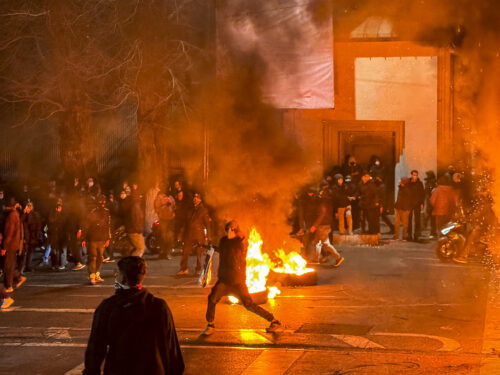
Against the backdrop of the Iranian government’s brutal crackdown on protestors, Brian is joined by Emad Shargi, an Iranian-American businessman who was unjustly detained by the regime in 2018 until his release in 2023. Shargi recounts his firsthand experience in the notorious Evin Prison and offers rare insights into the mentality and tactics of the Islamic Republic. He and Brian also discuss his recommendations for US engagement in Iran and his hopes for the country’s future.
Integration or conflict in northeastern Syria? Ten key points to consider
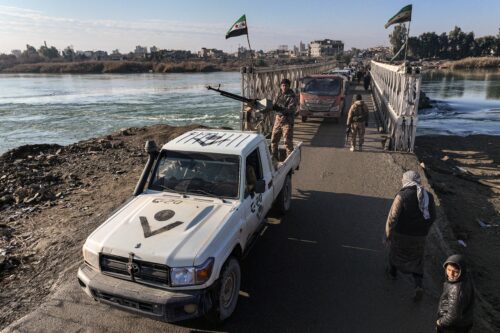
After 10 months of US-mediated talks failed to achieve an integration of the Syrian Democratic Forces into Syria’s transitional state, hostilities erupted in early January. US diplomacy stepped in to try to calm tensions and force through the integration of the SDF’s Kurdish core into the Syrian state. Here are 10 key takeaways and indications of where things could go next.
Ambiguous Uncertainties: Phase Two of Trump’s Plan for Gaza
MEI Senior Fellow Lucy Kurtzer-Ellenbogen joins hosts Alistair Taylor and Matthew Czekaj to discuss the latest developments in Gaza. Nearly four months after the Israeli government and Hamas agreed to President Donald Trump’s 20-point plan, Washington has announced that phase two of the process is now underway. Kurtzer-Ellenbogen, Taylor, and Czekaj examine the humanitarian situation in the devastated coastal strip, assess what phase two could entail, break down how international actors are responding, and explore what would need to happen to realize the plan’s aspirations.
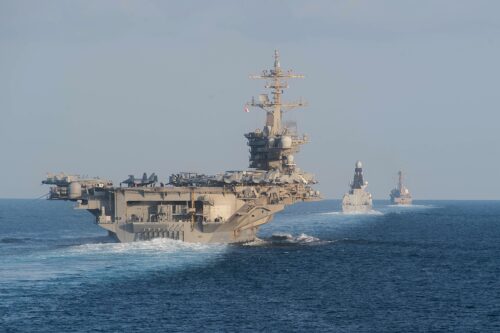
From a US military build-up in the region to Trump’s growing unpopularity at home, several factors could influence his decision on whether or not to attack.
This bonus episode of Middle East Focus features an excerpt from a recent MEI Virtual Briefing recorded on January 20. Director of Communications Zeina Al-Shaib is joined by MEI Affiliate Fatima Abo Alasrar and Associate Fellow F. Gregory Gause III to discuss the dramatically changing dynamics in Yemen’s civil war. Last month, Yemen emerged as a focal point of rising tensions between Saudi Arabia and the United Arab Emirates. The Southern Transitional Council, a UAE-backed southern separatist movement, has disbanded in recent weeks, following fierce clashes with Saudi-backed forces. In the conversation, Alasrar and Gause analyze the political, security, and socio-economic shifts affecting Yemen’s internal dynamics and what all this means for regional stability.
The Pakistan-Afghanistan conflict: A strategic concern for the US
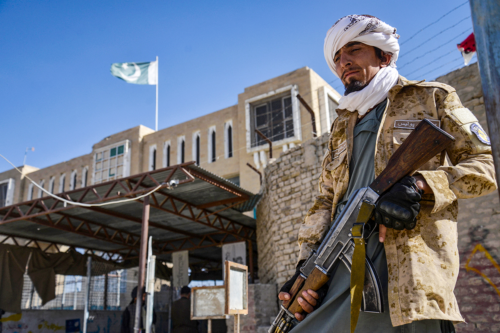
Pakistan’s relationship with the Afghan Taliban has shifted from open sponsorship in the 1990s to a silent partnership following 2001 to alienation and belligerence since 2021. Their current conflict, which comes at great cost to both countries and seems to have no easy military or political resolution, also poses a threat to the stability and prosperity of neighboring states. Although American strategic interests in the region greatly diminished following the United States’ military withdrawal from Afghanistan in August 2021, the region’s altered political dynamics have prompted a growing American engagement with Pakistan and tentatively with Afghanistan. At the same time, the US has become a factor in how both Islamabad and Kabul have come to form their national security strategies.
Breaking News Brief: Damascus and the Syrian Kurds Come to Blows
MEI Senior Fellow Charles Lister joins hosts Alistair Taylor and Matthew Czekaj to unpack the latest developments in Syria, as a tenuous cease-fire takes hold after several days of intense fighting between the Syrian army and the Kurdish-led Syrian Democratic Forces (SDF). Their discussion explores the drivers of the conflict, the prospects for a lasting deal that would integrate the SDF into the Syrian military, as well as the role and perspective of key external actors, including the US, Turkey, and Israel.
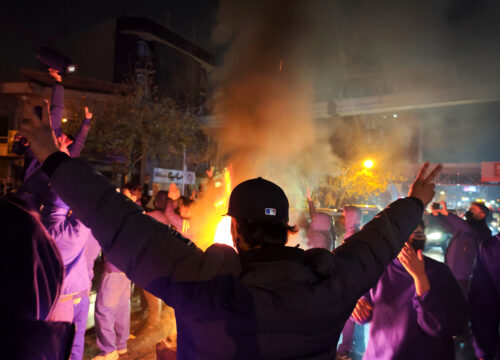
Brian sits down with Behnam Taleblu, Senior Fellow at the Foundation for Defense of Democracies, to unpack the ongoing protests in Iran and what this moment reveals about the long struggle between the state and the street. They discuss the regime’s brutal crackdown, the prospect of US intervention, and what both could mean for the future of the Islamic Republic. The episode centers on agency, imagination, and the possibilities facing Iranians at a critical juncture in the country’s history.
Iran’s coming reckoning: Regime collapse is likely — democracy is not
The collapse of the Iranian regime in its present form now seems more plausible than its survival as a functioning state. Yet the emergence of a democratic Iran remains far from certain. Between these two outcomes lies a volatile and dangerous middle ground. But much will depend on four factors.
What Ankara sees in Riyadh — and why it still needs Abu Dhabi
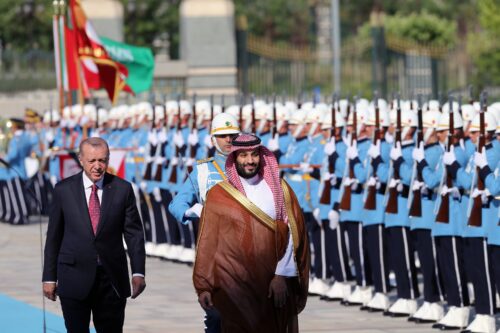
As the rivalry between Riyadh and Abu Dhabi sharpens in Yemen and beyond, Turkey has begun edging closer to Saudi Arabia, sparking claims that a new regional order is taking shape: a Turkey-Saudi axis backed by a NATO-like defense architecture, implicitly aligned against Israel and the United Arab Emirates. This reading overstates the case.
From Peripheries to Tehran: Iran’s New Geography of Protest
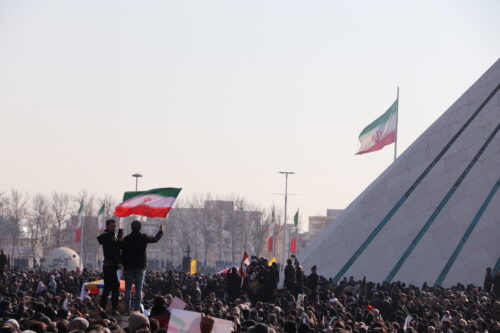
Iran is once again in the midst of nationwide unrest. Protests that erupted in late 2025—initially driven by an acute economic crisis rapidly spreading across the entire country—are ongoing. Whether this latest wave culminates in revolutionary rupture, regime adaptation, or a familiar cycle of repression and exhaustion remains uncertain. What is already clear, however, is that the structural forces animating the unrest extend far beyond the present.
At the heart of Iran’s protests lies a set of sharp and enduring regional disparities that have long shaped patterns of development, political control, and social mobilization. These center–periphery divides have repeatedly rendered Iran’s border provinces more vulnerable to deprivation, marginalization, and protest, while allowing the political and economic core to absorb shocks with greater resilience. Today, those divides are under unprecedented strain, as economic hardship is no longer confined to the margins but increasingly shared across the country.
Potential US military strikes on Iran: This won’t be another 12-Day War
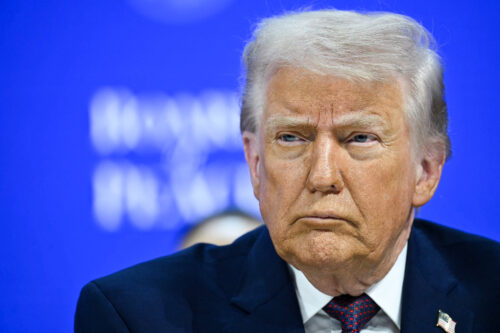
President Donald Trump has sharply warned the Iranian regime to halt its brutal crackdown on protesters. Amid speculation that the US is preparing for military action in Iran, Washington should take the lessons and fundamentally different context of its successful June 2025 operation against the Islamic Republic into account as it plans for how to respond.
Iran protests seem different. They may lead to real change.
People are not protesting because they suddenly discovered activism. They are protesting because the habits of coping and waiting for conditions to improve have finally stopped working.
How Damascus and the SDF came to blows in Aleppo — and what might come next
After months of building tensions, full-blown hostilities erupted between Syria’s transitional government and militia fighters linked to the Syrian Democratic Forces (SDF) in Aleppo on January 6. Through four days of fighting, government forces have now assumed full control of Syria’s second city, after expelling SDF-linked forces from its northwestern districts.
From coalition to confrontation: Saudi-UAE rivalry in Yemen and its regional implications
The final days of 2025 marked a turning point in the Middle East, as competition between Saudi Arabia and the United Arab Emirates in Yemen spilled out into the open. Tensions between the two coalition partners, which jointly launched a military intervention in Yemen in 2015, have simmered for years and are now rapidly escalating, with far-reaching implications for both Yemen and regional security more broadly.