Environment and Sustainable Development in the Maghreb
The Maghreb extends about 2,000 kilometers on either side of the Greenwich meridian (-13° West from Cabo Jubi and 11.08° East to Kelibia) and is located on the same longitude as Europe. Although the Maghreb forms a single climatologic and geographical unit, it is a diverse landscape of mountains, fertile areas, and steppes. Nevertheless, the similarity of climate, geography, and culture in the Maghreb provides a solid foundation for developing a common environmental strategy.
Internationalization of Higher Education in Jordan
There is a growing need in Jordan for universities to establish joint programs with overseas universities in countries such as the United Kingdom and to uphold partnerships with universities in the United States, Europe, and the Gulf states. Public universities are already highly regarded. Private universities are also seeking partnerships or joint programs with foreign institutions.
Benefitting from the Knowledge Economy? Examining Secondary Education Reform in Jordan
Jordan today, in spite of the scarcity of its natural resources, is at the forefront of the region’s states in several areas, primary among them are education, economic growth rates, and the qualifications of the Jordanian youth who have always proved their excellence nationally and abroad.
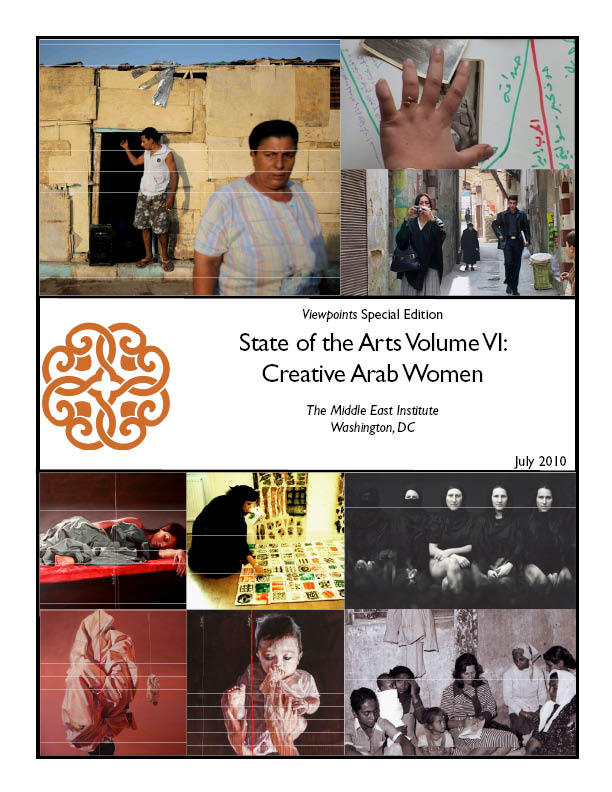
Introduction to The State of the Arts in the Middle East: Volume VI: Creative Arab Women
Creative Arab Women is the sixth edition of the MEI Viewpoints series on the State of the Arts in the Middle East. The 14 essays in this collection offer a glimpse into the rich and varied cultural output of Arab women in the region and the diaspora. Partly reminiscences and partly calls to action, they are essays of survival and empowerment that add a deeply personal dimension to the subject of the role of Arab women as cultural producers. MEI is grateful to Dr.
Throughout history, North African countries (i.e., Morocco, Algeria, and Tunisia) have experienced various forms of migration – internal and external, voluntary and forced, individual and collective, and legal and illegal.
Al-Wihdat: The Pride of the Palestinians in Jordan
“Wahid, itnen, talagha ya Abu Hussein” (One, two, divorce her Abu Hussein), Al-Faisali supporters sing, as their soccer team plays against Al-Wihdat.[1] Al-Faisali is the club associated with ethnic Jordanians, while Al-Wihdat is the club of the Palestinians.
Several months ago on a Tuesday afternoon, a local girls football team was practicing on a dirt field in Sidi Moumen, a notorious 350,000-person shantytown on the outskirts of Casablanca, Morocco. A crowd of boys had gathered along the fence. One of the boys began making comments. “Look at her touch on the ball,” he mumbled to his friend, “where did she learn to play football?” “My five-year old brother has better control,” shot back the other, slapping his friend’s hand and laughing.
Introduction to The State of the Arts in the Middle East: Volume IV
Literature, visual art, and photography not only serve an aesthetic purpose, but often act as mediums through which their creators explore deeply personal experiences and their broader social implications. In this, the fourth volume of MEI’s “The State of the Arts in the Middle East,” Najat Rahman considers the works of the Palestinian artists Emily Jacir and Eman Haram, and W. Scott Chahanovich (with Pauline Pannier) discusses the memoirs of the Moroccan-born writer Abdellah Taïa.
The Middle East Institute is proud to host Moroccan scholar and author Dr. Mohsine El Ahmadi. Dr. El Ahmadi has written extensively on Islamist movements in Morocco and will examine the government’s efforts to fight radical Islamist movements in the wake of the Casablanca bombings of 2003.