Skip to Content

Research & Commentary Results

Filter by
1064 Results
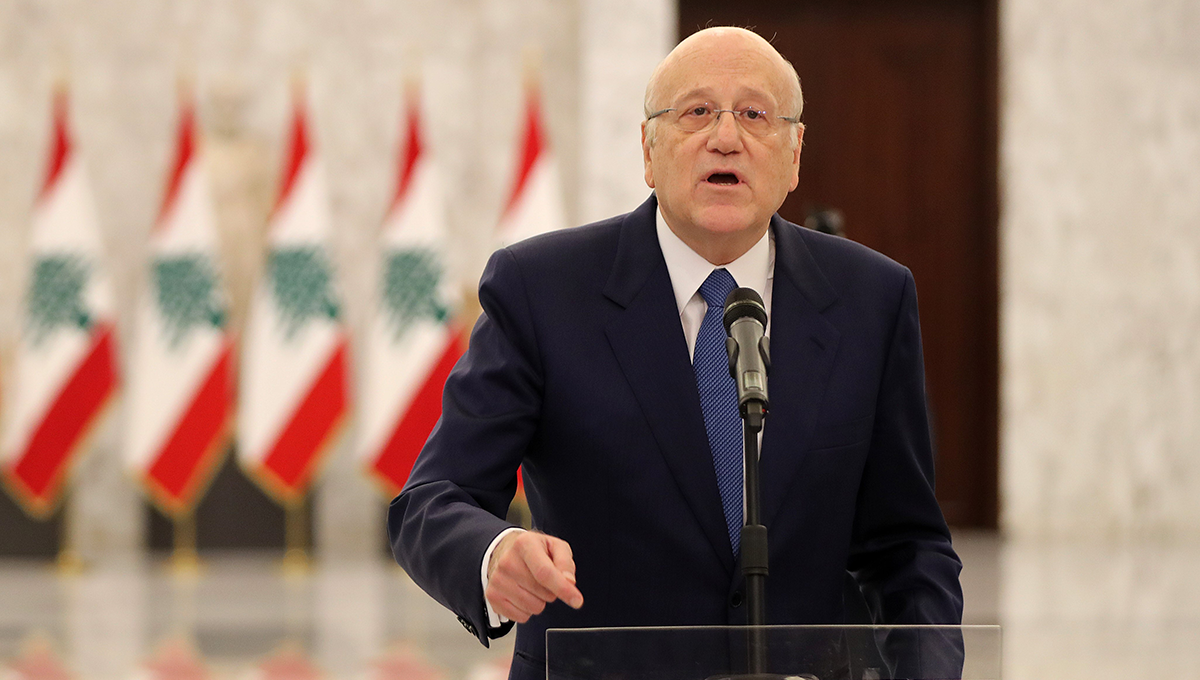
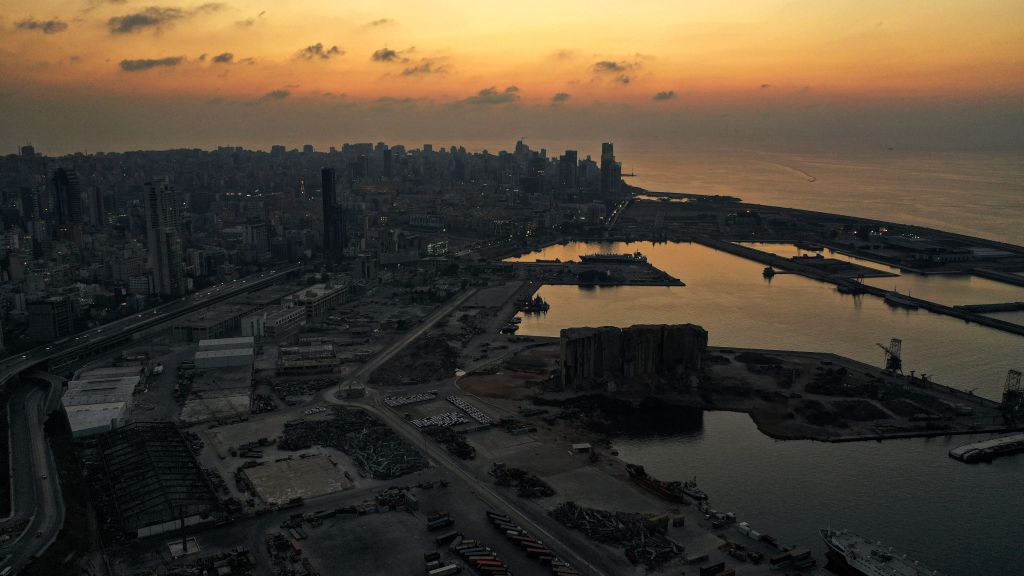
The consequences of Lebanon’s constitutional crisis
Photo by Valery SharifulinTASS via Getty Images
  • Analysis
  • The consequences of Lebanon’s constitutional crisis

    Lebanon is currently facing an unprecedented constitutional crisis that, if left to simmer, will further worsen the country’s numerous predicaments. Three decades after the Ta’if Agreement that ended the 1975-90 war, officials and warlords failed to implement a real reconciliation that could usher in civil order in a country known for its intrinsic vulnerabilities. Although a diverse society, Lebanon has always suffered from inherent political contradictions and currently agonizes over — among other calamities — major constitutional and political crises that, even though they are engulfed by crumbling socio-economic conditions, remain far more threatening than most imagine. How can the Lebanese put an end to such ongoing deterioration? And can Lebanon’s “business-political” class resolve some of the many crises confronting the country?

    September 20, 2021

    East Med gas needs clean tech and regional integration to support investment case
    Photo by Athanasios Gioumpasis/Getty Images
  • Analysis
  • East Med gas needs clean tech and regional integration to support investment case

    The viability of Eastern Mediterranean natural gas resources has long been a source of debate for reasons including cost considerations, market demand, and regional geopolitical tensions. The past couple of years have further complicated the debate, introducing new questions about the role of these resources in supporting post-pandemic economic recovery or helping more advanced markets achieve net-zero policies by replacing coal and other fuel sources (a particularly relevant topic of debate given Europe and Asia are key export targets for East Med gas).

    September 14, 2021

    Mega-projects and Small Enterprises: Understanding Saudi Arabian Banks’ Role in Economic Development
    G20 Saudi Arabia/Handout to Xinhua via Getty Images
  • Analysis
  • Mega-projects and Small Enterprises: Understanding Saudi Arabian Banks’ Role in Economic Development

    Vision 2030 promises a transformation of Saudi Arabia’s economy, and the financial sector will be crucial to achieving this. The sector will facilitate private investment focusing on small and medium-sized enterprise (SME) financing, fund mega-projects, and be a driver for diversifying away from oil. As a result, banks’ role must go from being distributive and largely passive to developmental and active. This article will highlight how the role of the Saudi banking sector has been transformed in the last five years and how its composition is changing to cope.

    September 8, 2021

    Baghdad, Beirut, and the politics of Lebanon’s power crisis
    Photo by AFP via Getty Images
  • Analysis
  • Baghdad, Beirut, and the politics of Lebanon’s power crisis

    On July 24, Beirut and Baghdad signed a governmental framework agreement under which Iraq pledged 1 million tons of heavy fuel oil to Lebanon over a full year.

    September 7, 2021

    In Afghanistan, the Gulf Arab states stepped up
    Photo by Jimmie Baker/U.S. Army via Getty Images
  • Analysis
  • In Afghanistan, the Gulf Arab states stepped up

    We rarely miss an opportunity to criticize our Gulf Arab partners — sometimes rightly so — for not doing enough to safeguard collective interests. But one must acknowledge that on Afghanistan, and especially our just-completed exit from the country, most of our Gulf Arab partners absolutely shined. They deserve a ton of credit for the role they played in our large, challenging, and deadly evacuation — a role which was nothing short of indispensable.

    September 1, 2021

    Sectarianism and ideology: The cases of Iran and Saudi Arabia
    Photo by Michael Gruber/Getty Images
  • Analysis
  • Sectarianism and ideology: The cases of Iran and Saudi Arabia

    Many analysts oversimplify the political conflict between Iran and Saudi Arabia as one driven by sectarianism or Shi’a-Sunni tensions that has shaped the two states’ outlook and actions in the Middle East. However, their political differences are actually much more complex and deeper rooted.

    August 27, 2021

    Saudi Arabia Returns
    Photo by Saudi Royal Council/Anadolu Agency via Getty Images.
  • Analysis
  • Saudi Arabia Returns

    At the dawn of the Biden era of American foreign policy, a more mature, realistic Saudi foreign policy is emerging to match the shifting signals from Washington. In some measure, the Saudis are readopting elements that traditionally characterized their policy preferences before the meteoric rise of Crown Prince Mohammed bin Salman (MbS), the kingdom’s de facto ruler.

    Hezbollah, America, and the race to supply Lebanon with power
    Photo by DYLAN COLLINS/AFP via Getty Images
  • Analysis
  • Hezbollah, America, and the race to supply Lebanon with power

    Amid typical governmental absenteeism, Hezbollah’s Secretary-General Hassan Nasrallah announced on Aug. 19 that the party had secured fuel shipments from Iran. He asserted that the first of many fuel tankers would set sail to Lebanon that same day. Hours later, U.S. ambassador to Lebanon Dorothy Shea declared that the U.S. was working closely with Egypt, Jordan, and the World Bank to find solutions to Lebanon’s crippling fuel shortages. Shea’s comments imply a U.S. willingness to loosen Caesar Act restrictions that would otherwise prevent Lebanon from importing natural gas and electricity through Syria from Egypt and Jordan respectively. The two announcements have been in the making for weeks, but both come at a time when Lebanon’s physical and human infrastructure is crumbling in the absence of essential fuel supplies and energy sources.

    August 20, 2021

    Lebanon is a tinderbox, and Lebanese politicians have started dropping matches
    Photo by Sam Tarling/Getty Images
  • Commentary
  • Lebanon is a tinderbox, and Lebanese politicians have started dropping matches

    Premeditated political paralysis and the absence of economic leadership have brought Lebanon to its knees. Critical infrastructure has collapsed. Reliable electricity and safe water provision are rare. Hospitals and medical services are crippled by the lack of power, medications, and supplies. Food security is at risk for the majority of the population. Desertions from the ranks of security forces are growing. A nationwide security collapse is increasingly likely. The humanitarian collapse is already here.

    August 19, 2021

    The race to reset the Middle East's maritime map
    Photo by Xinhua/Wu Lu via Getty Images
  • Analysis
  • The race to reset the Middle East's maritime map

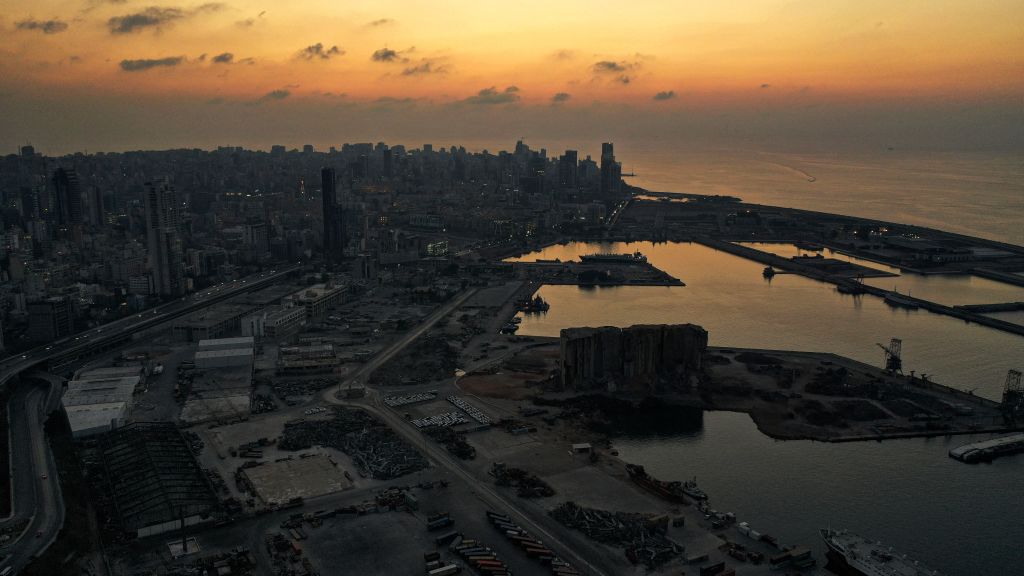
    One of the most consequential changes in the Middle East’s geopolitical map is happening at the water’s edge. Along the entire eastern rim of the Mediterranean basin, global and regional actors are engaging in a spate of port capacity expansions, new private port construction, and the sell-off of major state-owned ports that will determine who sits atop the region’s global trade flows for decades to come. The international competition to rebuild Beirut’s port is one key puzzle piece in this larger process that is reconfiguring the Levant’s maritime commercial architecture and, as a consequence, the geopolitical contours of the Middle East.

    The possibility that the Lebanese government could opt for China to reconstruct Beirut’s port has raised alarm in Washington and European capitals given China’s already outsized commercial port presence in Egypt, Israel, and Greece. Increased Chinese involvement in Lebanon’s port operations could consolidate Beijing’s hold over the commercial connectivity architecture of the Levant. Re-orienting global commercial flows between Europe, the Middle East, and Asia according to Beijing’s priorities would make China’s Belt and Road Initiative a dominant organizing principle in the international relations of the Middle East. The most effective way to offset China’s ambition may be to facilitate Mediterranean rivals France and Turkey to jointly rebuild Beirut’s port.