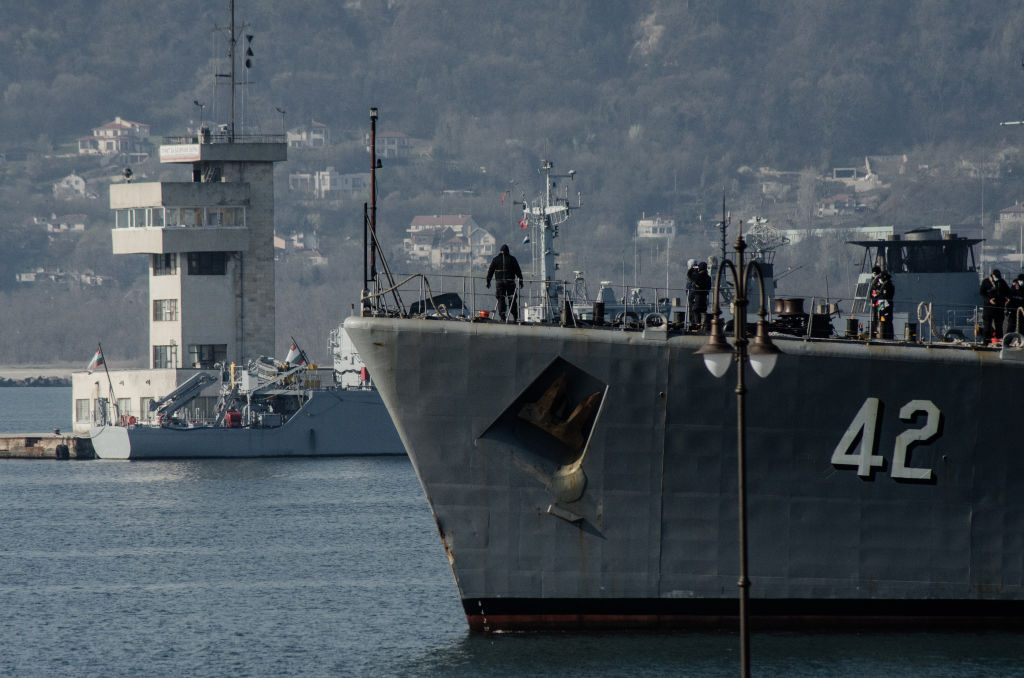
Ukraine is an intractable problem, made worse by a lack of strategy
There are three clear steps the Biden administration must take if it hopes to de-escalate the crisis with Russia in Eastern Europe without being drawn into conflict. First, recognize that the Normandy Format has failed. Second, take the lead on peace negotiations with Russia. And third, shape a strategy for the Black Sea region.
It looks like 1939 in Kyiv. Is Ukraine this century’s Poland?
Up until late on Tuesday, April 13, Russia seemed poised to invade Ukraine. An eleventh hour phone call between U.S. President Joe Biden and Russia’s President Vladimir Putin – and a non-specific agreement between the two to hold a bilateral summit – seems to have halted Moscow’s military for now. But an expanding presence of Russian troops on the border with Ukraine in the Eastern Donbas region and Crimea continues. Concurrently, the Black Sea is turning into a Russian lake due to a buildup of Russian naval power. This has more than one observer asking just how soon a full-scale invasion of Ukraine could become reality – and what follows next from such a conflict.
Bulgaria in the Black Sea: Defending against Russian hybrid warfare
As a NATO and EU member, Bulgaria has consistently been a target of the Kremlin’s hybrid warfare. Moscow is pursuing a calculated and well-planned policy aimed at influencing domestic politics in Bulgaria, with a view of preventing the country from becoming a robust NATO regional security provider. This is especially important for the build-up of the Alliance’s presence in the Black Sea.
Repairing regional and global relationships through cyber diplomacy
Under mounting pressure to define and execute its foreign policy to “restore U.S credibility,” the Biden administration needs to carefully consider its focal points in the Middle East, especially in light of the region’s recent realignment following the signing of the Abraham Accords. Luckily, through cyber diplomacy and norm setting, the administration can restore its credibility without abandoning its core ideals, while also nurturing relationships in the Middle East and beyond. Such cyber diplomacy could involve both engaging with partners to strengthen rules-based frameworks around acceptable state behavior in cyberspace and using cyber to leverage wider diplomatic aims.
As tensions grow, a strong Georgia-Ukraine partnership is essential for Black Sea security
New strategic alliances are being forged across the Black Sea in an attempt to counterbalance Russian influence in the region. The Georgia-Ukraine strategic partnership is complex and multifaceted. Despite diplomatic obstacles and how relatively new it is, the relationship is already making a difference to Black Sea security. On trade, security, or Euro-Atlantic integration, Georgia and Ukraine have realized they are louder when they speak with one voice. However, Russia’s military buildup on Ukraine’s border and in the Black Sea demonstrates that regional peace cannot be achieved without the support of the United States. Greater support is needed as Ukraine and Georgia continue to fight Russian hybrid warfare across the spectrum.
The cyclical futility of governance by TikTok in the Middle East
When headlines flashed this month about the Peshawar High Court’s decision in Pakistan to yet again ban the controversial video-sharing app TikTok, you might have been tempted to scroll away in boredom. After all, who hasn’t banned TikTok these days?
The data centers industry: The GCC’s new oil fields
Close observers of policy trends in the GCC will notice that digital transformation and data governance are becoming vital issues in the region. Over the last decade, Gulf countries have introduced ambitious plans to digitally transform their public and private sectors, with the goal of providing reliable, rapid, and efficient public and private services.
Energy transition and climate change efforts in the Black Sea
The aim of COP21 in Paris was to establish global consensus and a binding agreement for climate change mitigation. And it did so, setting a goal to limit global warming to “well below 2 degrees Celsius” compared to preindustrial levels while pursuing efforts to stay even within the 1.5 degrees Celsius threshold.
The geopolitics of space: Why did the UAE send a probe to Mars?
On Feb. 9, 2021, the UAE made history when its Hope Probe reached Mars and communicated back to Earth. This made it just the sixth member of the elite group of countries that have reached the Red Planet, and the first Arab nation to do so. The UAE stressed that the Mars mission is a success for all Arabs and this significant scientific feat positions Abu Dhabi not just as a leader in the Middle East, but also as an important global player in space.
Opportunities for a stronger NATO in the Black Sea under Biden
The foreign policy priorities of President Joe Biden suggest greater commitment to NATO Allies and decisive steps to counter Russian subversion in Europe.
Chinese Technology in the Middle East: A Threat to Sovereignty or an Economic Opportunity?
Recent moves by Chinese tech giants have raised concerns in Washington about Beijing’s technological outreach to developing nations. To stem the international growth of these companies, the U.S. has discouraged countries from adopting Chinese technologies through efforts like promoting the Clean Network Initiative. Countries across the globe often must choose between Chinese or Western technology, and these choices have broad implications.
Definitional doom: How Iran and Israel derail legal application in cyberspace
Despite the importance of cyberattacks, little has been written about the relationship between these attacks and the applicable law. States are still struggling with controversies involving definitions, even though there is wide applicability of both laws and norms in this context. As a result, cyberspace remains relatively anarchic and the continued controversies have impeded further progress. Although the global discussion has only just begun, it is clear that the rising prevalence of state-led cyber operations warrants a thoughtful, innovative, and immediate regulatory response. Pressure has been building on the governments of the Middle East to join the conversation as their relevance and power in the cyber domain grows.
Cyber violence against women is defined as a form of gender-based violence (GBV) carried out through digital means. The COVID-19 pandemic has drastically heightened the risk and incidence of violence against women both online and offline: the Australian eSafety Commissioner reported a 50% increase in domestic and cyber violence reports since March 2020. Globally, Facebook remains the most common platform for gendered violence online, followed closely by Instagram and WhatsApp. These developments show that special consideration must be given to the role of digital platforms in facilitating violence against women, and that policy solutions regarding violence against women must also consider the online context where that violence often takes place and escalates in plain sight.
Black Sea Connectivity in the South Caucasus is the latest report from MEI’s Frontier Europe Initiative. Dr. Mamuka Tsereteli, explores the potential for greater trade connectivity between Europe and wider Central Asia via the Black Sea and the South Caucasus.