Skip to Content

Research & Commentary Results

Filter by
1973 Results
Pensions, sovereign wealth funds, and industrial policy in the Gulf: A look at fund consolidation
Photo by HAITHAM AL-SHUKAIRI/AFP via Getty Images
  • Analysis
  • Pensions, sovereign wealth funds, and industrial policy in the Gulf: A look at fund consolidation

    The last few years have seen a lot of consolidation in Gulf financial sectors. Not only do these mergers create economic benefits, the merged entities also become potent tools for economic development. The mega-funds and other major financial institutions are part of a trend where Gulf political elites sidestep ossified bureaucracies and instead centralize power in private entities over which they have even more control.

    July 18, 2022

    Crown Prince Mohammed bin Salman’s people
    Photo by FAYEZ NURELDINE/AFP via Getty Images.
  • Analysis
  • Crown Prince Mohammed bin Salman’s people

    Crown Prince Mohammed bin Salman has surrounded himself with those who would indulge him and pose little threat. His circle comprises younger, less experienced but presumably loyal princes in key ministerial positions as well as a few select, savvy, experienced older half-brothers and uncles loyal to his father. There are also several notable royal holdovers from smaller family branches, the odd competent technocrat, and a cadre of minions from across the military and security agencies.

    July 14, 2022

    Urban pollution across the Middle East and Black Sea regions: Causes and mitigation measures
    Photo by Artur Widak/NurPhoto via Getty Images
  • Analysis
  • Urban pollution across the Middle East and Black Sea regions: Causes and mitigation measures

    The latest IPCC reports clearly indicate that cities — responsible for up to 72% of global emissions — need to be redesigned to stand a chance against the climate crisis. The urban communities of the Middle East and Black Sea regions face some of the most difficult climate change effects. To properly address their challenges, a comprehensive analysis of drivers and strategies to follow is needed.

    July 14, 2022

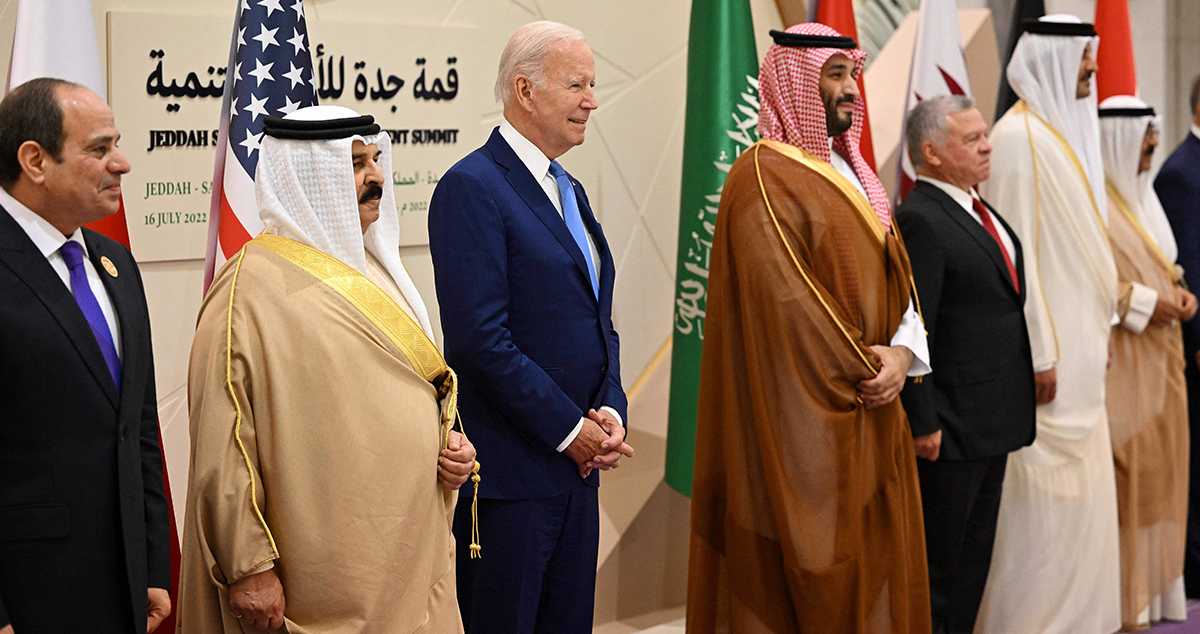
    Opinion: Biden Has a Lot to Gain in Saudi Arabia
  • Commentary
  • Opinion: Biden Has a Lot to Gain in Saudi Arabia

    Despite U.S. President Joe Biden’s meandering efforts to explain his about-face on Saudi Arabia—visiting the country this week after having dubbed it a “pariah” on the campaign trail—there remains much apprehension about his trip on both ends of the political spectrum. Progressives and human rights advocates worry the president will sacrifice U.S. values for short-term Faustian bargains in an attempt to secure cheap oil and expand Arab-Israeli normalization. Republicans and realists, who favor an interest-driven approach to foreign policy, aren’t sure there is enough to be gained by Washington on these fronts to justify a presidential visit.

    OPEC and maximum production: What is sustainable?
    Photo by Simon Dawson/Bloomberg via Getty Images
  • Analysis
  • OPEC and maximum production: What is sustainable?

    Industry analysts widely agree that OPEC+ production levels are currently well below the members’ authorized quotas and that any production increases will mainly be met by Saudi Arabia and the UAE. The challenges facing the group are daunting, but if met, seven major OPEC countries could feasibly raise crude oil production while utilizing existing infrastructure, significantly narrowing the global demand-supply gap.

    July 13, 2022

    Saudi Arabia’s political trajectory
    Photo by Bandar Algaloud / Saudi Kingdom Council / Handout/Anadolu Agency/Getty Images
  • Analysis
  • Saudi Arabia’s political trajectory

    When gaming out the country’s likely political trajectory, most fellow Saudi watchers I know agree that the likelihood of the kingdom imploding is slight, but were that to come to pass, the consequences for the U.S. and the rest of the world would be enormous. Yet Saudi Arabia has managed to negotiate several turbulent events in its recent history with a rather remarkable lack of destabilization. And it’s most likely to continue along that trend, even in the face of what could be more storms to come.

    July 7, 2022

    الأسباب التي تجعل الإدارة الذاتية الخيار المرحلي الأفضل للمجتمع المحلي
  • Commentary
  • الأسباب التي تجعل الإدارة الذاتية الخيار المرحلي الأفضل للمجتمع المحلي

    هذا يضعنا أمام تسأل مهم، لماذا باتت ردود الفعل للمجتمعات المحلية على الإدارة الذاتية وجناحها العسكري ردود محدودة أو منعدمة في كثير من الأحيان؟، رغم أن هذه المجتمعات خاضت معارك طاحنة ضد النظام و تنظيم “داعش” لذات هذه الأسباب.

    Why the AANES is the best interim option for local communities in northeastern Syria
    Photo by DELIL SOULEIMAN/AFP via Getty Images
  • Analysis
  • Why the AANES is the best interim option for local communities in northeastern Syria

    In early June, the SDF, the military wing of the AANES, raided the al-Mouh neighborhood in Abu Hamam in eastern Deir ez-Zor. They burned down several houses under the pretext that their owners were wanted for smuggling oil derivatives to areas under Syrian regime control, but the incident did not provoke any response from the al-Shaitat tribe affected. This raises an important question: Why do local communities respond to attacks by the AANES and its military wing in at most a limited way when these same communities fought fierce battles against the Syrian regime and ISIS when they carried out similar attacks?

    Erdoğan’s opportunism in the wake of the Russia-Ukraine war
    Photo by ADEM ALTAN/AFP via Getty Images
  • Analysis
  • Erdoğan’s opportunism in the wake of the Russia-Ukraine war

    Turkish President Recep Tayyip Erdoğan is notorious for pursuing a one-man foreign policy strategy to consolidate his popularity with his nationalist voter base. He has utilized bold, and sometimes reckless, foreign policy as a vehicle for his political ambitions. Now, Russia’s invasion of Ukraine has opened up new high-risk opportunities for Erdoğan to improve his domestic image, especially as the next Turkish presidential and parliamentary elections approach.

    July 6, 2022

    Qatar strengthens ties with international energy players through North Field East Project
    Photo by KARIM JAAFAR/AFP via Getty Images
  • Analysis
  • Qatar strengthens ties with international energy players through North Field East Project

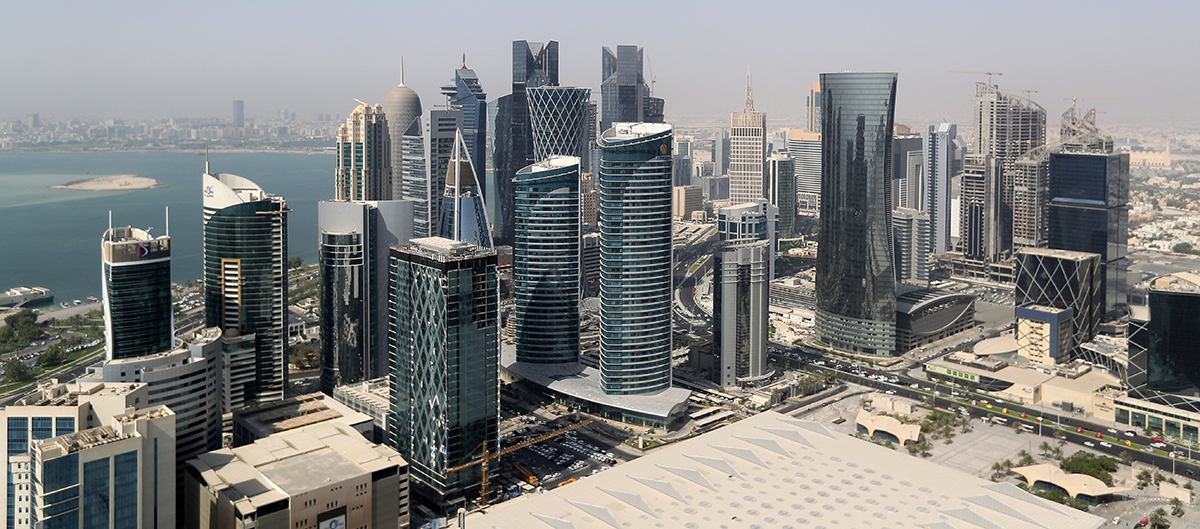
    Throughout the month of June, Qatar Energy, the state-owned energy company responsible for delivering the newly named North Field East Project, captivated the attention of global energy players. After more than six months of bid evaluation, the Qataris have selected the partners in the drive to expand their LNG capacity. While all partners have minor interests, the Qataris have publicly secured participation from representative Western energy players.

    July 5, 2022

    How Iran sees Turkey’s plan for a new military operation in Syria
    Photo by Anas Alkharboutli/picture alliance via Getty Images
  • Analysis
  • How Iran sees Turkey’s plan for a new military operation in Syria

    As the threat of a new Turkish military incursion into northern Syria looms, other international stakeholders in the Syrian crisis continue to voice their concerns over Ankara’s ambitions. At odds with Turkey since 2011 over its desire to overthrow the regime of Syrian President Bashar al-Assad and its support for an array of armed opposition factions, Iran has been increasingly vocal of late in opposing a potential new Turkish military operation.

    July 1, 2022

    Staying the course … for now: Germany’s MENA policy under the Scholz government
  • Analysis
  • Staying the course … for now: Germany’s MENA policy under the Scholz government

    After 16 years under Angela Merkel, Olaf Scholz’s assumption of Germany’s chancellorship on Dec. 8, 2021 marked a new chapter in the nation’s politics. Within the “traffic light” coalition government formed by the Social Democrats, the Free Democratic Party, and the Greens, Annalena Baerbock heads the Ministry of Foreign Affairs. Before taking office, the co-leader of Alliance 90/The Greens was known for both her welcoming attitude toward immigrants and her full-throated condemnation of human rights violations by authoritarian governments. The Middle East and North Africa (MENA) region has no shortage of the latter: According to the Economist Intelligence Unit’s Democracy Index, 17 out of the 20 countries in the region are “authoritarian” and not one is characterized as a “full democracy.” Beyond human rights, other key MENA policy issues for the new government include Iran, Turkey, ongoing conflicts in the region, and immigration. The challenges are numerous, if well-known, but how will Berlin respond? Is Germany’s policy toward MENA likely to change or remain the same under the new government?

    June 22, 2022