These days even the hint of a renewal of diplomacy on Palestine is enough to set tongues wagging. In recent months, France has led what remains an inchoate effort to fill the diplomatic vacuum created by the Obama administration’s decision two years ago to close its book on Palestine.
The Potential for Intra-Regional Energy Cooperation
Regional Cooperation Series
This Policy Paper is part of The Middle East Institute’s Regional Cooperation Series. Throughout 2016, MEI will be releasing several policy papers by renowned scholars and experts exploring possibilities to foster regional cooperation across an array of sectors. The purpose is to highlight the myriad benefits and opportunities associated with regional cooperation, and the high costs of the continued business-as-usual model of competition and intense rivalry.
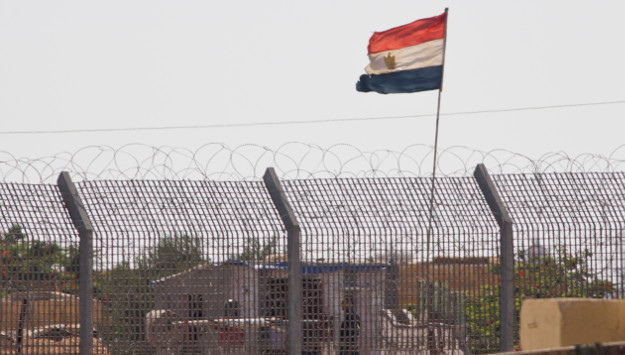
Since the mid-2000s, Egypt has developed into a main transit country for irregular migrants, either to Libya or to Israel. Now, as the traditional paths have largely been closed, many migrants and refugees are blocked in Cairo and along Egypt’s Mediterranean coast. Boarding a boat towards Europe is for many the only option to escape negligence, detention and abuse.
Monday Briefing: Erdogan's Failed Washington Trip, Iraq's Cabinet Reshuffle, and Other Key Issues in Week Ahead
In this week’s Monday Briefing, MEI experts Gonul Tol, Robert S. Ford, Charles Lister, and Paul Salem provide analysis on recent events including Turkish President Erdogan’s visit to Washington, the reshuffling of Iraq’s cabinet, King Salman’s forthcoming visit to Egypt, and the latest attempts by Jabhat al-Nusra over the weekend to disrupt the Syrian political process.
Humanitarianism in Highly Religious Contexts: Responding to Syrian Refugees in Lebanon
This essay discusses the potential value of and impediments to the provision of assistance to refugees by local religious institutions. It explores this issue by focusing on Lebanon, highlighting the important contribution of a small NGO, the Lebanese Society for Educational and Social Development (LSESD), in mentoring and training pastors and many of the key local church leadership in how to respond to the humanitarian needs of Syrian refugees.
Explaining the Military's Ruling Ambition in Egypt and Thailand
The military took advantage of political crisis to remove civilian governments in Egypt in 2013 and Thailand in 2014. This essay discusses three important features of the Egyptian and Thai political systems that have fostered the military’s ruling ambition in both cases.
Fate of the Dragon in the Year of the Red Fire Monkey: China and the Middle East 2016
February 2016 marks the beginning of a new phase in the Chinese lunar calendar, drawing to a close a year marked by heightened risks and fortuitous gains in China’s efforts to secure its interests in the Middle East and North Africa (MENA) region. This essay addresses three questions: How well has China adapted to the conflict and instability that have swept the region? And as we enter the Year of the Red Fire Monkey, what are the concerns that are likely to preoccupy Chinese leaders? What, if any, policy adjustments by Beijing, can realistically be expected in light of the current circumstances and uncertain prospects for the region and for China itself?
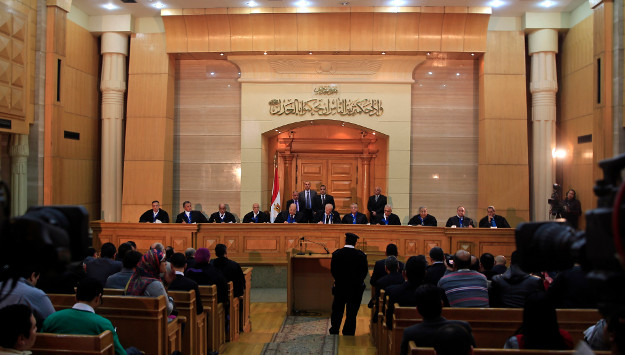
Egypt’s Judiciary: Obstructing or Assisting Reform?
Introduction
Prior to the 2011 revolution, Egypt’s surprisingly independent and assertive judiciary had gained recognition among scholars, political opposition figures, and many in the NGO community for strength and activism in defense of democratic values and political rights.[1] As Nathan Brown wrote in 2008:
Washington and Ankara are in yet another difficult phase in a relationship cycle that runs from very good to very bad. American public opinion about another country forms slowly, but persists through time once set. As Turkey changes, we keep trying to fit new evidence into the old paradigm. At some point, the contradictions are too obvious to explain away, and the new narrative emerges. Right now, Americans are caught in that dilemma regarding Turkey. Unless we have a better idea of which Turkey we are dealing with, we are certain to make bad choices.
Egyptian Civil Society in Transition—Reflections on Cairo’s Governance
This essay discusses the various barriers that inhibit local communities in densely populated, poor quarters in Cairo from taking action in order to improve the provision of basic services and the overall conditions in these neighborhoods.
The United States Should Prevent an Egyptian Shift to Russia
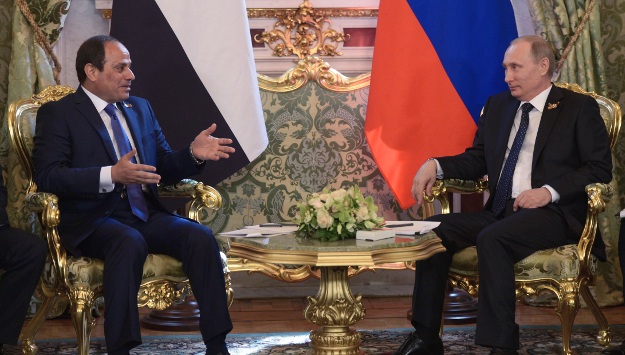
Roughly five decades since the Soviet foray into the Middle East vis-à-vis the Czech arms deal with Egypt in September 1955, Russia is reasserting its influence in Egypt. The deal marked the beginning of a brief period that saw Moscow serve as the primary military supplier for a number of regional countries that formed an ‘anti-imperialist front’, such as Egypt, Iraq, and Syria.
U.S. Forces in Sinai Ripe Pickings for Islamic State
Despite its preferences, the United States is quietly increasing and modifying its military deployment in Egypt’s Sinai Peninsula in response to the growing threat posed by ISIS.
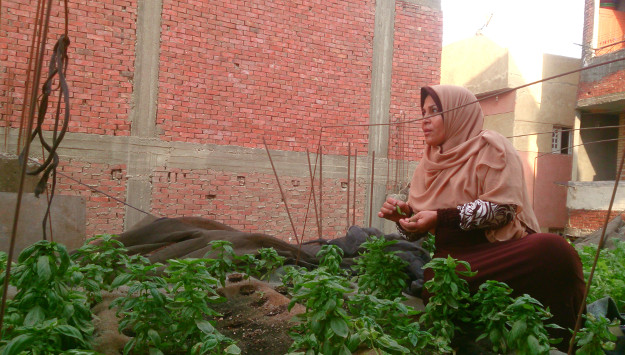
On the rooftop of a three-story brick building tucked inside a dusty alley of ‘Izbat al-Nasr, a poor and informal neighborhood southeast of Cairo, Leila Hussein crouches, tending to the basil and rocket she grows. The incessant cackling of geese, chickens, and pigeons emanating from the roof of a similarly run-down, red brick structure opposite the street gives an eerie, rural soundtrack to her meticulous work.