Skip to Content

Research & Commentary Results

Filter by
939 Results
OPEC+ and the specter of Iranian oil
Photo by Omar Marques/SOPA Images/LightRocket via Getty Images
  • Analysis
  • OPEC+ and the specter of Iranian oil

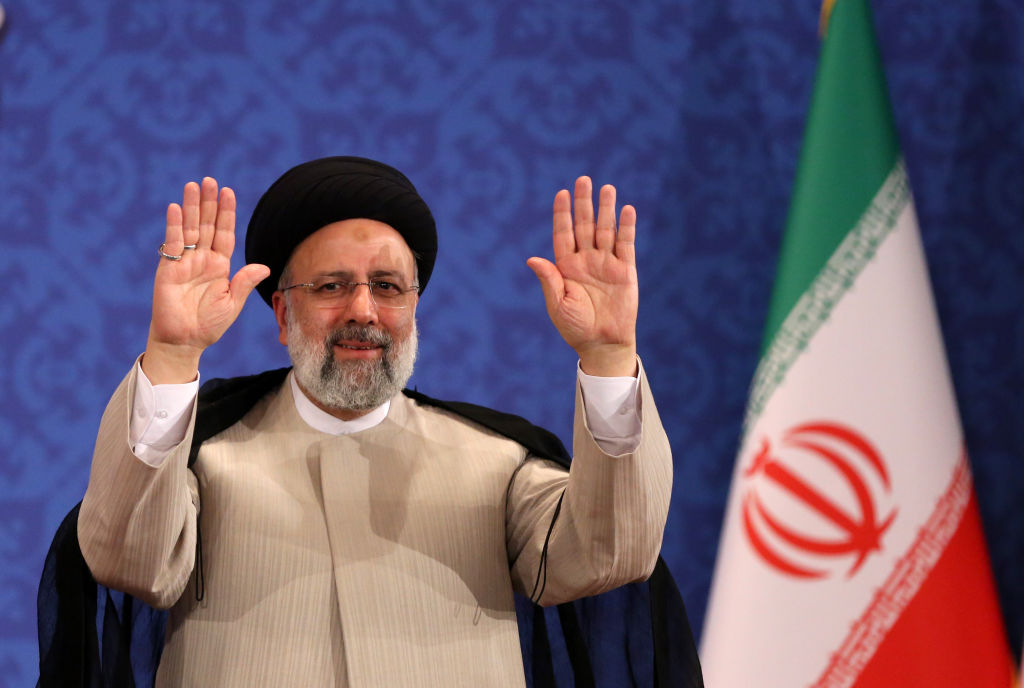
    The factor of Iranian oil, while important for the situation in the oil market, turned out to be somewhat overestimated in terms of its impact on OPEC+ decision-making.

    The promise and the pitfalls of Iraq’s tripartite New Mashreq
    Photo by AHMAD AL-RUBAYE/AFP via Getty Images
  • Analysis
  • The promise and the pitfalls of Iraq’s tripartite New Mashreq

    Sunday was a festive day in Baghdad. The last time Iraqis had received an Egyptian president 30 years ago, the region was gearing up for war and uncertainty as the late President Hosni Mubarak shuttled between Baghdad and Gulf capitals prior to Saddam Hussein’s invasion of Kuwait in 1990. The circumstances were quite different on June 27, when Egyptian President Abdel-Fattah el-Sisi and King Abdullah II of Jordan were given the red-carpet treatment at a tripartite summit marking the fourth meeting between the leaders of the three countries aiming to form a new regional alliance.

    June 29, 2021

    Egypt's Nile strategy
    Photo by SELMAN ELOTEFY/AFP via Getty Images
  • Analysis
  • Egypt's Nile strategy

    Egypt, Ethiopia, and Sudan are caught in a dangerous deadlock over the Nile River and despite what the international community seems to think, the risk of military confrontation among the three nations is not at all far-fetched. Addis Ababa began the second phase of filling the reservoir behind its giant Grand Ethiopian Renaissance Dam (GERD) in early May without an agreement with the riparian nations — Egypt and Sudan. However, much has changed over the past year and the second filling has played out rather differently from the first last July. In the intervening months Egypt has ramped up its diplomatic outreach and emerged as an influential player in the Nile Basin, the Horn of Africa, and East and Central Africa. Cairo succeeded in forging strategic alignment with Khartoum to exert diplomatic pressure on Addis Ababa, forming webs of alliances with different regional powers across East and Central Africa and the Horn of Africa to project power and influence, and exerting geopolitical forward pressure on Ethiopia in parallel with the diplomatic track to solve the GERD dispute. 

    Canal Istanbul: Don’t believe the hype
    Photo by BULENT KILIC/AFP via Getty Images
  • Analysis
  • Canal Istanbul: Don’t believe the hype

    The Turkish government recently confirmed that the country has approved development plans to carve a new passage between the Black Sea and the Sea of Marmara. Cutting through forests and farmland, the new Canal Istanbul would run parallel to the Bosphorus for a total of 45 km (28 miles) with a depth of 20.75 meters (68 feet) and a width of 275-350 meters (900 to 1150 feet). Ground-breaking for the first bridge over the proposed canal is scheduled to take place on June 26. However, this will be a ceremony for domestic political consumption and by no means indicates that construction is really starting. Financing the massive project might prove impossible due to the environmental concerns and investment risks hanging over it.

    June 25, 2021

    The “Palestinian exception”: Social media censorship of Palestinian activism
    Photo by Gokhan Kurtaran/Anadolu Agency/Getty Images
  • Commentary
  • The “Palestinian exception”: Social media censorship of Palestinian activism

    In a landscape of suppression and retaliation against Palestinian journalists and activists at the hands of Israel, social media networks have been at once critical organizing platforms and tools for exacerbating censorship.

    June 23, 2021

    Games without Frontiers: Renegotiating the Boundaries of Power in Iraqi Kurdistan
  • Analysis
  • Games without Frontiers: Renegotiating the Boundaries of Power in Iraqi Kurdistan

    Over the past year, intensifying political and economic conflicts between the Kurdistan Region’s two hegemonic parties, the Kurdistan Democratic Party and the Patriotic Union of Kurdistan, have challenged the legal and institutional order in which the Kurdistan Regional Government operates. A new generation of leadership within the parties, a fraught relationship with the federal government, and a prolonged economic crisis have strained the relationship between the two parties to its breaking point.

    June 23, 2021

    Could climate risk insurance reduce the cost of climate change adaptation in the Middle East?
    Photo by FADEL SENNA/AFP via Getty Images
  • Analysis
  • Could climate risk insurance reduce the cost of climate change adaptation in the Middle East?

    As one of the hottest and driest spots globally, the Middle East region faces some of the worst impacts of climate change. Many of these events have not only been socially and politically devastating but have also resulted in huge financial losses for countries already experiencing economic insecurity. Countries in MENA have found themselves increasingly exposed to extreme weather events and natural disasters, which have affected more than 40 million people and cost more than $20 billion over the past 30 years, according to the World Bank. During the last five years alone, 120 disasters were recorded in the region, resulting in an average of $1 billion annually in damages and losses.

    June 23, 2021

    The Trilemma of Power, Aid, and Peacebuilding in the Israeli-Palestinian Context
    Xinhua/xiongsihao via Getty Images
  • Analysis
  • The Trilemma of Power, Aid, and Peacebuilding in the Israeli-Palestinian Context

    On Dec. 21, 2020, the United States Congress passed the Nita M. Lowey Middle East Partnership for Peace Act. The new law provides $250 million over five years to expand peace and reconciliation programs between Israelis and Palestinians as well as to support projects bolstering the Palestinian economy. But such programs are unlikely to be effective because the whole approach on which they are based is structurally flawed in two critical ways: first, because it is disconnected from local political, social, cultural, and economic processes and expectations; and second, because it tends to reinforce the inequalities that sustain the conflict between the two sides while undermining the declared goals of this intervention.

    June 21, 2021

    Up for Debate: The Biden administration's approach to Israel/Palestine
    Photo by ALEX BRANDON/POOL/AFP via Getty Images
  • Analysis
  • Up for Debate: The Biden administration's approach to Israel/Palestine

    The Biden administration has repeatedly said that Israelis and Palestinians “deserve equal measures of security, freedom, opportunity and dignity” (sometimes expressed as “equal measures of freedom, security, dignity and prosperity”). Since the recent crisis in Gaza and East Jerusalem, Secretary of State Antony Blinken and other U.S. officials have reiterated this formula in one form or another. What is its significance? What does (or should) it mean in the context of the Biden administration’s approach to Israel/Palestine — particularly given the dire humanitarian situation in Gaza, pending expulsions in East Jerusalem, and ongoing settlement expansion in the occupied West Bank and East Jerusalem? We asked eight experts to weigh in with their thoughts.

    June 21, 2021

    The Economics of Hayat Tahrir al-Sham
    Photo by Anas Alkharboutli/picture alliance via Getty Images
  • Analysis
  • The Economics of Hayat Tahrir al-Sham

    Over the past four years, Hay’at Tahrir al-Sham (HTS) has tried to transform itself from a faction of the Global Jihad movement into the de facto local military and governing power in north-west (NW) Syria. This shift requires the group to seek sources of funding other than al-Qaeda and its donors; consequently, HTS has undertaken a slow but steady takeover of the economy in NW Syria, from financial services and oil and gas to internet and telecommunications. This paper lays out how that process has taken place and provides a detailed look at the economics of HTS.

    June 21, 2021

    It's Now or Never: Lebanon Policy Conference Key Takeaways
  • Analysis
  • It's Now or Never: Lebanon Policy Conference Key Takeaways

    Over the course of two weeks in May and June, the Middle East Institute hosted its inaugural Lebanon policy conference in collaboration with the American Task Force on Lebanon (ATFL) and LIFE. This series of events brought together leading diplomats, policymakers, economists, development practitioners, and think tank professionals from the U.S., Europe, the Middle East, and Lebanon to discuss the urgency and viable paths forward for the country’s political, financial, and humanitarian crises.

    June 15, 2021

    The nascent Israeli government: The thread that binds?
    Photo by RONEN ZVULUN/POOL/AFP via Getty Images
  • Analysis
  • The nascent Israeli government: The thread that binds?

    There is only one thread holding together the unprecedentedly disparate parties that will establish and support the nascent Israeli government announced on the night of June 2, an hour before the midnight deadline. That thread is, of course, a shared loathing for Benjamin Netanyahu. Whether that thread will even get the new government past its first hurdle, which is a vote of confidence in the Knesset, much less to its theoretical four years, is an open question. Until recently no one could have imagined such a political monstrosity might be conceived, let alone gestated, but there’s a decent chance this government will get off the ground.

    June 4, 2021

    Lessons Learned for Baghdad & Erbil From the GCC
  • Commentary
  • Lessons Learned for Baghdad & Erbil From the GCC

    In this policy paper, Dr. Karen E. Youngsets out to delineate and compare economic diversification efforts underway in the GCC that might prove useful in the Iraqi context, for the state as a whole, and measures that might be adopted in the context of the Kurdistan region.

    مجلس حقوق الإنسان التابع للأمم المتحدة يوافق على لجنة غزة لتقصي الحقائق
  • Commentary
  • مجلس حقوق الإنسان التابع للأمم المتحدة يوافق على لجنة غزة لتقصي الحقائق

    “إن استعداد مجلس حقوق الإنسان لإنشاء لجنة دائمة ذات تفويض شامل يشير إلى مدى التغيير في التصورات الدولية للصراع الإسرائيلي الفلسطيني في السنوات القليلة الماضية”.

    June 2, 2021