Skip to Content

Research & Commentary Results

Filter by
804 Results
Fair competition is needed to economically empower women in the Arab world
Careem offices on June 23, 2018 in Jeddah, Saudi Arabia
  • Analysis
  • Fair competition is needed to economically empower women in the Arab world

    Female labor force participation levels in Arab countries are the lowest in the world — despite the rising educational attainment of women reaching working age. Indeed, young women across the Arab world exceed the education levels of young men, who are worrisomely falling behind. Remedying the underrepresentation of Arab women in the labor force and reviving the educational motivation of young men are both social and economic imperatives.

    October 8, 2019

    Trade, Reform, and Revitalization: Toward a US-Egypt Free Trade Agreement
  • Analysis
  • Trade, Reform, and Revitalization: Toward a US-Egypt Free Trade Agreement

    A question as to the value of a U.S.-Egypt Free Trade Agreement (FTA) misses the point. The question should not be whether an FTA would be in the interest of both parties since there is abundant evidence that it would. The question is what kind of FTA would best suit the needs, both short and long term, of the two parties: shallow integration or deep integration? This report argues that notwithstanding several hurdles, it is in the interest of both countries to move swiftly and decisively toward a deep FTA.

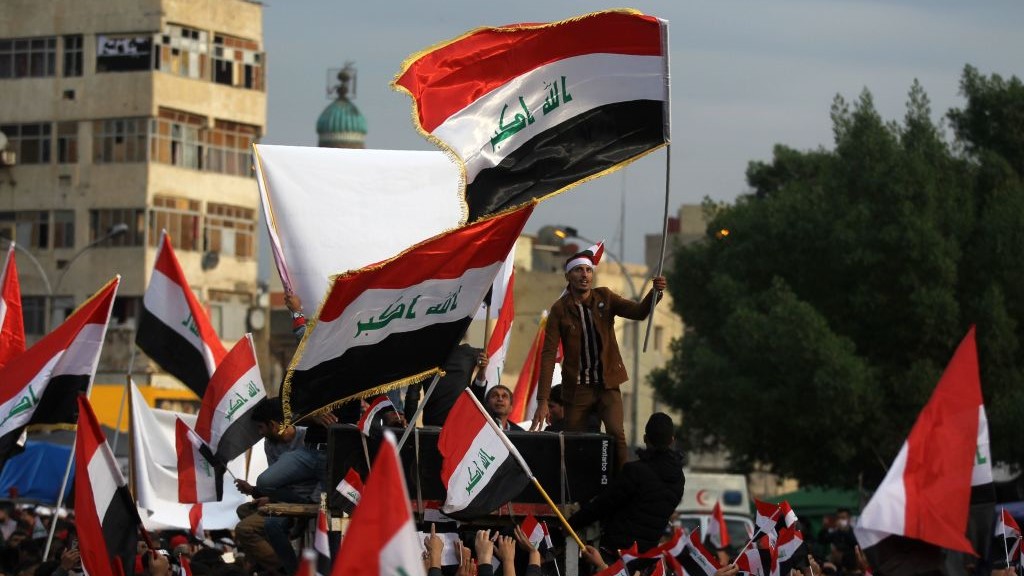
    Wave of protests rocks Iraq
    An Iraqi protester waves the national flag during a demonstration against state corruption, failing public services, and unemployment, in the Iraqi capital Baghdad on October 5, 2019.
  • Commentary
  • Wave of protests rocks Iraq

    For now, both Najaf and Tehran seemed to have a convergence of interests on preserving the post-2003 political order.

    October 7, 2019

    The UN deliberately (albeit mistakenly) accorded sovereignty to post-Gadhafi Libya’s economic institutions
    Libya's General National Congress (GNC) deputy president Saleh al-Makhzoum (C-R), the new national government head, Prime Minister, Fayez al-Sarraj (C) and the head of the Tobruk-based House of Representatives Mohammed Ali Shoeb (C-L) celebrate after signing a deal on a unity government on December 17, 2015, in the Moroccan city of Skhirat.
  • Analysis
  • The UN deliberately (albeit mistakenly) accorded sovereignty to post-Gadhafi Libya’s economic institutions

    The crux of today’s Libya problem in international foreign policy lies in an underappreciated UN misstep in the most important international treaty concerning Libya, the 2015 Skhirat Agreement, and the decision to vest sovereignty in the heads of independent and semi-independent sub-state institutions like the Central Bank of Libya. The negative implications of this decision must now be addressed and it is time to move onto something new, after Skhirat.

    September 26, 2019

    UN Summits Week puts a spotlight on climate change
    U.N. Secretary-General Antonio Guterres speaks at the at a summit to address climate change at the U.N. on September 23, 2019 in New York City.
  • Commentary
  • UN Summits Week puts a spotlight on climate change

    This week heads of state and government are gathered in New York for the UN Summits Week, during which five key summits are taking place to urge action on major challenges that continue to undermine human security globally.

    September 23, 2019

    How Libya’s economic structures enrich the militias
    Members of the Tripoli Protection Force, an alliance of militias from the capital city, patrol an area south of the Libyan capital on January 18, 2019, during clashes with the Seventh Brigade group from the town of Tarhuna.
  • Analysis
  • How Libya’s economic structures enrich the militias

    Largely overlooked in international policymaking toward Libya’s current conflict is the role of corruption as a key driver of violence, as opposed to merely its byproduct. The high-level debate on Libya at the UN General Assembly (UNGA) in late September and the proposed follow-on international conference to be hosted by Germany in October or November are the perfect opportunities to correct this oversight.

    September 23, 2019

    New leadership and new challenges for Saudi Arabia's oil industry
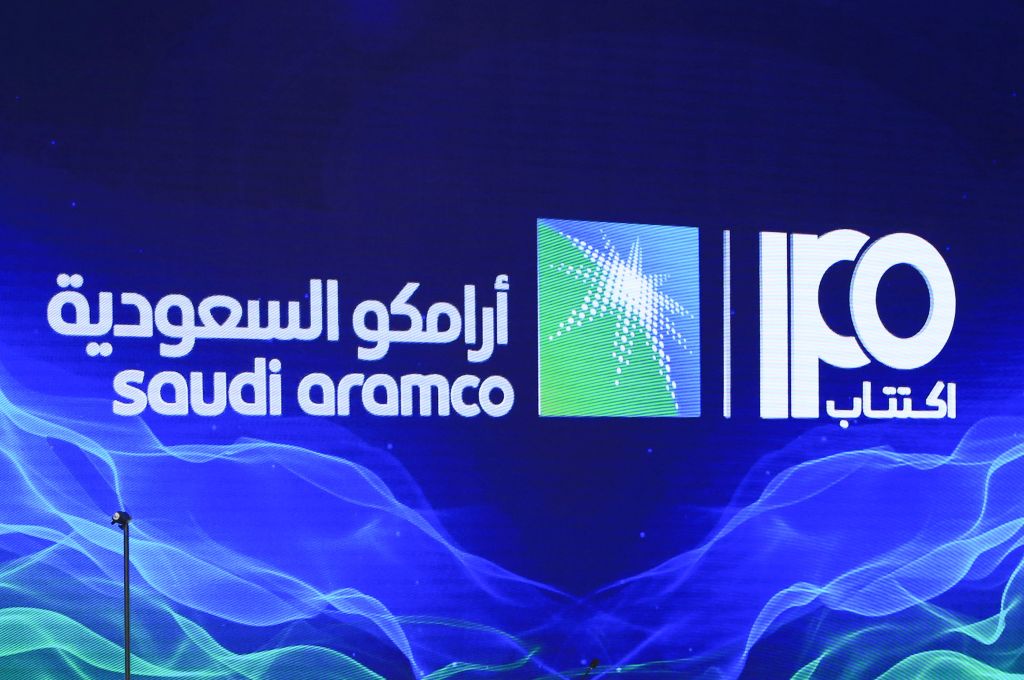
    Saudi and Foreign investors stand in front of the logo of Saudi state oil giant Aramco during the 10th Global Competitiveness Forum on January 25, 2016, in the capital Riyadh. The an annual event brings together high-ranking Saudi officials and world business leaders. / AFP / Fayez Nureldine (Photo credit should read FAYEZ NURELDINE/AFP/Getty Images)
  • Analysis
  • New leadership and new challenges for Saudi Arabia's oil industry

    Saudi Arabia surprised the global oil and gas industry earlier this month by reshuffling its top two energy positions. Long-serving technocrat Khalid al-Falih was ousted as chair of Saudi Aramco one day and as head of the Ministry of Energy the next.

    September 17, 2019

    Russia, Iran, and the competition to shape Syria’s future
    Russian President Vladimir Putin (L) and Iranian President Hassan Rouhani (R) attend the trilateral summit to discuss progress on Syria, between the Presidents of Turkey, Russia and Iran on November 22, 2017 in Sochi, Russia.
  • Analysis
  • Russia, Iran, and the competition to shape Syria’s future

    One important dynamic that is not acknowledged enough is the intensifying competition between Russia and Iran to determine the future shape of Syria and their position in it. While the very real competitive dynamic between Moscow and Tehran will never transition to hostility, it is beginning to have a very real effect on the evolution of major aspects of the crisis — from active conflict theaters, to the structures of the state, control over resources, and the prospect of intra-state conflict on Syrian soil.

    Is it too late to save Lebanon from financial collapse?
    A demonstrator argues with riot police guarding the entrance of the Lebanese Central Bank during a protest by retired Lebanese army and security personnel as part of a preemptive strike against austerity measures in the 2019 draft state budget that might affect their retirement wages.
  • Analysis
  • Is it too late to save Lebanon from financial collapse?

    Things seem to be going from bad to worse for Lebanon’s economy. On Aug. 23 Fitch downgraded its credit rating to CCC, meaning both it and Moody’s now rate the country’s bonds as junk. Ten days later, on Sept. 2, Lebanon’s top officials and bankers declared the country was in a state of economic emergency and said emergency measures would be taken.

    September 6, 2019

    A shifting development paradigm for the Middle East and North Africa
    A picture taken on December 12, 2017 shows an elevated view of al-Attaba district on the edge of downtown Cairo, Egypt.
  • Analysis
  • A shifting development paradigm for the Middle East and North Africa

    Economic development paradigms have shifted focus over past decades: from minimizing imports to encouraging exports as the path to prosperity. Individual countries in the Middle East and North Africa (MENA) have had little success under either paradigm — the result being stagnant economies and high unemployment, especially among young people. Perhaps now is the time for MENA countries to follow a different path and focus on harnessing the power of their collective domestic demand to foster economic development.

    September 5, 2019

    The Syrian Oil Crisis: Causes, Possible Responses, and Implications
    Iranian supertanker Grace 1 off the coast of Gibraltar on August 15, 2019.
  • Analysis
  • The Syrian Oil Crisis: Causes, Possible Responses, and Implications

    Unlike most other goods, the inflation-adjusted prices of oil and oil derivatives actually became cheaper in the years after the Syrian uprising and the loss of most of the country’s oil fields. Iran stepped in to fill the gap by shipping oil by sea through the Suez Canal. In recent months, however, these shipments seem to have ground to a halt, crippling regime-controlled areas. This paper examines several competing explanations for the slowdown in Iranian oil shipments, explores a range of possible responses for the Assad regime, and takes a closer look at the implications for the regime, its allies, and regular Syrians.

    August 28, 2019

    There Is No "Status Quo": Drivers of Violence in the Israeli-Palestinian Conflict
    A picture taken on February 1, 2019 from Jabel Mukaber, a Palestinian neighbourhood in Israeli-occupied East Jerusalem shows the Dome of the Rock mosque (golden dome) and al-Aqsa Mosque (silver dome) at the al-Aqsa Mosque compound in Jerusalem's Old City.
  • Analysis
  • There Is No "Status Quo": Drivers of Violence in the Israeli-Palestinian Conflict

    The Israeli-Palestinian conflict remains a destabilizing element in an already volatile Middle East. The Palestinians are too weak to wrest their independence from Israel. But as long as their right to self-determination is denied, they are likely to engage in regular violence targeting Israel. Absent outside intervention, Israel is powerful enough that it can suppress Palestinian demands for freedom — but it is not able to completely pacify the Palestinians. Thus, the conflict continues, punctuated every few years by rounds of more significant violence.

    August 20, 2019

    The end is not near: Sleepwalking through human and military security crises in MENA
    Yemeni children queue to obtain dinner meal distributed as aids by a local charity, the Amalona organization, on May 18, 2019 in Sana’a, Yemen.
  • Analysis
  • The end is not near: Sleepwalking through human and military security crises in MENA

    The Middle East and North Africa (MENA) is shouldering the world’s largest humanitarian caseload and most severe crises of undernourishment since World War II. Tens of millions of people in five MENA countries are struggling with chronic hunger, and millions of them are on the brink of famine. MENA has also been grappling with the world’s longest chain of consecutive regional wars every decade since the mid-20th century, now spanning nearly 75 years.

    August 19, 2019

    Monday Briefing: US-Turkey dispute over Syria comes to a head
  • Analysis
  • Monday Briefing: US-Turkey dispute over Syria comes to a head

    This week’s briefing on recent news and upcoming events in the region including the Turkish-U.S. crisis meeting in Ankara on Syria, the resumption of U.S.-Taliban negotiations, Trump’s creation of a new “dovish” line on Iran, a rise in Egypt’s poverty levels, Sudan’s democratic transition, the easing of female guardianship rules in Saudi Arabia, and the end of the ceasefire in Idlib, featuring Charles Lister, Marvin G. Weinbaum, Paul Salem, W. Robert Pearson, Mirette F. Mabrouk, Thomas W. Lippman, and Robert S. Ford.