A recent public opinion poll conducted by Ipsos suggests that the Turkish public is supportive of foreign aid, with around 45 percent of those surveyed indicating that Turkey should spend 3 to 10 percent of its national budget on such assistance. Material and ideological factors rather than moral imperatives play a role in this opinion.
Tens of thousands of women, angry at what they say is the government’s latest step to “Islamify” Turkey, recently signed a petition against the rise of religious marriages in lieu of civil unions.
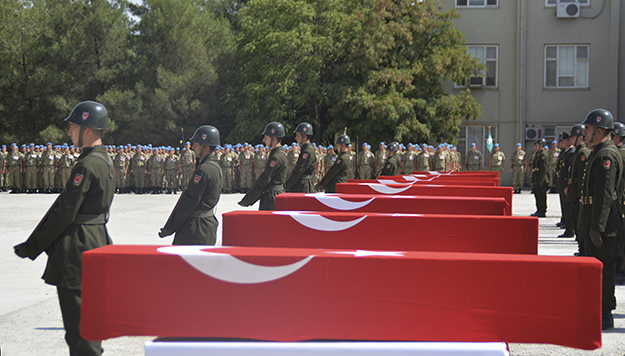
With less than two months left until the parliamentary elections in November, Turkey is engulfed in deepening chaos and growing violence. The peace process between Turkey and the PKK that began in 2013 collapsed in July when the PKK killed two Turkish policemen it believed were linked to the Islamic State. The PKK attack was in retaliation for an Islamic State bombing that killed 32 student activists at Suruc on their way to Kobani.
Read the full article in the September 2015 issue of The Ripon Forum.
It will be one year this September since the U.S. president declared the formation of an international coalition to ‘degrade and destroy’ ISIS. After 6,000 air strikes, 9,000 targets struck, 10,000 fighters killed, and various battles undertaken in Iraq and Syria, the war is at a strategic stalemate.
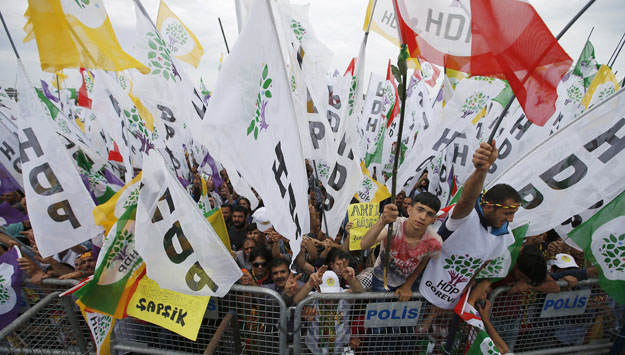
Despite enduring a contentious campaign in its fight to get the ten percent of the national vote necessary to enter parliament, Turkey’s Peoples’ Democratic Party (HDP)—part of the same political movement as the Kurdistan Workers’ Party (PKK)—ran on a fundamentally optimistic platform. It articulated democratic hopes for the so-called “peace process,” that is, the Turkish government-led, long-stuttering negotiations to end the PKK insurgency that has killed more than 40,000 people since 1984.
The ironies of modern Turkey’s history seem to be emerging in sharper relief. On Sunday, August 30, Turkey will celebrate its signal victory of 1922, which capped the struggle of Kemal Ataturk, Turkey’s founding father, to secure the country’s freedom. From the beginning of that war of liberation until final victory, Ataturk worked tirelessly to gain the support of all Turks for the fight for independence. That victory of 1922 was a military triumph, but it also reflected the power of a united people to bring a dream to reality.
Twenty-five years ago, on August 7th 1990, an American interagency team walked into an urgent meeting with King Fahd of Saudi Arabia, not knowing what would happen. A week earlier Iraq had seized Kuwait. The Americans feared that the Iraqi Army might keep going, seizing the Saudi oil fields. As a result of decisions made at that August 7th meeting, Iraq and terrorism have dominated American foreign policy for three decades and continue to do so.
If the hallmark of al-Qa‘ida was to execute simultaneous spectacular attacks to advance its strategic momentum, the month of Ramadan in June and July showed that the Islamic State (ISIS) is taking this tactic to a new level. Yet the extreme amounts of blood shed during the holy month will likely ultimately weaken ISIS, as tribes and other groups in Syria and Iraq, even more appalled by the organization’s barbarism, unite against it.
After months of hesitation to take action against the Islamic State (ISIS) and almost two years of quiet since a 2013 truce with the Kurdistan Workers’ Party (PKK), Turkey decided to pick a fight with both. It has been pounding Islamic State targets in Syria and PKK positions in northern Iraq.
This article was first published on NPR’s Parallels blog.
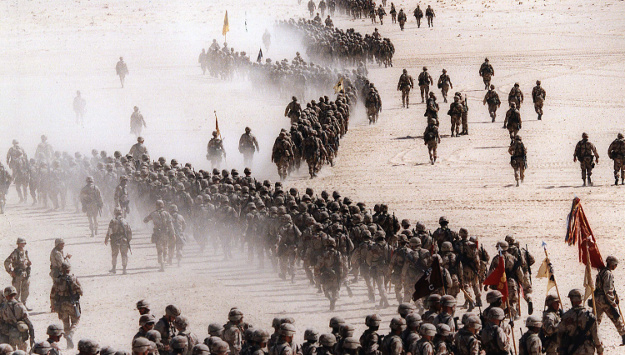
It started so well. When Saddam Hussein’s Iraq invaded Kuwait on Aug. 2, 1990, the United States swiftly cobbled together a broad coalition, unleashed a stunning new generation of air power and waged a lightning ground offensive that lasted all of four days. Iraqi troops were so desperate to quit that some surrendered to Western journalists armed only with notebooks.
Salafi discourse has made considerable inroads in Turkey over the past 30 years, making contributions to sectarianism in ways that have yet to be fully studied and understood.
The Humanitarian Crisis in the Middle East: Highlights from the MEI Conference
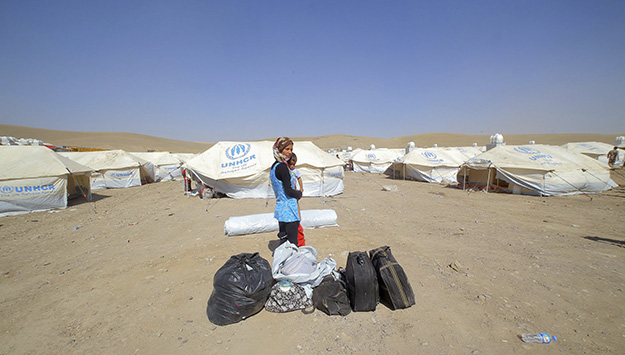
For decades, most refugee crises followed a pattern: A war erupted, usually in a poor country, and beleaguered civilians staggered across the nearest border. The United Nations organized a response, rich nations footed the bill, and aid groups sent in workers to tend to the needy. Even in extreme cases, such as the mass exodus from Afghanistan during the Soviet invasion in the 1980s, the crisis was largely confined to the country at war and a few immediate neighbors.
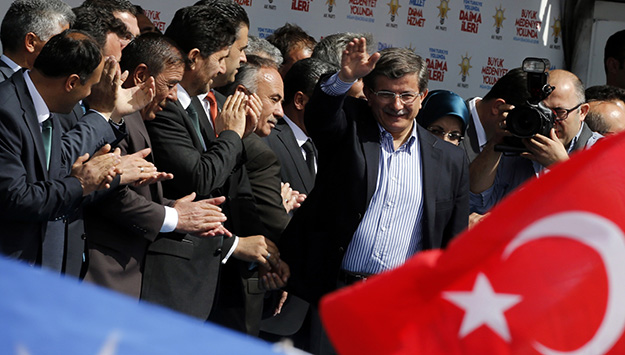
June 8, 2015 – Gonul Tol, director of the Center for Turkish Studies at The Middle East Institute, discusses the reactions to Turkey’s June 7 elections, and what the setback for the ruling AK party and President Erdogan means for Turkey’s domestic policy agenda and its relations with the United States.