Monday Briefing: Palmyra, Mosul, and the ISIS Threat Abroad
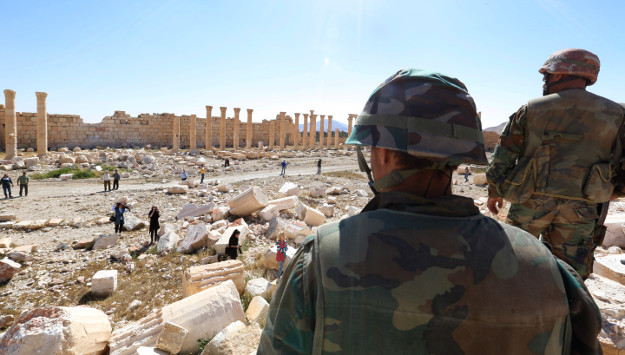
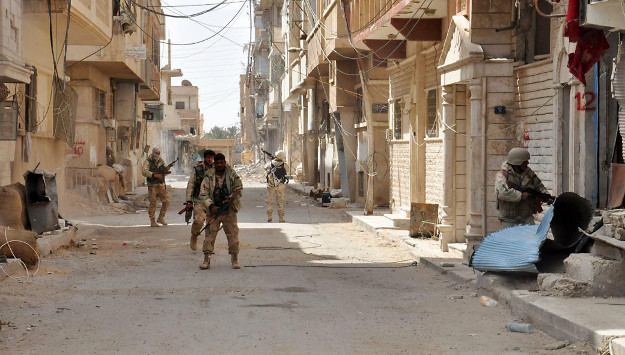
In this week’s Monday Briefing, MEI experts Charles Lister, Paul Salem, and Daniel Serwer provide analysis on recent events including the capture of Palmyra by Syrian government forces, preparations for the campaign to retake Mosul, the risk of further terrorist attacks in Europe like last week’s in Brussels. Allen Keiswetter also responds to recent comments by Republican presidential candidate Donald Trump on U.S. policy toward Saudi Arabia.
The Shaky Foundation of the E.U.-Turkey Deal
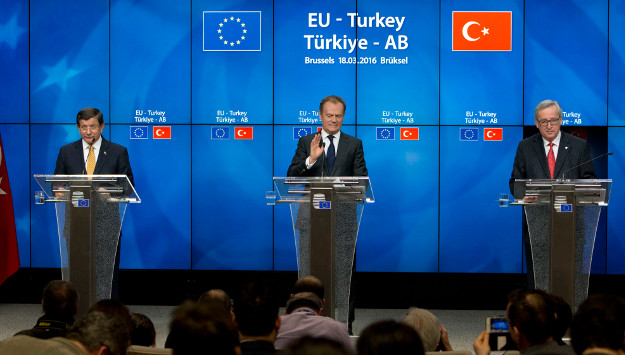
Turkey and the European Union have reached what they have labelled an “historic” agreement. The Europeans believe they have papered over an expanding and divisive refugee problem, while the Turks think they have a wider door for E.U. membership. The Europeans, however, have no intention of bringing Turkey into its fold anytime soon as it would dramatically accelerate the growth of its rightwing parties. Neither do the Turks have a genuine interest in solving Europe’s refugee crisis, since the crisis itself is Turkey’s leverage to gain concessions from Europe.
Squeezed At Its Base, ISIS Grows More Dangerous Elsewhere
This article was originally published on NPR.
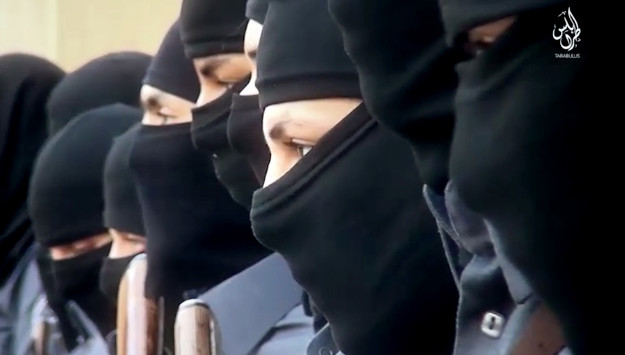
The Islamic State has been steadily losing territory in its self-declared caliphate in Syria and Iraq, where a U.S. bombing campaign and a host of rival forces chip away at its holdings.

The Societal Roles of CSOs: Evidence from Turkey
Support for civil society and civil society organizations (CSOs) has been an integral part of endeavors by most major policy makers to advance democratization across the globe, with particular emphasis on the Middle East North Africa (MENA) region since the late 1980s. The role envisaged for CSOs within this context is to increase government accountability, filter the interests of ordinary citizens into policy processes, and advance democratization generally, this process is often connected with human rights and social progress. This essay investigates how this vision of civil society is constituted in the case of Turkey, using empirical evidence gathered through 38 in-depth qualitative interviews with women’s organizations from across the political, religious, and geographical spectrum.
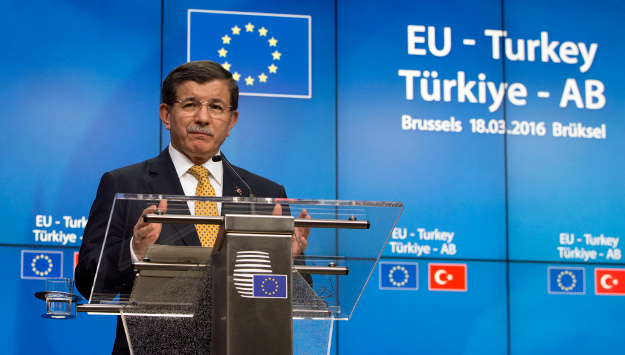
Turkish Experts Comment on E.U.-Turkey Deal
The European Union and Turkey agreed March 17 on a plan to address the Syrian refugee crisis. Under the deal any migrants arriving in Europe, starting next week, will be sent back to Turkey. Ankara, in exchange, will receive expedited aid intended to help Syrians in Turkey, as well as the promise of reignited E.U. membership talks.
Putin's Master Plan for Syria
For the full article visit Foreign Policy
After first surprising the world by entering the fray in Syria last year, Vladimir Putin again shocked observers by announcing he was partially pulling out. On March 14, the Russian president declared his objectives “generally accomplished” and announced the withdrawal of part of his Russian military forces in Syria.
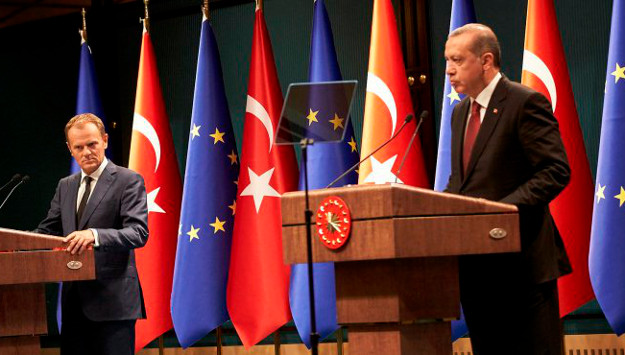
The EU’s Blank Check for Turkish Authoritarianism
This article was first published on Europe’s World.
Turkey first applied for associate membership in the European Economic Community in 1959, and Europe has ever since had the upper hand in relations with Ankara. But the EU’s relationship with Turkey has been turned upside down by the Syrian refugee crisis, and the alarm it has caused in European countries.
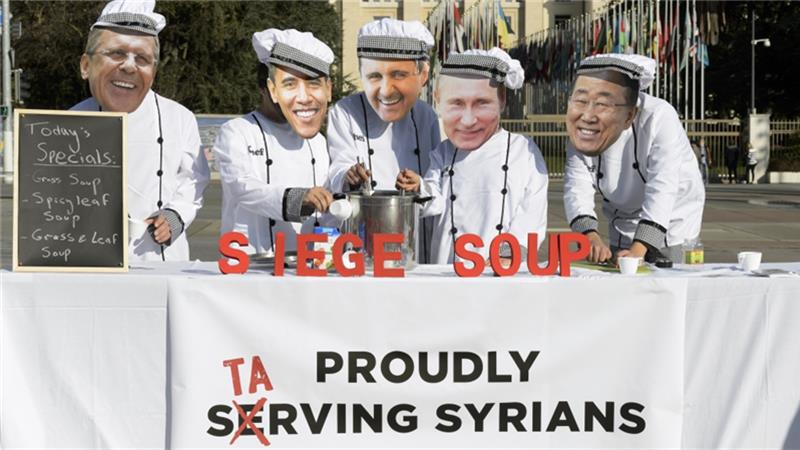
Moscow and Washington are not that far apart on Syria
Read the full article on Al Jazeera.
One of the positive and significant aspects of the Syria crisis is its effect on US-Russian relations. Russian President Vladimir Putin’s unexpected decision to withdraw forces from Syria is merely the latest chapter of this fast-moving engagement.
Humanitarianism in Highly Religious Contexts: Responding to Syrian Refugees in Lebanon
This essay discusses the potential value of and impediments to the provision of assistance to refugees by local religious institutions. It explores this issue by focusing on Lebanon, highlighting the important contribution of a small NGO, the Lebanese Society for Educational and Social Development (LSESD), in mentoring and training pastors and many of the key local church leadership in how to respond to the humanitarian needs of Syrian refugees.
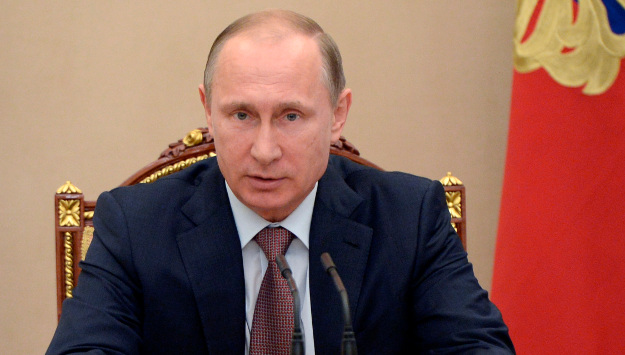
Randa Slim on Russia’s Decision to Partially Withdraw from Syria
Russian President Vladimir Putin surprised observers when he announced on March 14 that he is going to begin withdrawing Russian military forces from Syria. As the director of MEI’s Initiative for Track II Dialogues Randa Slim has worked extensively with all parties on the Syrian conflict, including Russian participants. She discusses the meaning of Putin’s decision with MEI Senior Editor Antoun Issa.
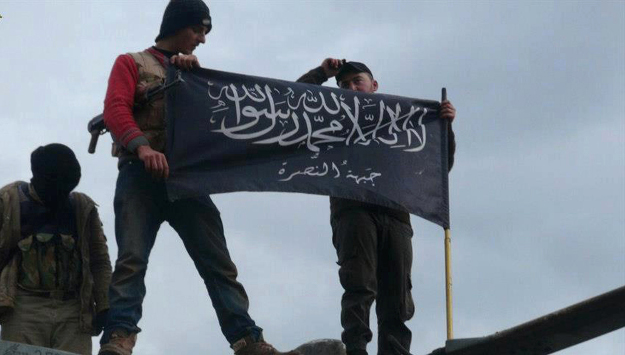
Jabhat al-Nusra Oversteps Mark with Idlib Crackdown
Ten days ago, under the relative calm of Syria’s cessation of hostilities, hundreds of civilians gathered in the Idlib town of Maarat al-Numan to celebrate the continuation of their populist revolution.
What if the E.U. Had a Refugee Policy?
This essay explores how, if the European Union had a more complete refugee policy—one that covers all aspects of refugee arrival, reception, and protection—the Syria crisis might have been mitigated, if not averted. The essay focuses specifically on the desirability and advantages of resettlement (among other mooted policies) as a vital protection tool.
Monday Briefing: Syria Ceasefire, Iran's Elections, and ISIS in Libya
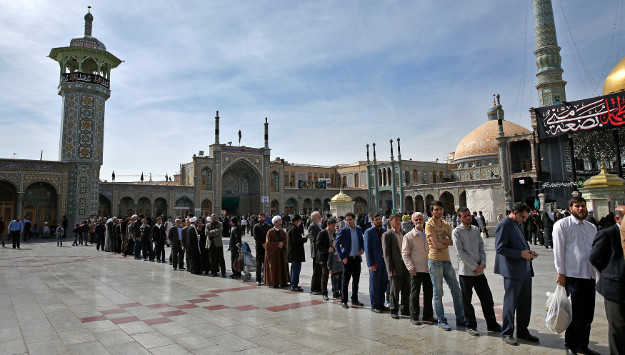
In this week’s Monday Briefing, MEI experts Robert S. Ford, Paul Salem, Alex Vatanka, and David Mack provide analysis on recent events including the ceasefire agreement in Syria, Iran’s elections, and how the United States should respond to the growing threat of ISIS in Libya.
On the Syria Ceasefire
Robert S. Ford
Senior Fellow

Turkey Running Out of Options on Syria
Turkey is confronting a nightmare as its two archenemies, President Bashar al-Assad’s regime and the Kurdish Democratic Union Party (PYD), gain ground in Syria with the help of U.S. and Russian air cover. Turkey has long called for a no-fly zone in northern Syria to protect areas held by the opposition and a halt to the PYD advances west of the Euphrates. Frustrated with U.S. cooperation with the PYD, Ankara has insisted that the PYD is a terrorist organization and poses a grave danger to Turkey’s national security.