The Coming Debate Over the US Military Presence in the Gulf
The war with Iran is hardly over, but the debate over the shape and nature of the post-conflict American posture in the Gulf region is just beginning. Undoubtedly, how the war ends will affect how the United States adjusts its role. While this debate is still in its early stages, something of a conventional wisdom is already developing in policy circles that could seriously compromise American influence in the Middle East.
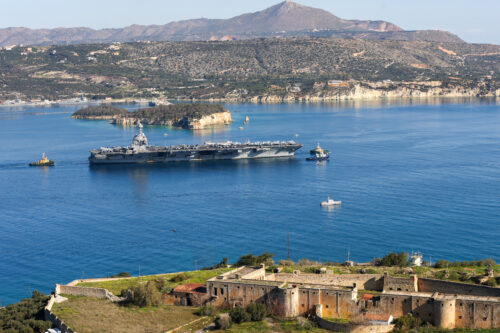
This report explores maritime security conditions in the Mediterranean and the evolving US engagement in the region. As critical infrastructure becomes increasingly vulnerable to sabotage, freedom of navigation is undermined by conflict, and energy disputes generate tension, US policy focus on the region has become fragmented and disengaged. The authors call for a sustained American role to strengthen maritime domain awareness, allied coordination, infrastructure protection, and the capacity to respond when Mediterranean crises affect US and transatlantic interests.
Curb Your Enthusiasm: Why the Midterms Might Not Change Much in US Middle East Policy
With less than a week before the midterm elections in the United States, the spotlight is on the economy and cultural divides. US foreign policy remains mostly on the sidelines, but this year’s inconclusive Iran war and its effect on America’s economy have shaped the broader political environment in this electoral cycle.
Since 1967, Israeli settlements in the West Bank have been a contested feature of the Israeli-Palestinian conflict. The ultimate disposition of the settlements and ongoing activity related to their growth have repeatedly defied agreement in negotiations over a resolution to the conflict.
The Houthis are a political-military faction and Zaydi religious movement founded in northwestern Yemen in the 1980s. A key member of Iran’s Axis of Resistance with links to other militant organizations in the Arabian Peninsula and the Horn of Africa, the group has continued to pose a threat to Western interests on a global scale.
The India-Middle East-Europe Economic Corridor (IMEC) is a proposed multinational infrastructure initiative aimed at upgrading connectivity between the three regions through integrated trade, energy, and digital networks. Announced at the G20 summit in New Delhi in September 2023, IMEC is envisioned partially as a counterweight to China’s international infrastructure project, the Belt and Road Initiative.
After a decade of post-Arab Spring isolation, Turkey’s leaders have recognized that their ambition to position the country as an agenda-setter on the world stage requires active engagement in all directions. President Recep Tayyip Erdoğan’s consolidation of executive authority has centralized foreign policy decision-making and tied it to his domestic political priorities, transforming the country’s revisionist approach to one shaped primarily by personal and pragmatic interests.
MEI Senior Fellow Brian Katulis engages friends, colleagues, and policy experts in casual conversations on the most important happenings in the Middle East.
Competing Understandings of Protection in the European ‘Migrant Crisis’
No European government has made any substantial reference to the ‘Responsibility to Protect’ principle (R2P) during the current migrant crisis. This is remarkable since the crisis, which has gone on for the past five years, is mainly due to displacement of people fleeing from mass atrocities and crimes. At the same time, several European governments are using the word ‘protection’ with reference to European citizens and borders to justify the need of a ‘fortress Europe’. The world ‘protection’ has probably never been more popular in post-cold war Europe. At the same time, the word seems to have lost its association with R2P since the principle’s inception.
“The ‘Islamic State’ Rocked Crusader Europe Again. Hundreds of Deaths and Injuries as a Result of Martyrdom Operations in Brussels,” read the headline of the Islamic State’s (ISIS) Arabic-language newsletter al-Naba’ on March 21, 2016. There were not much details about the terrorist bombings, but they certainly follow a pattern established since early 2015. “Do not look for specific targets. Kill anybody,” said Boubaker Hakim, an ISIS commander of French-Tunisian origins, in an interview initially published in March 2015 by ISIS’ French-language magazine Dar al-Islam.
Defying Expectations: China’s Iran Trade and Investments
This essay examines China-Iran trade relations, as well as Chinese investments in Iran. Particularly, it asks whether the Chinese-Iranian stated ambition to increase the value of bilateral trade to $600 billion within a decade is attainable. Additionally, it identifies the factors responsible for the trade deficit in Iran’s favor, and shows that the pace of China’s foreign direct investment (F.D.I) in Iran is slowing in spite of absolute increases.
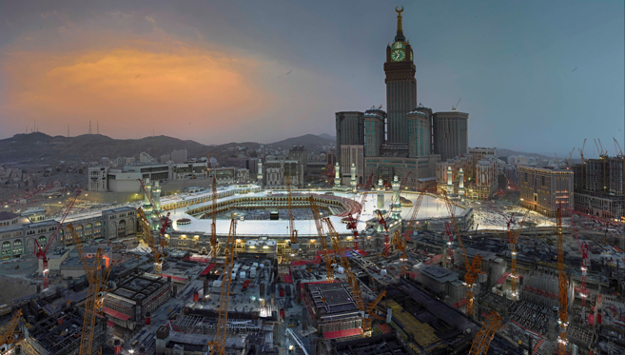
On a sub-level inside one of the Smithsonian’s art galleries in Washington, a man stood entranced by the Golden Hour, a six by eight foot photographic composition of Mecca.
The man noted the dozens of cranes and the Makkah Royal Clock Tower, a monstrous and controversial piece of architecture that dwarfs everything around it. Then, with his finger, the visitor carefully air circumnavigated around the Great Mosque.
“What’s this tiny black cube in the middle?” he asked, pointing to the Kaaba.
Some problems cannot be postponed indefinitely, and Libya is one of them. U.N. mediators, fronting for a hesitant and oft-divided international community, are running out of gimmicks for further talks among the feuding parties in Libya’s dysfunctional political process. Moving swiftly after his arrival in Tripoli last Wednesday, Prime Minister Fayez al-Sarraj reached out to the Libyan public, key central government institutions, and regional and municipal authorities.
European Identity and the Plight of Syrian Refugees
In the Declaration on European Identity, the nine Member States at that time expressed their determination to build a community of law and democracy which measures up to the needs of the individual and preserves the rich variety of national cultures.[12] Many things have changed since 1973, but I would argue, the building blocks for a political—as well constructive—notion of European identity remain the same … Yet, the actions of the member states during the last 12 months with respect to the so-called ‘refugee crisis’ reveal their betrayal of those commitments undertaken in 1973.
Monday Briefing: Erdogan's Failed Washington Trip, Iraq's Cabinet Reshuffle, and Other Key Issues in Week Ahead
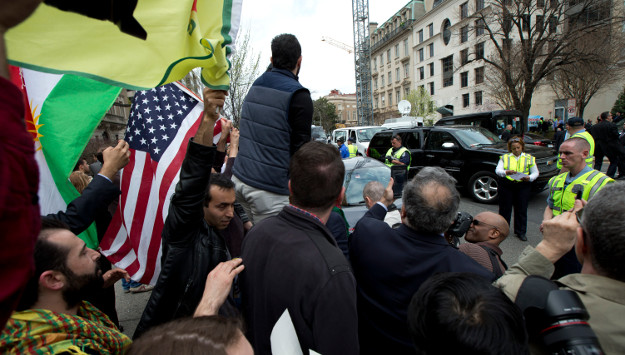
In this week’s Monday Briefing, MEI experts Gonul Tol, Robert S. Ford, Charles Lister, and Paul Salem provide analysis on recent events including Turkish President Erdogan’s visit to Washington, the reshuffling of Iraq’s cabinet, King Salman’s forthcoming visit to Egypt, and the latest attempts by Jabhat al-Nusra over the weekend to disrupt the Syrian political process.
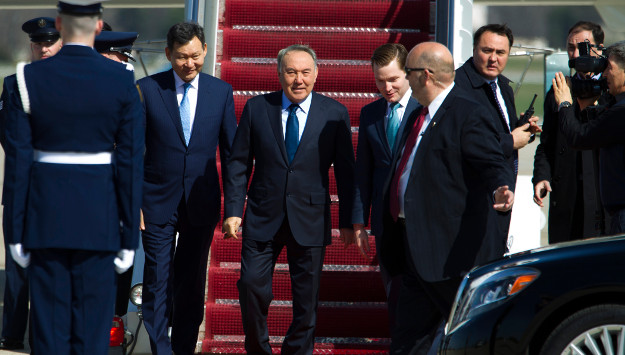
At the request of the Embassy of the Republic of Kazakhstan, the Middle East Institute (MEI) solicited a series of short academic papers on aspects of Kazakhstan’s domestic and regional policies for advancing prosperity, confidence-building, political stability, and nuclear nonproliferation. Experts from MEI and three other leading institutions presented their work in a round table discussion on March 29, 2016. They engaged in an active exchange of views with invited counterparts from the U.S. administration, think tanks, and from Central Asia, including Afghanistan.
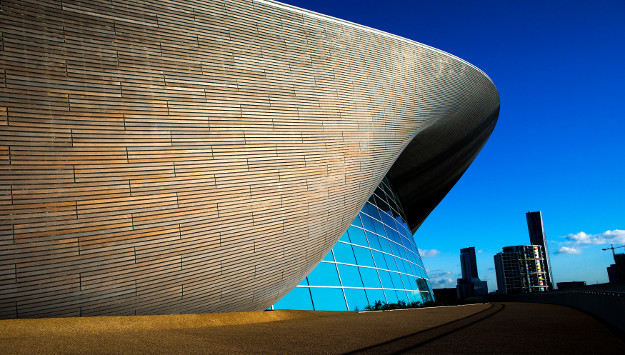
The Middle East Institute (MEI) is saddened by the passing of Zaha Hadid, the renowned Iraqi-born architect whose iconic structures ignited imaginations and experimented with new spatial concepts. Hadid was the first female and first Arab recipient of the Pritzker Architecture Prize, the field’s highest honor. In 2013 she received MEI’s Issam M. Fares Award for Excellence in recognition of her visionary contribution to architecture and urban design.
Where History and Humanitarianism Collide: The Bay of Bengal “Migrant” Crisis
This essay examines the 2015 Bay of Bengal migrant crisis in Asia from three broad perspectives: 1) the historically entrenched views towards the Rohingyas in Myanmar, which are now conflated with religion and which have exacerbated the refugee situation; 2) the lack of humanitarian response by governments for the plight of the displaced; and 3) the challenges of using regional mechanisms to tackle the issue.
A casual, short visit to Stockholm may not yield any eye-opening revelations. The mood is as tranquil as ever—the trendy restaurants and bars occupy every neighborhood in the center, and the grandeur of its dazzling, opulent architecture blinds the eye from noticing the Roma beggars scattered across the city.
When Pakistani Taliban gunmen stormed a school in December 2014, killing more than 130 schoolboys, it united many Pakistanis in support of a major offensive against the radical group that had been growing more menacing for years.
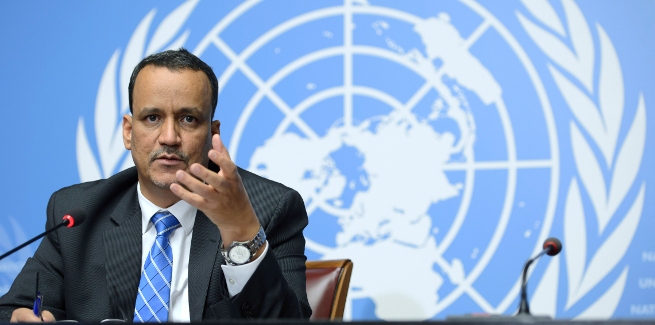
Just days before the first anniversary of the Saudi air campaign in Yemen on March 26, the U.N. special rapporteur to Yemen, Ould Cheikh, announced a cease-fire to begin April 10 followed by a third round of talks between the warring Yemeni factions on April 18. These talks have a better chance of success than previous attempts. The Houthi-Saleh alliance has long insisted that a complete and final cease-fire proceed any talks, and in previous attempts at negotiation, announced cease-fires never took hold and talks went nowhere.
Free Movement, Border Control and Asylum in Europe: Geopolitics of Italy in the European Migration Policy Framework
The creation of the Schengen area has modified the political geography of migration with important implications on for countries around the world. On one hand, the Schengen area established the first supranational border in the history of Europe; on the other hand, it obliged a small group of countries to guard the new border and to manage the refugee flows. In this context, Italy has a key role to play, but the policies that have been implemented in Italy and other E.U nations since the ’80s have revealed a lack of long-term vision. This is occurring in a context characterized by the absence of an E.U. migration policy and the selfish attitude shown by some non-Mediterranean European countries.
The oldest peer-reviewed publication dedicated to the study of the modern Middle East, MEI’s flagship journal covers politics, society, and culture in the region.