Skip to Content

Research & Commentary

Read in-depth research, analysis, and commentary from MEI’s fellows and experts on the Middle East. 

Attacked by All Sides Iraq’s New Government Faces Old Problems
  • Podcast
  • Attacked by All Sides Iraq’s New Government Faces Old Problems

    After months of deadlock following the November 2025 elections, Iraq’s parliament approved a new government under Prime Minister Ali al-Zaidi on May 14, 2026 — just as the country has become a battleground in the US-Israel-Iran war. Zaidi inherits a daunting brief: reviving a struggling economy, reining in armed factions, and steering Iraq through a perilous regional landscape. Dr. Renad Mansour, deputy director of the Middle East and North Africa Programme and director of the Iraq Initiative at Chatham House, joins host Alistair Taylor to discuss the war’s impact on Iraq — from Iran’s militia networks to the surge of attacks on the Kurdistan region — and how it’s reshaping Baghdad’s ties with Tehran and Washington.

    June 11, 2026

    Additional Research & Commentary

    Backgrounders

    The Houthis
  • Backgrounder
  • The Houthis

    The Houthis are a political-military faction and Zaydi religious movement founded in northwestern Yemen in the 1980s. A key member of Iran’s Axis of Resistance with links to other militant organizations in the Arabian Peninsula and the Horn of Africa, the group has continued to pose a threat to Western interests on a global scale.

    May 15, 2026

    The Abraham Accords
    Photo by Alex Wong/Getty Images
  • Backgrounder
  • The Abraham Accords

    This backgrounder provides an overview of how the Abraham Accords came about, the US interests involved, their economic and strategic consequences, and the prospects for further enlargement going forward.

    November 17, 2025

    Turkish Foreign Policy
  • Backgrounder
  • Turkish Foreign Policy

    After a decade of post-Arab Spring isolation, Turkey’s leaders have recognized that their ambition to position the country as an agenda-setter on the world stage requires active engagement in all directions. President Recep Tayyip Erdoğan’s consolidation of executive authority has centralized foreign policy decision-making and tied it to his domestic political priorities, transforming the country’s revisionist approach to one shaped primarily by personal and pragmatic interests.

    April 23, 2026

    Western Sahara: Why the conflict still matters
  • Video
  • Western Sahara: Why the conflict still matters

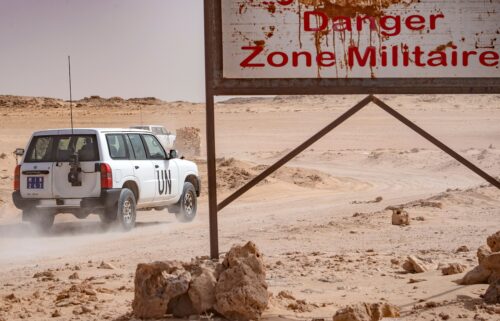
    As the Western Sahara conflict reaches its fifth decade, the territorial dispute remains unresolved and largely unknown. MEI’s Intissar Fakir unpacks the Western Sahara’s complex history and the rival claims by Morocco and the Sahrawi Arab Democratic Republic. She examines recent developments, such as President Trump’s recognition of Moroccan sovereignty over the territory and the collapse of a 30-year cease-fire, as well as the core questions that remain unanswered after half a century.

    August 7, 2025

    Podcasts

    Middle East Focus

    MEI’s flagship weekly podcast on US foreign policy and contemporary political and social issues in the Middle East.

    Taking the Edge Off the Middle East

    MEI Senior Fellow Brian Katulis engages friends, colleagues, and policy experts in casual conversations on the most important happenings in the Middle East. 

    Rethinking Democracy

    MEI Senior Fellow Gonul Tol hosts leading scholars and thought leaders on global democracy trends and the state of the liberal international order. 

    Filter by
    8730 Results
    Algeria’s opposition after the Hirak: Limitations and divisions
    Photo by APP/NurPhoto via Getty Images
  • Analysis
  • Algeria’s opposition after the Hirak: Limitations and divisions

    The gradual fading out of protests in 2020 amid the surge of the pandemic was the result of both the system’s political maneuvers and the opposition’s own organizational and political weaknesses.

    February 22, 2022

    Data shows nowhere in Syria is safe for return
    Photo by Muhammed Said/Anadolu Agency via Getty Images
  • Analysis
  • Data shows nowhere in Syria is safe for return

    The past year has seen a trend toward normalization with the Assad regime, accompanied by a push by some nations to force or coerce displaced Syrians to return — or deny them asylum outright. The presumption that Syria is now safe for return is often motivated by political expediency and a false equivalency between “safety” and reduced military operations in a particular area, rather than an in-depth understanding of conditions on the ground and the challenges that returnees face. With pressures for return increasing, the Voices for Displaced Syrians and the Operations and Policy Center undertook a first-of-its-kind research project to establish the minimum frequency and types of violations experienced by returnees throughout the whole of Syria. Despite the known difficulties, the report aimed at obtaining an understanding of at least the minimum frequency with which violations occur, which is a critical step in discussions about return.

    February 22, 2022

    Between the Sky and the Earth: Contemporary Art from the UAE
  • Podcast
  • Between the Sky and the Earth: Contemporary Art from the UAE

    Afra Aldhaheri and Asma Belhamar, two featured artists in the MEI Art Gallery’s latest exhibition, Between the Sky and the Earth: Contemporary Art from the UAE, join MEI’s Lyne Sneige to discuss the inspirations and artistic processes behind their pieces in the show.

    February 18, 2022

    A Peace-Maker's Case For Designating The Houthis
    Photo: Hani Al-Ansi/dpa (Photo by Hani Al-Ansi/picture alliance via Getty Images)
  • Commentary
  • A Peace-Maker's Case For Designating The Houthis

    The civil war in Yemen is well into its eighth year with no end in sight. It is imperative that the United Nations, with the United States and other key powers in support, do more to end the suffering and begin the long process of rebuilding and reconstructing Yemen. But that work cannot begin until there is a common understanding of what the obstacles are to achieving a peaceful resolution. In particular, what tools can and should the United States use to pressure the Houthis and overcome their resistance to negotiations?

    February 16, 2022

    Revolutionary narratives: The Islamic Republic’s greatest strength
    Photo by ATTA KENARE/AFP/Getty Images
  • Analysis
  • Revolutionary narratives: The Islamic Republic’s greatest strength

    On Feb. 11, Iran celebrated the 43rd anniversary of its 1979 revolution. The current government in Tehran takes good care to refer to this as the “Islamic Revolution,” implying that what happened then was an organized and intentional effort, on the part of the entire country, to pivot toward an Islamic society. But any student of modern Iranian history will tell you that this is a vast oversimplification that puts the cart before the horse.

    February 16, 2022

    مخاوف طهران المتزايدة بشأن الاعتماد المفرط على بكين
  • Commentary
  • مخاوف طهران المتزايدة بشأن الاعتماد المفرط على بكين

    مع استمرار المحادثات النووية في فيينا، ثمة حقيقة واحدة لا يمكن إنكارها وهي أن قدرة إيران الاقتصادية على تحمل العقوبات الأمريكية حتى الآن ترجع في الغالب إلى الصين. ففي نهاية الأمر، حصلت شركات صينية كافية على مباركة السلطات في بكين لمواصلة استيراد النفط الإيراني وتجاهل المطالب الأمريكية منذ أن أعاد دونالد ترامب فرض العقوبات على إيران في عام 2018. البيانات التجارية غامضة، ولكن كميات الخام الإيرانية المصدرة إلى الصين، يقال أنها لم تقل سوى قليلًا عما كانت عليه في سنوات ما قبل العقوبات.

    The dangers of empowering the Taliban
    Photo by HOSHANG HASHIMI/AFP via Getty Images
  • Analysis
  • The dangers of empowering the Taliban

    For years, the world tried to soften the Taliban’s extremist ideology by exposing them to modernity. As an insurgency they learned diplomacy and negotiation tactics, but their medieval thinking remained just as rigid. Now that the Taliban rule over Afghanistan, the international community continues to appease them, assuming it can convince them to form an inclusive government and ease their regressive policies while alleviating the country’s worsening humanitarian disaster. That is a naïve assumption that overlooks the root causes of the current crisis. Not only will the international community not get what it wants, but it also risks creating a much greater crisis: a Taliban theocracy that institutionalizes its repressive rule at a steep human and economic cost.

    February 14, 2022

    تفاصيل هجوم "داعش" على سجن الصناعة في مدينة الحسكة السورية
    Photo by AFP via Getty Images
  • Commentary
  • تفاصيل هجوم "داعش" على سجن الصناعة في مدينة الحسكة السورية

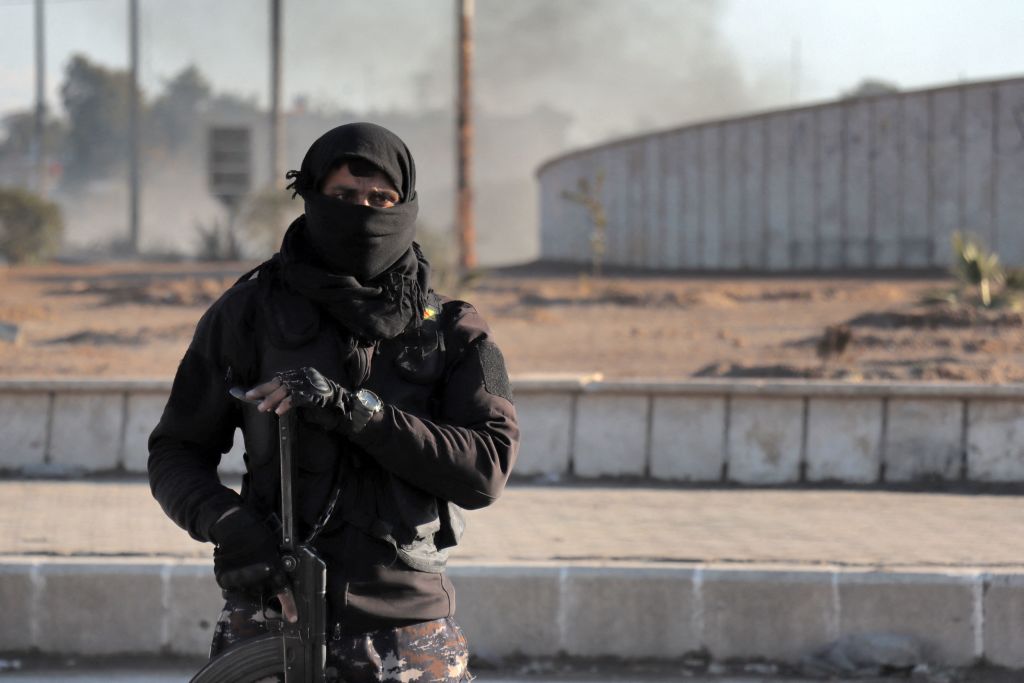
    في العشرين من شهر كانون الثاني/ يناير، هاجمت مجموعات تابعة لتنظيم “داعش”، سجن الصناعة الواقع في الجهة الجنوبية لمدينة الحسكة أقصى شمال شرق سورية، الهجوم الذي أستمر لقرابة تسعة أيام، أنتهى بمقتل العشرات من مقاتلي التنظيم ومعتقليه داخل السجن، إضافة لمقتل قرابة 140 عنصراً من قوات سوريا الديمقراطية وحامية السجن التابعة لها.

    A closer look at the ISIS attack on Syria’s al-Sina Prison
    Photo by AFP via Getty Images
  • Analysis
  • A closer look at the ISIS attack on Syria’s al-Sina Prison

    On Jan. 20, 2021, groups affiliated with ISIS attacked al-Sina Prison in the southern part of the city of al-Hasakah, in Syria’s far northeast. The attack, which lasted for nearly nine days, ended with the killing of dozens of ISIS fighters and detainees inside the prison, in addition to approximately 140 members of the SDF and its prison guards.

    Sustainable Finance in MENA
  • Podcast
  • Sustainable Finance in MENA

    Lama Kiyasseh and Lina Osman join Karen Young, director of MEI’s Economics and Energy program, to discuss how sustainable finance is changing the region by channeling financial resources toward addressing environmental and social challenges.

    February 11, 2022

    Thanks to Iran, Israel emerges stronger as the US shifts its focus away from the Middle East
    Photo by MC2 Class Dawson Roth. The appearance of U.S. Department of Defense (DoD) visual information does not imply or constitute DoD endorsement
  • Analysis
  • Thanks to Iran, Israel emerges stronger as the US shifts its focus away from the Middle East

    The U.S. is disengaging from the Middle East as it shifts its focus elsewhere, a move widely perceived within the region as a sign of a coming American departure. Many in Israel were concerned that this would strengthen Iran and its influence in the region. Instead, it is Israel that has emerged stronger.

    February 10, 2022

    Promoting Entrepreneurship in MENA: A Catalyst for a Sustained and Inclusive Recovery from COVID-19
    Photo by Morteza Nikoubazl/NurPhoto via Getty Images.
  • Analysis
  • Promoting Entrepreneurship in MENA: A Catalyst for a Sustained and Inclusive Recovery from COVID-19

    Academic and policy-based research demonstrates that women and youth in most MENA countries face legal, regulatory, and socio-cultural barriers to entering the formal labor market and generating income. Entrepreneurship can be a viable alternative for MENA women and youth because of its prestige in the region and its ability to catalyze inclusive growth. This brief draws on research and evidence to formulate policy advice on how support for entrepreneurship can enhance the economic security of women and youth in what will be a slow and painful post-pandemic recovery.

    February 9, 2022

    Read the Middle East Journal

    The oldest peer-reviewed publication dedicated to the study of the modern Middle East, MEI’s flagship journal covers politics, society, and culture in the region.