Bonus Episode: Previewing Israel’s First Post-October 7 Election
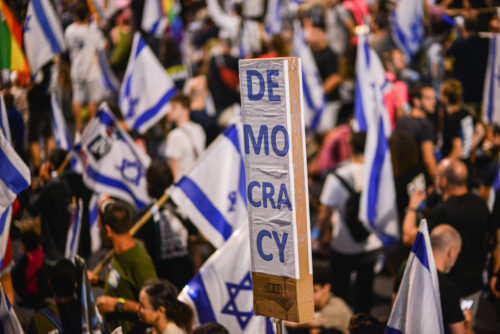
Israel is preparing to hold what may be its most consequential election in decades. On October 27, Prime Minister Benjamin Netanyahu will face his first electoral test since October 7, 2023. In this bonus episode of Middle East Focus, we present the audio from a recent MEI webinar, hosted in Israel on the eve of the vote. Senior Fellow Natan Sachs is joined by Dr. Shira Efron, Distinguished Chair for Israel Policy and senior fellow at the RAND Corporation, and Neri Zilber, veteran journalist and Financial Times correspondent. They explore what’s at stake in this historic election and how different outcomes could reshape Israel’s domestic politics and the wider region.
Israel Was Built on Hope. This Election May Be Our Last Chance to Save It
Israel’s national anthem, Hatikva, means “the hope.” Israel is not just another country, but the culmination of a 2,000-year-old dream of national redemption. The rebirth of the Jewish people’s ancestral homeland, just three years after the Holocaust, was a miraculous triumph of hope over all odds.
Today, that hope has been shattered and the elections on October 27 have become the most consequential in Israel’s history.
Washington says it doesn’t know who runs Iran. Tehran insists its leadership is united. MEI Senior Fellow Alex Vatanka joins hosts Alistair Taylor and Matthew Czekaj to sort out where the truth lies. They look at the small circle of political and military figures now steering the war effort in Tehran: who they are, how they make decisions, and how unified they really are. They also discuss the current state of US-Iran negotiations, the role of the upcoming midterm elections in the United States, and how the Islamic Republic is preparing for a potential renewal of conflict afterward.
Since 1967, Israeli settlements in the West Bank have been a contested feature of the Israeli-Palestinian conflict. The ultimate disposition of the settlements and ongoing activity related to their growth have repeatedly defied agreement in negotiations over a resolution to the conflict.
The Houthis are a political-military faction and Zaydi religious movement founded in northwestern Yemen in the 1980s. A key member of Iran’s Axis of Resistance with links to other militant organizations in the Arabian Peninsula and the Horn of Africa, the group has continued to pose a threat to Western interests on a global scale.
The India-Middle East-Europe Economic Corridor (IMEC) is a proposed multinational infrastructure initiative aimed at upgrading connectivity between the three regions through integrated trade, energy, and digital networks. Announced at the G20 summit in New Delhi in September 2023, IMEC is envisioned partially as a counterweight to China’s international infrastructure project, the Belt and Road Initiative.
After a decade of post-Arab Spring isolation, Turkey’s leaders have recognized that their ambition to position the country as an agenda-setter on the world stage requires active engagement in all directions. President Recep Tayyip Erdoğan’s consolidation of executive authority has centralized foreign policy decision-making and tied it to his domestic political priorities, transforming the country’s revisionist approach to one shaped primarily by personal and pragmatic interests.
MEI Senior Fellow Brian Katulis engages friends, colleagues, and policy experts in casual conversations on the most important happenings in the Middle East.
Iran-Backed Militia Groups Threaten US Forces in Iraq
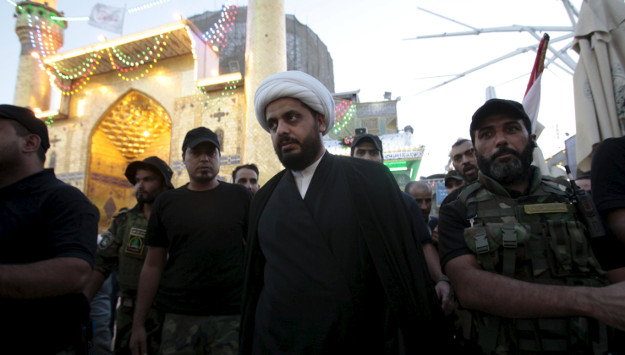
The head of a prominent Iranian-backed Iraqi militia group has called for the exit of American troops from Iraq, Iran’s Fars News Agency reported today. “We have repeatedly heard American government officials saying that Washington wants to remain in Iraq after ISIS for the long haul. This is not something that we want to allow to happen and is totally acceptable to us,” Qais al-Khazali, the secretary-general of Asa’ib Ahl al-Haq, said during a speech in the Iraqi city of Najaf.
Rouhani Talks with Macron amid Anti-Regime Protests across Iran
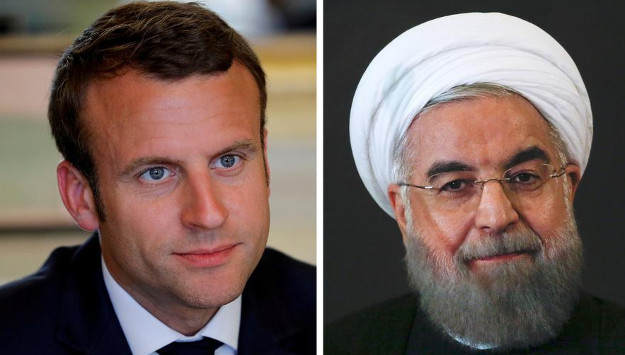
In a telephone call with his French counterpart Emmanuel Macron earlier today, Iran’s President Hassan Rouhani defended the country’s military involvement in regional conflicts and emphasized that Tehran will continue its controversial ballistic missile program despite increasing pressure from Washington and its allies, according to the account of the conversation provided by the Iranian media.
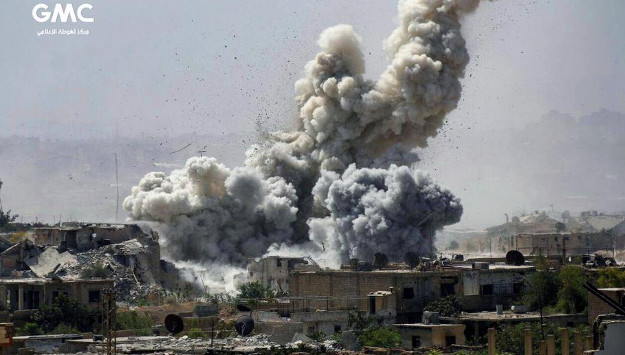
An article in Fars News Agency says Russia has reached out to all key internal and external stakeholders in the Syrian conflict to shape up the future of the country, but it cannot ignore Iran’s role and interest in Syria. “Although Russia has supported the Bashar al-Assad government through its air force, it has been Iran and the resistance axis that has carried out most of the fighting on the battlefield.
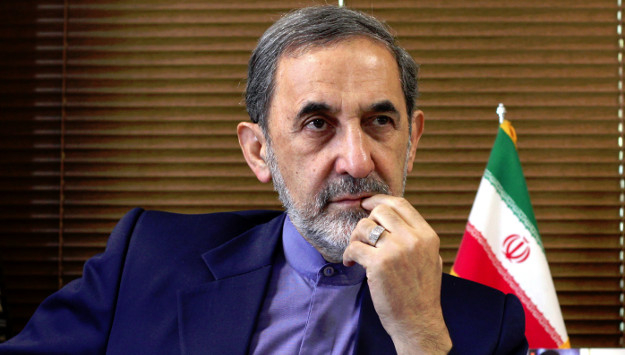
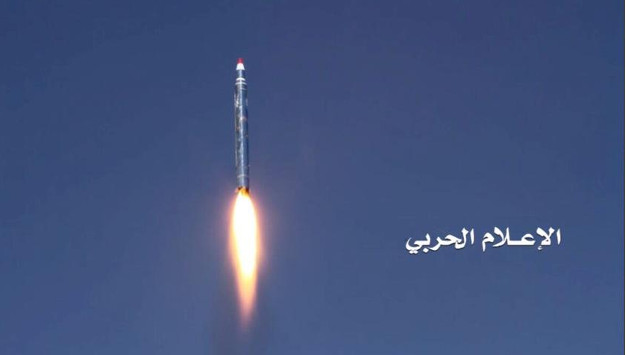
Vahidi: Yemen’s Houthis Act on Khamenei’s Order; Iran Won’t Curb Its Missile Program
A senior Iranian military official has said that the Houthi rebels in Yemen are inspired by Iran’s Islamic Revolution and its founder’s thoughts and are fighting against the Saudi-led coalition under the instructions of Ira
India’s burgeoning economic relations with the Gulf Cooperation Council (GCC) countries have been accompanied by heightened security risks, including in the domain of terrorism. In light of these developments, this article addresses three questions: What is the nature and gravity of the transnational terrorist linkages that exist between India and Gulf Arab countries? What steps has India taken, in concert with its Gulf Arab partners, to counter the terrorist threat? And what more could be done to strengthen India-Gulf Arab counterterrorism (CT) cooperation?
Khamenei Aide Calls for “Stronger Intifada” against Israel
A top aide to Iran’s Supreme Leader Ali Khamenei said there will be a third intifada and called on all Muslim countries to support Palestinian armed factions to fight Israel.
Iran Worried about Shiite Allies in Iraq Losing Power in Next Elections
Major General Yahya Rahim Safavi, senior advisor to Supreme Leader Ali Khamenei on military affairs, has expressed the concern that Iran’s interests in Iraq could be imperiled if the upcoming Iraqi parliamentary elections change the balance of power in
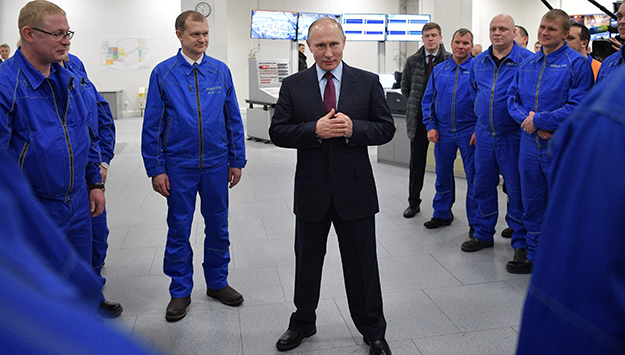
Russia's Energy Diplomacy Should Cause Concern in Washington
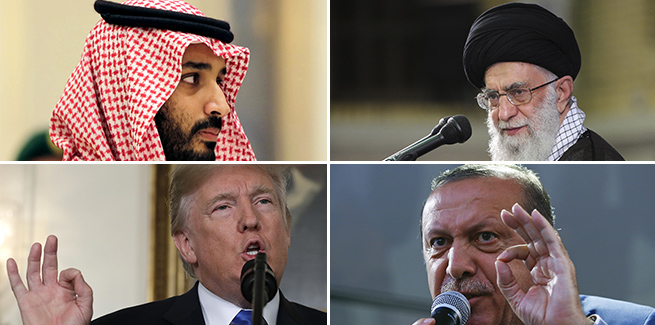
Friction between the United States and Saudi Arabia is unsettling their friends and emboldening their enemies, in particular, Russia.
Saudi public criticism of President Donald Trump’s decision to recognize Jerusalem as Israel’s capital and the State Department’s warning that Saudi Arabia needs to allow humanitarian aid into Yemen are just two of the issues straining ties. A development that has the potential to worsen U.S.-Saudi ties even further is Russia’s growing global energy clout.
After ISIS, Iran's Afghan Proxy in Syria May Fight in Other Regional Conflicts
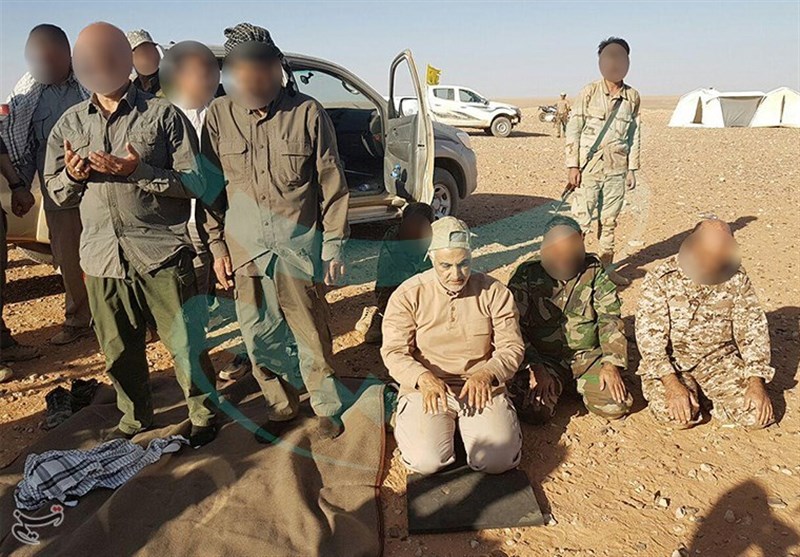
A commander of the Fatemiyoun Division, an Iranian-led Afghan Shiite militia group fighting in Syria, has said that the mission of his forces is not confined in Syria, and that the militiamen will be willing to fight in other regional conflicts and around the world if instructed by Supreme Leader Ali Khamenei.
In our final episode of the year, Paul Salem interviews several MEI scholars on the key events that transpired across the Middle East in 2017 including in Turkey, Saudi Arabia, Yemen, Syria, Iraq, and Iran. Guests include Gerald Feierstein, Charles Lister, Gonul Tol, and Alex Vatanka.
Iran Plans to Keep Long-Term Military Presence in Syria
A senior Iranian officials has said that Tehran will keep its military presence in Syria for the long haul, the Iranian media reported. “Based on the request of the legitimate government of Syria, we will continue our presence and advisory assistance until all terrorist groups in this country are destroyed,” said Ali Shamkhani, the secretary of Iran’s Supreme National Security Council.
Khamenei Aide: Iran Will Support “Resistance” to Confront U.S. in Region
A senior aide to Iran’s Supreme Leader Ali Khamenei has said that Iran will continue to aid the “resistance” forces in Yemen, Iraq, Syria and Lebanon to confront U.S. influence in the Middle East. “Victory in Iraq, Syria, Lebanon and Yemen will continue as long as the resistance coalition defends its achievements. And as long as necessary, we will have a presence in these countries. The Islamic Republic of Iran has an active presence [in these countries].
The oldest peer-reviewed publication dedicated to the study of the modern Middle East, MEI’s flagship journal covers politics, society, and culture in the region.