Skip to Content

Research & Commentary

Read in-depth research, analysis, and commentary from MEI’s fellows and experts on the Middle East. 

Trump’s Family Business Deals Risk Further Undermining the Credibility of US Middle East Policy
  • Analysis
  • Trump’s Family Business Deals Risk Further Undermining the Credibility of US Middle East Policy

    President Trump’s family businesses are once again in the spotlight as a new financial disclosure showed they earned $2 billion in income in 2025 — a dramatic increase on the year before, with much of it coming from Gulf entities, raising emoluments concerns. Mounting perceptions of corruption, combined with unresolved crises in Iran and Israel-Palestine, are eroding trust among key partners in the Middle East. With the 2026 midterms approaching, these entanglements could represent a major political vulnerability and further undermine America’s already-strained standing in the region.

    Do the Gulf States Need a New Playbook?
  • Podcast
  • Do the Gulf States Need a New Playbook?

    After the US-Israel-Iran war — and the strikes that followed the cease-fire — the Gulf states find themselves dangerously exposed. Host Alistair Taylor is joined by MEI Associate Fellow Gregory Gause to discuss the war’s impact on the Gulf, their partnership with the United States, and whether the turmoil of recent months will push Gulf leaders to reassess their alliances and international engagement.

    July 2, 2026

    Additional Research & Commentary

    Backgrounders

    The Houthis
  • Backgrounder
  • The Houthis

    The Houthis are a political-military faction and Zaydi religious movement founded in northwestern Yemen in the 1980s. A key member of Iran’s Axis of Resistance with links to other militant organizations in the Arabian Peninsula and the Horn of Africa, the group has continued to pose a threat to Western interests on a global scale.

    May 15, 2026

    The Abraham Accords
    Photo by Alex Wong/Getty Images
  • Backgrounder
  • The Abraham Accords

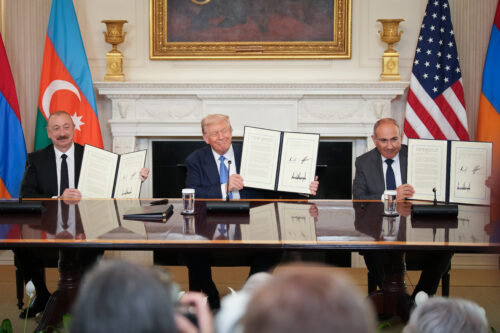
    This backgrounder provides an overview of how the Abraham Accords came about, the US interests involved, their economic and strategic consequences, and the prospects for further enlargement going forward.

    November 17, 2025

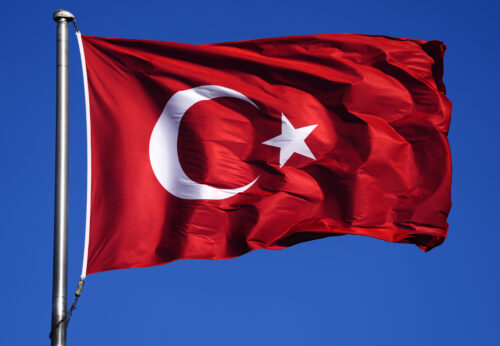
    Turkish Foreign Policy
  • Backgrounder
  • Turkish Foreign Policy

    After a decade of post-Arab Spring isolation, Turkey’s leaders have recognized that their ambition to position the country as an agenda-setter on the world stage requires active engagement in all directions. President Recep Tayyip Erdoğan’s consolidation of executive authority has centralized foreign policy decision-making and tied it to his domestic political priorities, transforming the country’s revisionist approach to one shaped primarily by personal and pragmatic interests.

    April 23, 2026

    Western Sahara: Why the conflict still matters
  • Video
  • Western Sahara: Why the conflict still matters

    As the Western Sahara conflict reaches its fifth decade, the territorial dispute remains unresolved and largely unknown. MEI’s Intissar Fakir unpacks the Western Sahara’s complex history and the rival claims by Morocco and the Sahrawi Arab Democratic Republic. She examines recent developments, such as President Trump’s recognition of Moroccan sovereignty over the territory and the collapse of a 30-year cease-fire, as well as the core questions that remain unanswered after half a century.

    August 7, 2025

    Podcasts

    Middle East Focus

    MEI’s flagship weekly podcast on US foreign policy and contemporary political and social issues in the Middle East.

    Taking the Edge Off the Middle East

    MEI Senior Fellow Brian Katulis engages friends, colleagues, and policy experts in casual conversations on the most important happenings in the Middle East. 

    Rethinking Democracy

    MEI Senior Fellow Gonul Tol hosts leading scholars and thought leaders on global democracy trends and the state of the liberal international order. 

    Filter by
    8748 Results
    NATO and the Gulf: What’s Next?
    Middle East Institute
  • Analysis
  • NATO and the Gulf: What’s Next?

    Over the course of the past ten years, NATO[1] has consistently invited Saudi Arabia and Oman to join the Istanbul Cooperation Initiative (ICI), which launched in 2004 as a cooperation framework between NATO and the GCC countries. So far, the ICI contains just four Gulf partners (Bahrain, Qatar, Kuwait, and the United Arab Emirates), and neither Riyadh nor Muscat has accepted the invitation.

    February 3, 2015

    The Syrian Opposition Meeting in Cairo: One Small Step
  • Analysis
  • The Syrian Opposition Meeting in Cairo: One Small Step

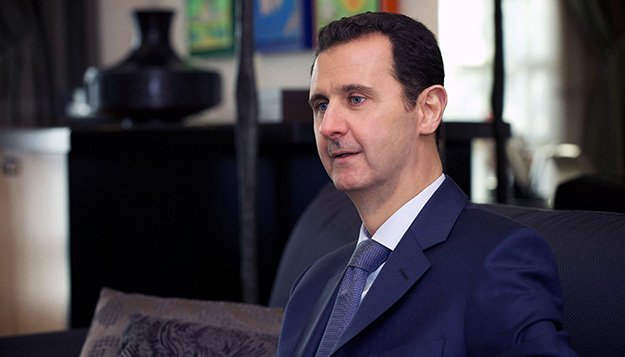
    Around 100 Syrian opposition figures recently concluded a conference in Cairo. The meeting was noteworthy for two reasons. It signaled Cairo’s cautious but unmistakable entry into the Syrian minefield, and it marks the still-fragmented opposition’s first careful steps in the direction of a compromise with the Assad regime.

    January 31, 2015

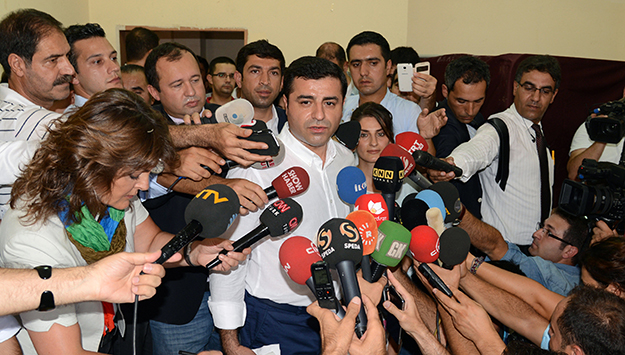
    Can Kurds Save Turkish Democracy?
  • Analysis
  • Can Kurds Save Turkish Democracy?

    Turkey’s Kurds are playing a risky game. If they succeed, they can boost the country’s troubled democracy. If they fail, a further drift toward authoritarianism will follow.

    ISIS and the Institution of Online Terrorist Recruitment
    Middle East Institute
  • Analysis
  • ISIS and the Institution of Online Terrorist Recruitment

    The rise of ISIS and associated jihadi violence taking place in Syria and Iraq has reverberated widely. The effects can be felt not just in the horrific attacks that took place in Paris in January 2015, but across the Asia-Pacific region as well, including Australia. Public officials and analysts are struggling to understand and devise countermeasures to the recruitment mechanisms employed by ISIS and other violent extremist groups. This essay explores the role that social media has played in ISIS’s efforts to attract adherents.

    January 29, 2015

    Saudi Arabia’s Seamless Succession
  • Analysis
  • Saudi Arabia’s Seamless Succession

    It appears that the senior princes who run Saudi Arabia don’t read Western news reports about their country or the numerous analyses of Saudi affairs put forth by American and European think tanks. If they did, they would have known that the death of King Abdullah was going to set off a “succession crisis” that would divide the ruling family and possibly destabilize the kingdom. They clearly did not get the memo.

    January 28, 2015

    A New Kind of Terrorist
  • Analysis
  • A New Kind of Terrorist

    This article was first published by Politico Magazine. It is co-authored by Amb. Daniel Benjamin, director of the John Sloan Dickey Center for International Understanding at Dartmouth College and fmr. coordinator for counterterrorism at the State Department.

    January 28, 2015

    Aleppo’s Musical Heritage Suffers another Loss
  • Analysis
  • Aleppo’s Musical Heritage Suffers another Loss

    Virtuoso French-Swiss qanun player Julien “Jalal Eddine” Weiss, who tirelessly promoted classical Arab and Syrian music to international audiences from his home in Aleppo, Syria, died this month in Paris. Forced to flee Syria’s brutal civil war like millions of other Syrians, Weiss’s death is a sad reminder of the ongoing threat to Aleppo’s rich cultural traditions, as well as an occasion to remember the city’s heritage, which played such an important role in inspiring his unique Middle Eastern compositions.

    January 27, 2015

    There and Back Again: Indonesian Fighters in Syria
    Middle East Institute
  • Analysis
  • There and Back Again: Indonesian Fighters in Syria

    In July of 2014, I met with a former member of Tanah Runtuh, Jemaah Islamiyah’s onetime affiliate in Poso, Central Sulawesi. As he was newly released from prison, I wanted to inquire as to his future plans. Would he go to the hills and fight with Mujahidin Indonesia Timor (MIT)? Would he follow in the footsteps of many of his former comrades and become a contractor? When he walked into the room, I was surprised to see that he sported an Islamic State (ISIS) t-shirt. “Do you want to join ISIS?” I asked. “If I can raise the money,” he answered. A week later, I met with a former affiliate of Noordin M. Top who was running several small businesses in Solo, Central Java. I had interviewed him in 2012 when he was due to open the Solo branch of Dapur Bistek, a restaurant-cum-job training program for former fighters run by the Institute for International Peace Building. With his son next to him eating ice cream, he told me that he hoped to fight with Jabhat al-Nusra (the Nusra Front); he simply needed to raise the money. Whether or not these two individuals ever make it to Syria, their responses raise important questions.

    January 27, 2015

    The Egyptian Parliamentary Elections 101
  • Analysis
  • The Egyptian Parliamentary Elections 101

    Long-awaited elections for Egypt’s parliament, which has been dissolved since 2012 as the result of a court order, have been scheduled in a two-phase process beginning this March. What will the process involve? Why are these elections important? Ahmed Morsy answers essential questions.

    January 26, 2015

    The Case for Aiding Anbar
  • Analysis
  • The Case for Aiding Anbar

    I ran into some Anbaris in Washington this week. All of them have lost friends or relatives in the fight against Islamist extremism in one form or another. They had interesting things to say.

    January 23, 2015

    Israel’s Attack on Hezbollah and Iran
  • Analysis
  • Israel’s Attack on Hezbollah and Iran

    An Israeli helicopter fired rockets on a convoy in the Golan Heights on January 18, killing six members of Hezbollah and an Iranian general. MEI’s Randa Slim explains the context surrounding the attack and the likely repercussions.

    Why did Israel choose this time to attack Hezbollah and Iranian targets in the Golan Heights?

    January 22, 2015

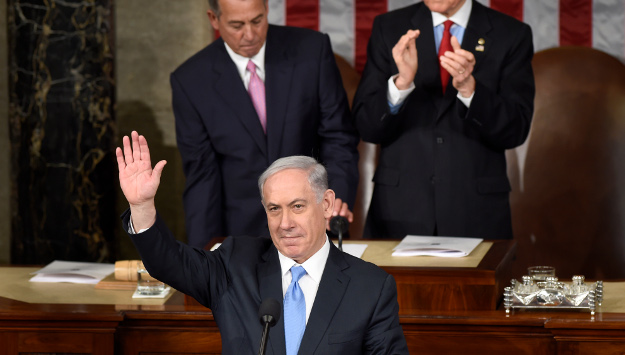
    Israel’s Potentially Existential Election
  • Analysis
  • Israel’s Potentially Existential Election

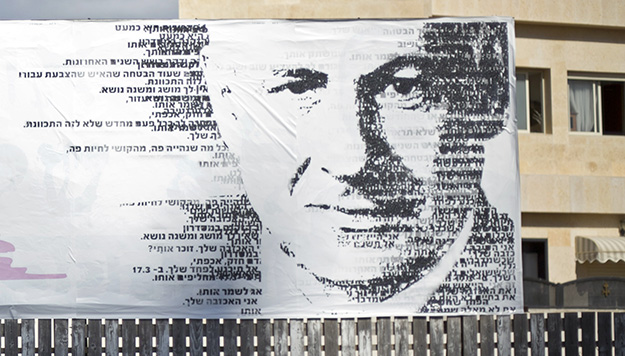
    Israel’s politics are always full of paradoxes. In the upcoming March 17 election, the central one is that the likely winner is perhaps the most disliked man in the country’s politics, namely the current prime minister, Benjamin (Bibi) Netanyahu. Even many who will vote for him don’t like him. This is partly a function of his longevity in the top ranks; he first became PM in 1996, but others held the office from 1999 until he regained it in 2009, and he has made a lot of enemies over the years.

    January 17, 2015

    Read the Middle East Journal

    The oldest peer-reviewed publication dedicated to the study of the modern Middle East, MEI’s flagship journal covers politics, society, and culture in the region.