Skip to Content

Research & Commentary

Read in-depth research, analysis, and commentary from MEI’s fellows and experts on the Middle East. 

Trump’s Family Business Deals Risk Further Undermining the Credibility of US Middle East Policy
  • Analysis
  • Trump’s Family Business Deals Risk Further Undermining the Credibility of US Middle East Policy

    President Trump’s family businesses are once again in the spotlight as a new financial disclosure showed they earned $2 billion in income in 2025 — a dramatic increase on the year before, with much of it coming from Gulf entities, raising emoluments concerns. Mounting perceptions of corruption, combined with unresolved crises in Iran and Israel-Palestine, are eroding trust among key partners in the Middle East. With the 2026 midterms approaching, these entanglements could represent a major political vulnerability and further undermine America’s already-strained standing in the region.

    Do the Gulf States Need a New Playbook?
  • Podcast
  • Do the Gulf States Need a New Playbook?

    After the US-Israel-Iran war — and the strikes that followed the cease-fire — the Gulf states find themselves dangerously exposed. Host Alistair Taylor is joined by MEI Associate Fellow Gregory Gause to discuss the war’s impact on the Gulf, their partnership with the United States, and whether the turmoil of recent months will push Gulf leaders to reassess their alliances and international engagement.

    July 2, 2026

    Additional Research & Commentary

    Backgrounders

    The Houthis
  • Backgrounder
  • The Houthis

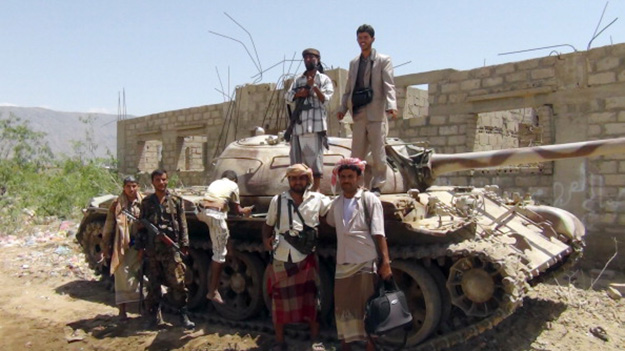
    The Houthis are a political-military faction and Zaydi religious movement founded in northwestern Yemen in the 1980s. A key member of Iran’s Axis of Resistance with links to other militant organizations in the Arabian Peninsula and the Horn of Africa, the group has continued to pose a threat to Western interests on a global scale.

    May 15, 2026

    The Abraham Accords
    Photo by Alex Wong/Getty Images
  • Backgrounder
  • The Abraham Accords

    This backgrounder provides an overview of how the Abraham Accords came about, the US interests involved, their economic and strategic consequences, and the prospects for further enlargement going forward.

    November 17, 2025

    Turkish Foreign Policy
  • Backgrounder
  • Turkish Foreign Policy

    After a decade of post-Arab Spring isolation, Turkey’s leaders have recognized that their ambition to position the country as an agenda-setter on the world stage requires active engagement in all directions. President Recep Tayyip Erdoğan’s consolidation of executive authority has centralized foreign policy decision-making and tied it to his domestic political priorities, transforming the country’s revisionist approach to one shaped primarily by personal and pragmatic interests.

    April 23, 2026

    Western Sahara: Why the conflict still matters
  • Video
  • Western Sahara: Why the conflict still matters

    As the Western Sahara conflict reaches its fifth decade, the territorial dispute remains unresolved and largely unknown. MEI’s Intissar Fakir unpacks the Western Sahara’s complex history and the rival claims by Morocco and the Sahrawi Arab Democratic Republic. She examines recent developments, such as President Trump’s recognition of Moroccan sovereignty over the territory and the collapse of a 30-year cease-fire, as well as the core questions that remain unanswered after half a century.

    August 7, 2025

    Podcasts

    Middle East Focus

    MEI’s flagship weekly podcast on US foreign policy and contemporary political and social issues in the Middle East.

    Taking the Edge Off the Middle East

    MEI Senior Fellow Brian Katulis engages friends, colleagues, and policy experts in casual conversations on the most important happenings in the Middle East. 

    Rethinking Democracy

    MEI Senior Fellow Gonul Tol hosts leading scholars and thought leaders on global democracy trends and the state of the liberal international order. 

    Filter by
    8748 Results
    Surviving Cold and Conflict in Syria
    Middle East Institute
  • Analysis
  • Surviving Cold and Conflict in Syria

    “Amal”[1] fled violence in the countryside outside of Damascus with her husband, father, and five children almost two years ago. The family moved to Salamieh, a Syrian town of approximately 100,000 people 33 kilometers southeast of Hama. Salamieh is still under the control of the government armed forces, and many displaced people, mainly Sunnis from Homs, Aleppo, and the Damascus area, have sought refuge there and in surrounding towns.

    January 24, 2014

    What's at Stake in Geneva II
  • Analysis
  • What's at Stake in Geneva II

    This article was originally published by NPR.

    With a major push from the U.S., a new Syrian peace conference opened Wednesday in Switzerland, the first such effort since the middle of 2012. It wasn’t easy getting everyone there, and it will be harder still to achieve a breakthrough.

    January 22, 2014

    Qanats and Water Cooperation for a Sustainable Future
    Middle East Institute
  • Analysis
  • Qanats and Water Cooperation for a Sustainable Future

    This essay is part of the Middle East-Asia Project (MAP) series on “Harvesting Water and Harnessing Cooperation: Qanat Systems in the Middle East and Asia.” 

    January 19, 2014

    Harvesting Water and Harnessing Cooperation: Qanat Systems in the Middle East and Asia
    Middle East Institute
  • Analysis
  • Harvesting Water and Harnessing Cooperation: Qanat Systems in the Middle East and Asia

    For centuries, human societies in drylands have overcome the challenge of water scarcity through traditional methods of water harvesting. The utilization of qanat technology is one of them.


    Qanat is the generic term for an ancient environmentally sustainable water harvesting and conveyance technique believed to have originated in Persia in the early first millennium B.C.

    January 18, 2014

    The Necessity of Karez Water Systems in Balochistan
    Middle East Institute
  • Analysis
  • The Necessity of Karez Water Systems in Balochistan

    Land is infinite in Balochistan. It is the one place in South Asia where if you ask someone how much land they have, they will generally have no idea. Instead, it is water that matters. In Balochistan, social station is not determined by landholdings but by the size of one’s share of water in a karez. These manmade underground channels passively tap groundwater and provide the lifeblood of villages at the valley floor.

    January 17, 2014

    The Karez System in China’s Xinjiang Region
    Middle East Institute
  • Analysis
  • The Karez System in China’s Xinjiang Region

    The water harvesting and underground transmission system called a karez in the Uygur language, or kan er jing in Mandarin, has provided sustainable water supplies in some communities of the Xinjiang Uygur Autonomous Region (Xinjiang), China for over 2,000 years. These water systems have also been used in countries in North Africa and West Asia, as well as other Asian countries, including Afghanistan, Iran, and Pakistan.

    January 17, 2014

    The Problem of Transitional Justice in Post-Suharto Indonesia
  • Analysis
  • The Problem of Transitional Justice in Post-Suharto Indonesia

    Transitional justice in Indonesia has largely failed. While exact definitions vary, transitional justice here refers loosely to the righting of past wrongs by holding perpetrators accountable for their actions. In Indonesia, neither Suharto nor any of the high-ranking officials of the New Order era have ever been put on trial or held accountable for human rights abuses during 32 years of authoritarian rule. In fact, no Indonesian has been successfully convicted for past abuses despite numerous attempts to do so.

    January 17, 2014

    The Houthi Paradox
  • Analysis
  • The Houthi Paradox

    The removal of Yemeni President Ali Abdullah Saleh in 2011 has created an existential crisis for Yemen’s Houthis. Like many other armed political groups in Yemen and elsewhere, the Houthis’ survival depends on the continued existence of an enemy. With Saleh gone, their raison d’être has become difficult to define and their armed opposition hard to defend.

    January 16, 2014

    Tunisia’s New Constitution
    Middle East Institute
  • Analysis
  • Tunisia’s New Constitution

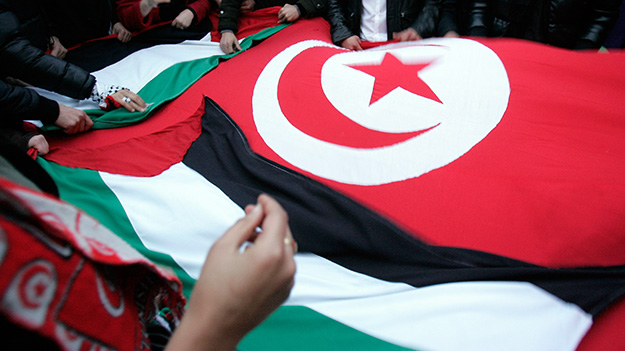
    Whereas many observers are lamenting the failure of the “Arab Spring,” Tunisia has proven once again that it is on a march toward democracy. On January 3, the National Constituent Assembly (NCA) began voting on the country’s new constitution. Lawmakers have approved many of the chapters and articles, and the final vote on the entire document should take place within a few days. Surprisingly, many of the controversial articles on state identity, the relationship between religion and politics, and gender equality have passed with a clear majority.

    January 14, 2014

    Iraq: Reversing the Reversal
  • Analysis
  • Iraq: Reversing the Reversal

    Since the departure of U.S. ground forces from Iraq in 2011 in the wake of failed negotiations to extend the 2008 Status of Forces Agreement, the security situation in Iraq has steadily declined. To many, the situation was predictable, as the absence of a residual U.S. force to mature the Iraqi security forces and moderate long-standing political tensions among the sects led to a security vacuum filled by extremists and terrorists. To others, 10 years of investment and over 4,000 troops lost was enough, and it was time for the Iraqis to resolve their own internal conflicts.

    January 10, 2014

    Whither Political Islam?
  • Analysis
  • Whither Political Islam?

    This article was first published on Al Jazeera on December 24, 2013.

    The downfall of Egypt’s Muslim Brotherhood (MB) has put political Islam at a crossroads. Not only has it shown that ideology per se is not a guarantor of political success, but also that Islamists need to rethink their strategy and tactics in order to deal with the new environment following the Arab Spring.

    January 7, 2014

    Cambodia: Politics and a Legacy of Trauma
    Middle East Institute
  • Analysis
  • Cambodia: Politics and a Legacy of Trauma

    Cambodia’s traumatic history has often been used as a tool for power among rival politicians in the country, particularly when elections are approaching. This article, however, argues that due to the passage of time, such tactics in relation to the Khmer Rouge have started to lose ground, in particular owing to demographic redistribution, social media outreach, and changes in perception.

    January 7, 2014

    Iraq’s Tangled Foreign Interests and Relations
    Middle East Institute
  • Analysis
  • Iraq’s Tangled Foreign Interests and Relations

    The following is an excerpt from “Iraq’s Tangled Foreign Interests and Relations,” written by MEI Vice President Paul Salem and published by the Carnegie Middle East Center on December 24, 2013.  Click here to view the full report.

    January 6, 2014

    Egypt’s Informal Economy
  • Analysis
  • Egypt’s Informal Economy

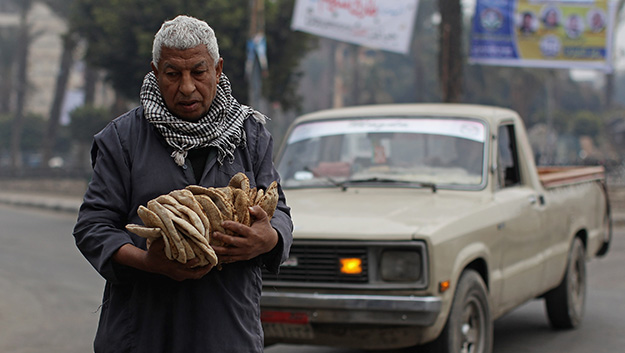
    Samy M. has been providing currency exchange services on the black market in Cairo’s hectic neighborhood of Nasr City for nearly a decade. He does this from the crammed office of his other, formal business, which offers real estate services.

    “Money exchange has always been lucrative, but it was even busier last year,” he says. With the Egyptian pound weak, hovering at around 6.9 pounds to the dollar on the official market for the past few months, people are drawn to black market rates, which are sometimes as high as 7.20 pounds to the dollar. 

    January 6, 2014

    Read the Middle East Journal

    The oldest peer-reviewed publication dedicated to the study of the modern Middle East, MEI’s flagship journal covers politics, society, and culture in the region.