Skip to Content

Research & Commentary

Read in-depth research, analysis, and commentary from MEI’s fellows and experts on the Middle East. 

Trump’s Family Business Deals Risk Further Undermining the Credibility of US Middle East Policy
  • Analysis
  • Trump’s Family Business Deals Risk Further Undermining the Credibility of US Middle East Policy

    President Trump’s family businesses are once again in the spotlight as a new financial disclosure showed they earned $2 billion in income in 2025 — a dramatic increase on the year before, with much of it coming from Gulf entities, raising emoluments concerns. Mounting perceptions of corruption, combined with unresolved crises in Iran and Israel-Palestine, are eroding trust among key partners in the Middle East. With the 2026 midterms approaching, these entanglements could represent a major political vulnerability and further undermine America’s already-strained standing in the region.

    Do the Gulf States Need a New Playbook?
  • Podcast
  • Do the Gulf States Need a New Playbook?

    After the US-Israel-Iran war — and the strikes that followed the cease-fire — the Gulf states find themselves dangerously exposed. Host Alistair Taylor is joined by MEI Associate Fellow Gregory Gause to discuss the war’s impact on the Gulf, their partnership with the United States, and whether the turmoil of recent months will push Gulf leaders to reassess their alliances and international engagement.

    July 2, 2026

    Additional Research & Commentary

    Backgrounders

    The Houthis
  • Backgrounder
  • The Houthis

    The Houthis are a political-military faction and Zaydi religious movement founded in northwestern Yemen in the 1980s. A key member of Iran’s Axis of Resistance with links to other militant organizations in the Arabian Peninsula and the Horn of Africa, the group has continued to pose a threat to Western interests on a global scale.

    May 15, 2026

    The Abraham Accords
    Photo by Alex Wong/Getty Images
  • Backgrounder
  • The Abraham Accords

    This backgrounder provides an overview of how the Abraham Accords came about, the US interests involved, their economic and strategic consequences, and the prospects for further enlargement going forward.

    November 17, 2025

    Turkish Foreign Policy
  • Backgrounder
  • Turkish Foreign Policy

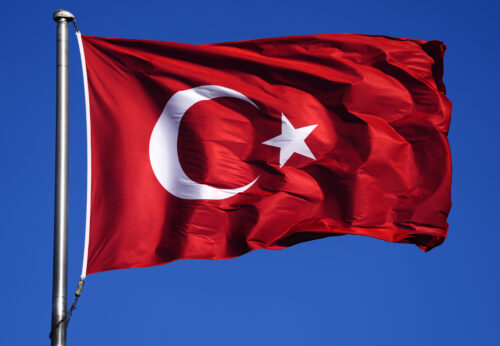
    After a decade of post-Arab Spring isolation, Turkey’s leaders have recognized that their ambition to position the country as an agenda-setter on the world stage requires active engagement in all directions. President Recep Tayyip Erdoğan’s consolidation of executive authority has centralized foreign policy decision-making and tied it to his domestic political priorities, transforming the country’s revisionist approach to one shaped primarily by personal and pragmatic interests.

    April 23, 2026

    Western Sahara: Why the conflict still matters
  • Video
  • Western Sahara: Why the conflict still matters

    As the Western Sahara conflict reaches its fifth decade, the territorial dispute remains unresolved and largely unknown. MEI’s Intissar Fakir unpacks the Western Sahara’s complex history and the rival claims by Morocco and the Sahrawi Arab Democratic Republic. She examines recent developments, such as President Trump’s recognition of Moroccan sovereignty over the territory and the collapse of a 30-year cease-fire, as well as the core questions that remain unanswered after half a century.

    August 7, 2025

    Podcasts

    Middle East Focus

    MEI’s flagship weekly podcast on US foreign policy and contemporary political and social issues in the Middle East.

    Taking the Edge Off the Middle East

    MEI Senior Fellow Brian Katulis engages friends, colleagues, and policy experts in casual conversations on the most important happenings in the Middle East. 

    Rethinking Democracy

    MEI Senior Fellow Gonul Tol hosts leading scholars and thought leaders on global democracy trends and the state of the liberal international order. 

    Filter by
    8748 Results
    Egypt after June 30: Violence in Speech, Politics, & Institutions
    Middle East Institute
  • Analysis
  • Egypt after June 30: Violence in Speech, Politics, & Institutions

    The current wave of violence in Egypt, which began in the wake of June 30, 2013, is unlike any other the Egyptian public has witnessed since the January 25 revolution of 2011. Both verbal and political forms of violence are driving Egypt’s state and society toward a dangerous precipice—and to a total departure from the path to democratic transformation.

    August 14, 2013

    The Brothers and the Copts
    Middle East Institute
  • Analysis
  • The Brothers and the Copts

    “What’s interesting about the Christians is that when they elect Shafik, they comprise half the population; when they go down to Ittihadiya [Palace] they are most of the population; when it comes to building churches they are five percent; and right before the elections they are partners in the nation.”

    –Egyptian satirist Bassem Youssef, December 14, 2012[1]

    August 12, 2013

    The Persistence of the Police in Egypt
    Middle East Institute
  • Analysis
  • The Persistence of the Police in Egypt

    The fact that millions of Egyptians welcomed back the military and the police in order to depose Morsi and his Muslim Brotherhood in early July has given the police a regained sense of control and authority. As such, they have returned to the streets in large numbers and, moreover, have been implicated in the shooting deaths of protestors calling for Morsi’s reinstatement.

    August 8, 2013

    Brotherhood Violence, Overshadowed
    Middle East Institute
  • Analysis
  • Brotherhood Violence, Overshadowed

    Significant numbers of Egyptians again poured into the streets on July 26 in response to Defense Minister Abdul-Fattah el-Sisi’s call to demonstrate “against terrorism.” While some may argue over the merit of el-Sisi’s call, the deluge of people into the streets reflects a rejection of what they believe is a Brotherhood campaign of political violence waged not just against security forces but against civilians.

    August 8, 2013

    The Artistic Activities of Iranian Immigrants in Malaysia
    Middle East Institute
  • Analysis
  • The Artistic Activities of Iranian Immigrants in Malaysia

    Popular art produced by immigrant artists reflects their special circumstances, namely the challenges and limitations associated with navigating two cultures. Such is the case for many Iranian artists in Malaysia who have nonetheless overcome these obstacles to create art.

    August 6, 2013

    The Future of Political Islam in Egypt Post-Morsi
    Middle East Institute
  • Podcast
  • The Future of Political Islam in Egypt Post-Morsi

    The Middle East Institute, in conjunction with the Conflict Management Program at SAIS, is pleased to welcome Dr. Ahmad Atif Ahmad, Professor of Religious Studies at the University of California, Santa Barbara, and Dr. Jonathan A. Brown, Associate Professor of Islam and Muslim-Christian Understanding at the Edmund A. Walsh School of Foreign Service, for a discussion about the thinking and strategy of Islamist actors in Egypt in the wake of Egyptian president Mohamed Morsi’s ouster.

    August 6, 2013

    The Future of Political Islam in Egypt Post-Morsi
    Middle East Institute
  • Podcast
  • The Future of Political Islam in Egypt Post-Morsi

    The Middle East Institute, in conjunction with the Conflict Management Program at SAIS, is pleased to welcome Dr. Ahmad Atif Ahmad, Professor of Religious Studies at the University of California, Santa Barbara, and Dr. Jonathan A. Brown, Associate Professor of Islam and Muslim-Christian Understanding at the Edmund A. Walsh School of Foreign Service, for a discussion about the thinking and strategy of Islamist actors in Egypt in the wake of Egyptian president Mohamed Morsi’s ouster.

    August 6, 2013

    The Future of Political Islam in Egypt Post-Morsi
    Middle East Institute
  • Podcast
  • The Future of Political Islam in Egypt Post-Morsi

    The Middle East Institute, in conjunction with the Conflict Management Program at SAIS, is pleased to welcome Dr. Ahmad Atif Ahmad, Professor of Religious Studies at the University of California, Santa Barbara, and Dr. Jonathan A. Brown, Associate Professor of Islam and Muslim-Christian Understanding at the Edmund A. Walsh School of Foreign Service, for a discussion about the thinking and strategy of Islamist actors in Egypt in the wake of Egyptian president Mohamed Morsi’s ouster.

    August 6, 2013

    The Future of Political Islam in Egypt Post-Morsi
    Middle East Institute
  • Podcast
  • The Future of Political Islam in Egypt Post-Morsi

    The Middle East Institute, in conjunction with the Conflict Management Program at SAIS, is pleased to welcome Dr. Ahmad Atif Ahmad, Professor of Religious Studies at the University of California, Santa Barbara, and Dr. Jonathan A. Brown, Associate Professor of Islam and Muslim-Christian Understanding at the Edmund A. Walsh School of Foreign Service, for a discussion about the thinking and strategy of Islamist actors in Egypt in the wake of Egyptian president Mohamed Morsi’s ouster.

    August 6, 2013

    The Future of Political Islam in Egypt Post-Morsi
    Middle East Institute
  • Podcast
  • The Future of Political Islam in Egypt Post-Morsi

    The Middle East Institute, in conjunction with the Conflict Management Program at SAIS, is pleased to welcome Dr. Ahmad Atif Ahmad, Professor of Religious Studies at the University of California, Santa Barbara, and Dr. Jonathan A. Brown, Associate Professor of Islam and Muslim-Christian Understanding at the Edmund A. Walsh School of Foreign Service, for a discussion about the thinking and strategy of Islamist actors in Egypt in the wake of Egyptian president Mohamed Morsi’s ouster.

    August 6, 2013

    Al-Qa'ida: Time to Engage the Deep Battle
    Middle East Institute
  • Analysis
  • Al-Qa'ida: Time to Engage the Deep Battle

    Al-Qa’ida is not simply the terrorist organization responsible for the 9/11 attacks; it is a violent manifestation of a social movement that rejects the current international order.

    August 2, 2013

    Read the Middle East Journal

    The oldest peer-reviewed publication dedicated to the study of the modern Middle East, MEI’s flagship journal covers politics, society, and culture in the region.