Skip to Content

Research & Commentary

Read in-depth research, analysis, and commentary from MEI’s fellows and experts on the Middle East. 

Trump’s Family Business Deals Risk Further Undermining the Credibility of US Middle East Policy
  • Analysis
  • Trump’s Family Business Deals Risk Further Undermining the Credibility of US Middle East Policy

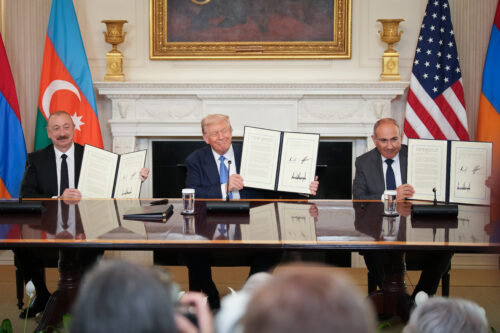
    President Trump’s family businesses are once again in the spotlight as a new financial disclosure showed they earned $2 billion in income in 2025 — a dramatic increase on the year before, with much of it coming from Gulf entities, raising emoluments concerns. Mounting perceptions of corruption, combined with unresolved crises in Iran and Israel-Palestine, are eroding trust among key partners in the Middle East. With the 2026 midterms approaching, these entanglements could represent a major political vulnerability and further undermine America’s already-strained standing in the region.

    Do the Gulf States Need a New Playbook?
  • Podcast
  • Do the Gulf States Need a New Playbook?

    After the US-Israel-Iran war — and the strikes that followed the cease-fire — the Gulf states find themselves dangerously exposed. Host Alistair Taylor is joined by MEI Associate Fellow Gregory Gause to discuss the war’s impact on the Gulf, their partnership with the United States, and whether the turmoil of recent months will push Gulf leaders to reassess their alliances and international engagement.

    July 2, 2026

    Additional Research & Commentary

    Backgrounders

    The Houthis
  • Backgrounder
  • The Houthis

    The Houthis are a political-military faction and Zaydi religious movement founded in northwestern Yemen in the 1980s. A key member of Iran’s Axis of Resistance with links to other militant organizations in the Arabian Peninsula and the Horn of Africa, the group has continued to pose a threat to Western interests on a global scale.

    May 15, 2026

    The Abraham Accords
    Photo by Alex Wong/Getty Images
  • Backgrounder
  • The Abraham Accords

    This backgrounder provides an overview of how the Abraham Accords came about, the US interests involved, their economic and strategic consequences, and the prospects for further enlargement going forward.

    November 17, 2025

    Turkish Foreign Policy
  • Backgrounder
  • Turkish Foreign Policy

    After a decade of post-Arab Spring isolation, Turkey’s leaders have recognized that their ambition to position the country as an agenda-setter on the world stage requires active engagement in all directions. President Recep Tayyip Erdoğan’s consolidation of executive authority has centralized foreign policy decision-making and tied it to his domestic political priorities, transforming the country’s revisionist approach to one shaped primarily by personal and pragmatic interests.

    April 23, 2026

    Western Sahara: Why the conflict still matters
  • Video
  • Western Sahara: Why the conflict still matters

    As the Western Sahara conflict reaches its fifth decade, the territorial dispute remains unresolved and largely unknown. MEI’s Intissar Fakir unpacks the Western Sahara’s complex history and the rival claims by Morocco and the Sahrawi Arab Democratic Republic. She examines recent developments, such as President Trump’s recognition of Moroccan sovereignty over the territory and the collapse of a 30-year cease-fire, as well as the core questions that remain unanswered after half a century.

    August 7, 2025

    Podcasts

    Middle East Focus

    MEI’s flagship weekly podcast on US foreign policy and contemporary political and social issues in the Middle East.

    Taking the Edge Off the Middle East

    MEI Senior Fellow Brian Katulis engages friends, colleagues, and policy experts in casual conversations on the most important happenings in the Middle East. 

    Rethinking Democracy

    MEI Senior Fellow Gonul Tol hosts leading scholars and thought leaders on global democracy trends and the state of the liberal international order. 

    Filter by
    8748 Results
    The Ways of the Nassara
  • Analysis
  • The Ways of the Nassara

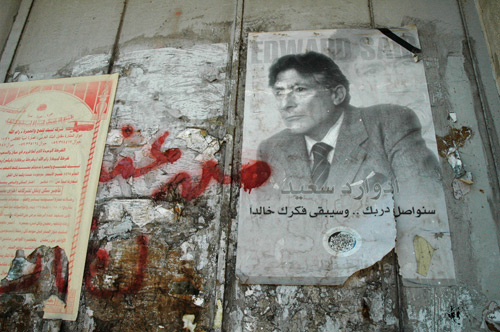
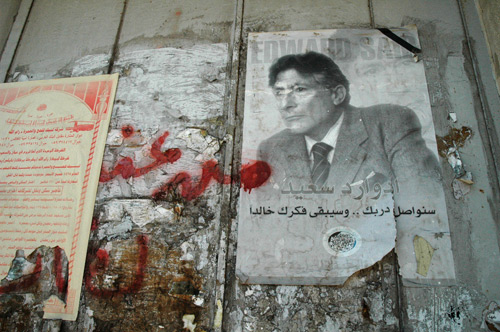
    I had heard of Edward Said long before I discovered the world of theory and read Orientalism in the early 1990s, more than a decade after the book was published to great acclaim. I remember being vaguely intrigued by the public presence of a man with an English-Arab name. In a sort of fateful irony, Said’s parents seemed to have baptized their son to live across cultures, to be out of place, as Said wrote toward the end of his life. But it was the name’s hint of Arabness that first caught my attention.

    April 19, 2012

    Popular Culture, Orientalism, and Edward Said
  • Analysis
  • Popular Culture, Orientalism, and Edward Said

    Originally posted September 2009

    There are at least two unexamined axioms in Edward Said’s Orientalism: first, the primacy of the political in Orientalist discourse, and secondly the importance in that discourse of the intellectual and the literary (using “literary” in a high cultural sense). The first will not be discussed here, though it seems doubtful. The second deserves thinking about, and it is that which is discussed here.

    April 19, 2012

    Intimidating, Assassinating, and Leading: Two Early Mujahidin Commanders Reflect on Building Resistance Fronts
    Middle East Institute
  • Analysis
  • Intimidating, Assassinating, and Leading: Two Early Mujahidin Commanders Reflect on Building Resistance Fronts

    Originally posted December 2009

    Saleh Mohammad and Ezzatullah Atif[1] were among the angry young Afghans who, in the first three years after the 1978 coup, drove their government out of the countryside. Mobilizing the youth of their areas into clandestine networks and then refashioning these into jabhas (resistance fronts) was their first experience of leadership. Their successful mobilization laid the foundations of the war of attrition, which eventually defeated the Soviet Union and toppled its client government.

    April 19, 2012

    Mullah Omar Wants You! Taliban Mobilization Strategies or Motivations for Joining the Insurgency
    Middle East Institute
  • Analysis
  • Mullah Omar Wants You! Taliban Mobilization Strategies or Motivations for Joining the Insurgency

    Originally posted December 2009

    The Taliban insurgency in Afghanistan seemingly benefits from an unlimited reservoir of “foot soldiers” ready to take up the fight against the Afghan government and its international military supporters. The foot soldiers’ motivation is often attributed to ideology, poverty, and/or a lack of education. However, the ability of the Taliban insurgency to mobilize recruits is complex and driven by a mix of political, economic, and social factors.

    April 19, 2012

    Repeating History: Parallels between Mujahidin Tactics and Afghanistan’s Current Insurgency
    Middle East Institute
  • Analysis
  • Repeating History: Parallels between Mujahidin Tactics and Afghanistan’s Current Insurgency

    Originally posted December 2009

    Since 1747, all of the invaders or occupiers of Afghanistan have made almost the same mistakes. All were obliged to leave Afghanistan, resulting in the downfall or demise of their empires. In general, Afghans are independent thinkers and believe their own way of life to be the best. Interfering in their day-to-day affairs brings animosity and hatred against their would-be rulers, occupiers, and invaders. Nor do Afghans accept the imposition of rulers or types of government which would clash with their basic values.

    April 18, 2012

    Charting a Course for a Better Future: Responding to the Crimes of the Past
    Middle East Institute
  • Analysis
  • Charting a Course for a Better Future: Responding to the Crimes of the Past

    Originally posted December 2009

    Thirty years of war have taken an enormous toll on all aspects of Afghan society whose traditional social fabric has broken down, giving rise to a new generation of political and military elites. The cycles of violence over the past three decades have included massive human rights abuses by all parties, leaving a legacy of pent-up grievances and profound feelings of injustice.

    April 18, 2012

    Respecting Afghanistan’s Sovereignty
    Middle East Institute
  • Analysis
  • Respecting Afghanistan’s Sovereignty

    Originally posted December 2009

    Respect for Afghanistan’s sovereignty is a sine qua non condition to restoring the country to normalcy. The fact that a country expects and demands that its sovereignty be respected should not be misconstrued as a refusal to engage the outside world — as a sign that the country is drifting towards some type of chauvinistic nationalism.

    April 18, 2012

    Containment: A Viable Strategy for Iran?
  • Video
  • Containment: A Viable Strategy for Iran?

    The Middle East Institute is proud to host Georgetown University professor Paul Pillar for a discussion about Iran and how best to address its nuclear ambitions. Pillar argues that the acceptable range of opinion on Iran has narrowed around the idea that all options, including a military strike, must be pursued to prevent the country from acquiring nuclear weapons. And yet, Pillar argues, if the combination of nuclear talks and sanctions do not yield the outcome the West and Israel seek, containment is preferable to war.

    April 18, 2012

    Read the Middle East Journal

    The oldest peer-reviewed publication dedicated to the study of the modern Middle East, MEI’s flagship journal covers politics, society, and culture in the region.