Skip to Content

Research & Commentary

Read in-depth research, analysis, and commentary from MEI’s fellows and experts on the Middle East. 

Trump’s Family Business Deals Risk Further Undermining the Credibility of US Middle East Policy
  • Analysis
  • Trump’s Family Business Deals Risk Further Undermining the Credibility of US Middle East Policy

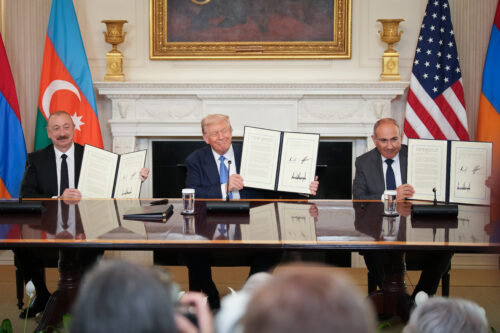
    President Trump’s family businesses are once again in the spotlight as a new financial disclosure showed they earned $2 billion in income in 2025 — a dramatic increase on the year before, with much of it coming from Gulf entities, raising emoluments concerns. Mounting perceptions of corruption, combined with unresolved crises in Iran and Israel-Palestine, are eroding trust among key partners in the Middle East. With the 2026 midterms approaching, these entanglements could represent a major political vulnerability and further undermine America’s already-strained standing in the region.

    Do the Gulf States Need a New Playbook?
  • Podcast
  • Do the Gulf States Need a New Playbook?

    After the US-Israel-Iran war — and the strikes that followed the cease-fire — the Gulf states find themselves dangerously exposed. Host Alistair Taylor is joined by MEI Associate Fellow Gregory Gause to discuss the war’s impact on the Gulf, their partnership with the United States, and whether the turmoil of recent months will push Gulf leaders to reassess their alliances and international engagement.

    July 2, 2026

    Additional Research & Commentary

    Backgrounders

    The Houthis
  • Backgrounder
  • The Houthis

    The Houthis are a political-military faction and Zaydi religious movement founded in northwestern Yemen in the 1980s. A key member of Iran’s Axis of Resistance with links to other militant organizations in the Arabian Peninsula and the Horn of Africa, the group has continued to pose a threat to Western interests on a global scale.

    May 15, 2026

    The Abraham Accords
    Photo by Alex Wong/Getty Images
  • Backgrounder
  • The Abraham Accords

    This backgrounder provides an overview of how the Abraham Accords came about, the US interests involved, their economic and strategic consequences, and the prospects for further enlargement going forward.

    November 17, 2025

    Turkish Foreign Policy
  • Backgrounder
  • Turkish Foreign Policy

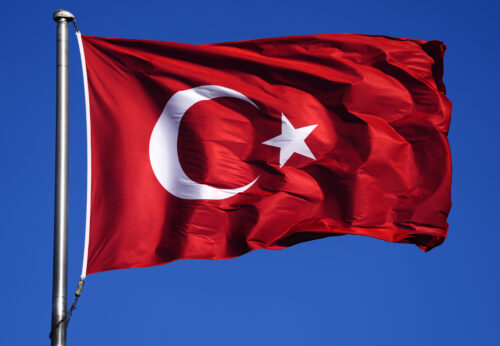
    After a decade of post-Arab Spring isolation, Turkey’s leaders have recognized that their ambition to position the country as an agenda-setter on the world stage requires active engagement in all directions. President Recep Tayyip Erdoğan’s consolidation of executive authority has centralized foreign policy decision-making and tied it to his domestic political priorities, transforming the country’s revisionist approach to one shaped primarily by personal and pragmatic interests.

    April 23, 2026

    Western Sahara: Why the conflict still matters
  • Video
  • Western Sahara: Why the conflict still matters

    As the Western Sahara conflict reaches its fifth decade, the territorial dispute remains unresolved and largely unknown. MEI’s Intissar Fakir unpacks the Western Sahara’s complex history and the rival claims by Morocco and the Sahrawi Arab Democratic Republic. She examines recent developments, such as President Trump’s recognition of Moroccan sovereignty over the territory and the collapse of a 30-year cease-fire, as well as the core questions that remain unanswered after half a century.

    August 7, 2025

    Podcasts

    Middle East Focus

    MEI’s flagship weekly podcast on US foreign policy and contemporary political and social issues in the Middle East.

    Taking the Edge Off the Middle East

    MEI Senior Fellow Brian Katulis engages friends, colleagues, and policy experts in casual conversations on the most important happenings in the Middle East. 

    Rethinking Democracy

    MEI Senior Fellow Gonul Tol hosts leading scholars and thought leaders on global democracy trends and the state of the liberal international order. 

    Filter by
    8748 Results
    Giving Voice to the Voiceless
    Middle East Institute
  • Analysis
  • Giving Voice to the Voiceless

    Originally posted July 2010

    I am a documentary filmmaker of Iraqi origin and have lived in London for a long time. I worked for many years as a film editor on documentaries and dramas and was working toward my ultimate goal, which is to make a fiction feature film, when the first Gulf War erupted in 1991.

    April 5, 2012

    Thinking Outside the Box
    Middle East Institute
  • Analysis
  • Thinking Outside the Box

    Originally posted July 2010

    The word “creativity” has many connotations. A creative person is always expected to produce something new and even revolutionary, which makes creativity an unpredictable process. I sometimes feel creativity pouring into my efforts as a filmmaker. Yet, other times I feel that I can no longer come up with fresh ideas, leading me to doubt my talent and even to reconsider my career in the film industry. Nevertheless, filmmaking remains fascinating work and continues to be my passion.

    April 5, 2012

    Discovering Life in Painting
    Middle East Institute
  • Analysis
  • Discovering Life in Painting

    Originally posted July 2010

    I was born in Damascus in 1975. My father is an engineer and a music lover. He used to listen to Jazz and Rock music and play as a drummer in a band. I grew up with 1960s and 1970s tunes. My mother, however, is a Sociology and Child Psychology graduate — a real intellectual who appreciates literature and arts. She is also a determined woman with a strong personality, high principles, and immense affection for me and my two younger brothers. I have always felt that our house was full of love, caring, and freedom.

    April 5, 2012

    Russia and the Arab Spring
  • Analysis
  • Russia and the Arab Spring

    The Russian government, like its counterparts in the West, the Middle East, and elsewhere, was caught off guard by the outburst of Arab uprisings beginning in January 2011 that swept away long-ruling authoritarian regimes in Tunisia, Egypt, Libya, and (it appears) Yemen, and have threatened to topple those in Bahrain and Syria. The response of the Russian government to these events has, like that of Western governments, often been confused and inconsistent. Just as Western governments have done, Moscow has sought to protect its interests in the region.

    April 3, 2012

    Israeli-Palestinian Peace: A Special Regime Option for the Old City of Jerusalem
    Middle East Institute
  • Analysis
  • Israeli-Palestinian Peace: A Special Regime Option for the Old City of Jerusalem

    Jerusalem will probably be the toughest issue in any future Israeli-Palestinian peace negotiations. The other three core issues – borders/settlements, security, and Palestinian refugees – will also be very difficult, but Jerusalem is at a different level. Jews, Muslims, and Christians worldwide have strong attachment to the city and its many holy sites. For Israelis and Palestinians, Jerusalem is the focal point of national, cultural, and religious identities and aspirations. Their conflicting claims are based on long history and narratives that do not accommodate the other.

    April 2, 2012

    Strikes Over Iran
  • Analysis
  • Strikes Over Iran

    Let us assume that nobody will bomb Iran’s nuclear facilities, at least for quite a while. There is no Iranian nuclear test in the offing. Until now, the inspections of the International Atomic Energy Agency (IAEA) have uncovered no diversion of declared stocks of uranium for use in a nuclear explosive device. Of course, clandestine activities could always take place in some remote stretch of the vast Iranian territory, unknown to the inspectors of the Vienna Agency.

    March 27, 2012

    A View From the Gulf: A Discussion of Gulf Politics and Security
  • Video
  • A View From the Gulf: A Discussion of Gulf Politics and Security

    The Middle East Institute is proud to host Gulf Research Center experts Abdulaziz Sager, Mustafa Alani, and Christian Koch for an examination of recent developments in the Gulf in the wake of the Arab Spring. The speakers will address the crises in Yemen and Bahrain, US-Gulf relations and the question of reform in the region.

    March 26, 2012

    Iran and the West at a Crossroad: Will Recent Elections Make or Break a Deal on Iran's Nuclear Program?
  • Video
  • Iran and the West at a Crossroad: Will Recent Elections Make or Break a Deal on Iran's Nuclear Program?

    U.S. Secretary of State Hillary Clinton has described upcoming talks with Iran over its nuclear program as "the last chance to resolve the crisis." Yet as the final hour approaches for an opportunity to avert a military attack, there are few apparent signs Iran will make compromises. Recent parliamentary elections have only strengthened the power of Supreme Leader Ali Khamenei and the hardliners in his inner circle who aspire to make the Islamic republic a regional superpower.

    March 23, 2012

    Read the Middle East Journal

    The oldest peer-reviewed publication dedicated to the study of the modern Middle East, MEI’s flagship journal covers politics, society, and culture in the region.