Skip to Content

Research & Commentary

Read in-depth research, analysis, and commentary from MEI’s fellows and experts on the Middle East. 

Trump’s Family Business Deals Risk Further Undermining the Credibility of US Middle East Policy
  • Analysis
  • Trump’s Family Business Deals Risk Further Undermining the Credibility of US Middle East Policy

    President Trump’s family businesses are once again in the spotlight as a new financial disclosure showed they earned $2 billion in income in 2025 — a dramatic increase on the year before, with much of it coming from Gulf entities, raising emoluments concerns. Mounting perceptions of corruption, combined with unresolved crises in Iran and Israel-Palestine, are eroding trust among key partners in the Middle East. With the 2026 midterms approaching, these entanglements could represent a major political vulnerability and further undermine America’s already-strained standing in the region.

    Do the Gulf States Need a New Playbook?
  • Podcast
  • Do the Gulf States Need a New Playbook?

    After the US-Israel-Iran war — and the strikes that followed the cease-fire — the Gulf states find themselves dangerously exposed. Host Alistair Taylor is joined by MEI Associate Fellow Gregory Gause to discuss the war’s impact on the Gulf, their partnership with the United States, and whether the turmoil of recent months will push Gulf leaders to reassess their alliances and international engagement.

    July 2, 2026

    Additional Research & Commentary

    Backgrounders

    The Houthis
  • Backgrounder
  • The Houthis

    The Houthis are a political-military faction and Zaydi religious movement founded in northwestern Yemen in the 1980s. A key member of Iran’s Axis of Resistance with links to other militant organizations in the Arabian Peninsula and the Horn of Africa, the group has continued to pose a threat to Western interests on a global scale.

    May 15, 2026

    The Abraham Accords
    Photo by Alex Wong/Getty Images
  • Backgrounder
  • The Abraham Accords

    This backgrounder provides an overview of how the Abraham Accords came about, the US interests involved, their economic and strategic consequences, and the prospects for further enlargement going forward.

    November 17, 2025

    Turkish Foreign Policy
  • Backgrounder
  • Turkish Foreign Policy

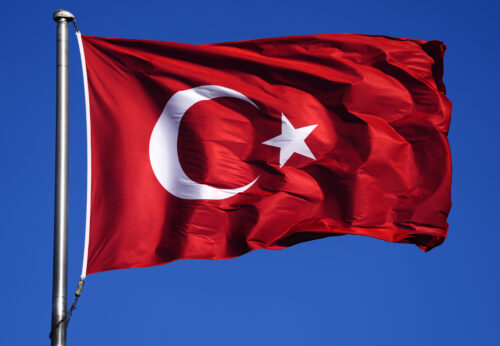
    After a decade of post-Arab Spring isolation, Turkey’s leaders have recognized that their ambition to position the country as an agenda-setter on the world stage requires active engagement in all directions. President Recep Tayyip Erdoğan’s consolidation of executive authority has centralized foreign policy decision-making and tied it to his domestic political priorities, transforming the country’s revisionist approach to one shaped primarily by personal and pragmatic interests.

    April 23, 2026

    Western Sahara: Why the conflict still matters
  • Video
  • Western Sahara: Why the conflict still matters

    As the Western Sahara conflict reaches its fifth decade, the territorial dispute remains unresolved and largely unknown. MEI’s Intissar Fakir unpacks the Western Sahara’s complex history and the rival claims by Morocco and the Sahrawi Arab Democratic Republic. She examines recent developments, such as President Trump’s recognition of Moroccan sovereignty over the territory and the collapse of a 30-year cease-fire, as well as the core questions that remain unanswered after half a century.

    August 7, 2025

    Podcasts

    Middle East Focus

    MEI’s flagship weekly podcast on US foreign policy and contemporary political and social issues in the Middle East.

    Taking the Edge Off the Middle East

    MEI Senior Fellow Brian Katulis engages friends, colleagues, and policy experts in casual conversations on the most important happenings in the Middle East. 

    Rethinking Democracy

    MEI Senior Fellow Gonul Tol hosts leading scholars and thought leaders on global democracy trends and the state of the liberal international order. 

    Filter by
    8748 Results
    Western Education in the Gulf: The Costs and Benefits of Reform
  • Analysis
  • Western Education in the Gulf: The Costs and Benefits of Reform

    Originally posted July 2010

    Educational reform from the West has arrived on a grand scale in the Gulf, particularly in higher education. American, Canadian, Australian, and British universities are being established throughout the region. In addition, Western-style methodologies and best-practices are being employed. Although there are considerable benefits to adopting Western models of education, such reform does not come without a price.

    February 23, 2012

    Tertiary Education in the Gulf: "A Colossal Wreck, Remaining Boundless and Bare?"
  • Analysis
  • Tertiary Education in the Gulf: "A Colossal Wreck, Remaining Boundless and Bare?"

    Originally posted July 2010

    … “My name is Ozymandias, king of kings:
    Look on my works, ye Mighty, and despair!”

    Nothing beside remains. Round the decay
    Of that colossal wreck, boundless and bare
    The lone and level sands stretch far away. [1]­

    – Percy Shelley

    February 23, 2012

    United Arab Emirates (UAE): Flagship of the Gulf
  • Analysis
  • United Arab Emirates (UAE): Flagship of the Gulf

    Originally posted July 2010

    In an article in the Fall 2008 issue of The New Atlantic, the Doha-based Egyptian science writer Waleed Al-Shobakky, advanced the proposition that the center of creative initiative in higher education in the Arab world has shifted from the traditionally influential lands of Egypt and the Levant to the Gulf Cooperation Council (GCC) countries.

    February 23, 2012

    A Rentier Social Contract: The Saudi Political Economy since 1979
    Middle East Institute
  • Analysis
  • A Rentier Social Contract: The Saudi Political Economy since 1979

    Originally posted October 2009

    The year 1979 was the last year of the pivotal decade in which the Saudi economy took its modern shape; no other decade before or since has seen more change. The patterns of oil-driven politics that emerged at the time still define the Kingdom’s political landscape today — even if some of the players in the political game have subtly shifted their roles.

    February 22, 2012

    Is Reconciliation in Bahrain Possible?
  • Video
  • Is Reconciliation in Bahrain Possible?

    Three months after the release of the Bassiouni report, which documented systematic government abuses of pro-democracy protesters, Bahrain's King Hamad has announced constitutional reforms to increase parliamentary oversight. His announcement has done little to appease opposition forces, however, who contend the reforms do little to address the underlying sectarian inequities in Bahrain. Popular protests continue almost daily and are often met with police violence. In this highly polarized environment, is political compromise possible?

    February 22, 2012

    Read the Middle East Journal

    The oldest peer-reviewed publication dedicated to the study of the modern Middle East, MEI’s flagship journal covers politics, society, and culture in the region.