Skip to Content

Research & Commentary

Read in-depth research, analysis, and commentary from MEI’s fellows and experts on the Middle East. 

Trump’s Family Business Deals Risk Further Undermining the Credibility of US Middle East Policy
  • Analysis
  • Trump’s Family Business Deals Risk Further Undermining the Credibility of US Middle East Policy

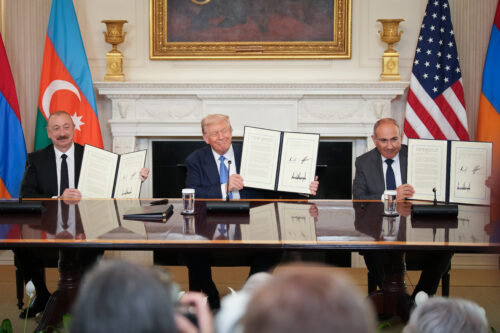
    President Trump’s family businesses are once again in the spotlight as a new financial disclosure showed they earned $2 billion in income in 2025 — a dramatic increase on the year before, with much of it coming from Gulf entities, raising emoluments concerns. Mounting perceptions of corruption, combined with unresolved crises in Iran and Israel-Palestine, are eroding trust among key partners in the Middle East. With the 2026 midterms approaching, these entanglements could represent a major political vulnerability and further undermine America’s already-strained standing in the region.

    Do the Gulf States Need a New Playbook?
  • Podcast
  • Do the Gulf States Need a New Playbook?

    After the US-Israel-Iran war — and the strikes that followed the cease-fire — the Gulf states find themselves dangerously exposed. Host Alistair Taylor is joined by MEI Associate Fellow Gregory Gause to discuss the war’s impact on the Gulf, their partnership with the United States, and whether the turmoil of recent months will push Gulf leaders to reassess their alliances and international engagement.

    July 2, 2026

    Additional Research & Commentary

    Backgrounders

    The Houthis
  • Backgrounder
  • The Houthis

    The Houthis are a political-military faction and Zaydi religious movement founded in northwestern Yemen in the 1980s. A key member of Iran’s Axis of Resistance with links to other militant organizations in the Arabian Peninsula and the Horn of Africa, the group has continued to pose a threat to Western interests on a global scale.

    May 15, 2026

    The Abraham Accords
    Photo by Alex Wong/Getty Images
  • Backgrounder
  • The Abraham Accords

    This backgrounder provides an overview of how the Abraham Accords came about, the US interests involved, their economic and strategic consequences, and the prospects for further enlargement going forward.

    November 17, 2025

    Turkish Foreign Policy
  • Backgrounder
  • Turkish Foreign Policy

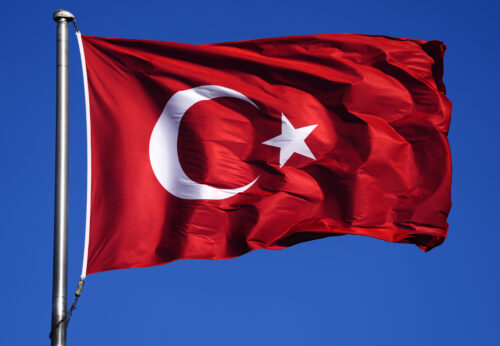
    After a decade of post-Arab Spring isolation, Turkey’s leaders have recognized that their ambition to position the country as an agenda-setter on the world stage requires active engagement in all directions. President Recep Tayyip Erdoğan’s consolidation of executive authority has centralized foreign policy decision-making and tied it to his domestic political priorities, transforming the country’s revisionist approach to one shaped primarily by personal and pragmatic interests.

    April 23, 2026

    Western Sahara: Why the conflict still matters
  • Video
  • Western Sahara: Why the conflict still matters

    As the Western Sahara conflict reaches its fifth decade, the territorial dispute remains unresolved and largely unknown. MEI’s Intissar Fakir unpacks the Western Sahara’s complex history and the rival claims by Morocco and the Sahrawi Arab Democratic Republic. She examines recent developments, such as President Trump’s recognition of Moroccan sovereignty over the territory and the collapse of a 30-year cease-fire, as well as the core questions that remain unanswered after half a century.

    August 7, 2025

    Podcasts

    Middle East Focus

    MEI’s flagship weekly podcast on US foreign policy and contemporary political and social issues in the Middle East.

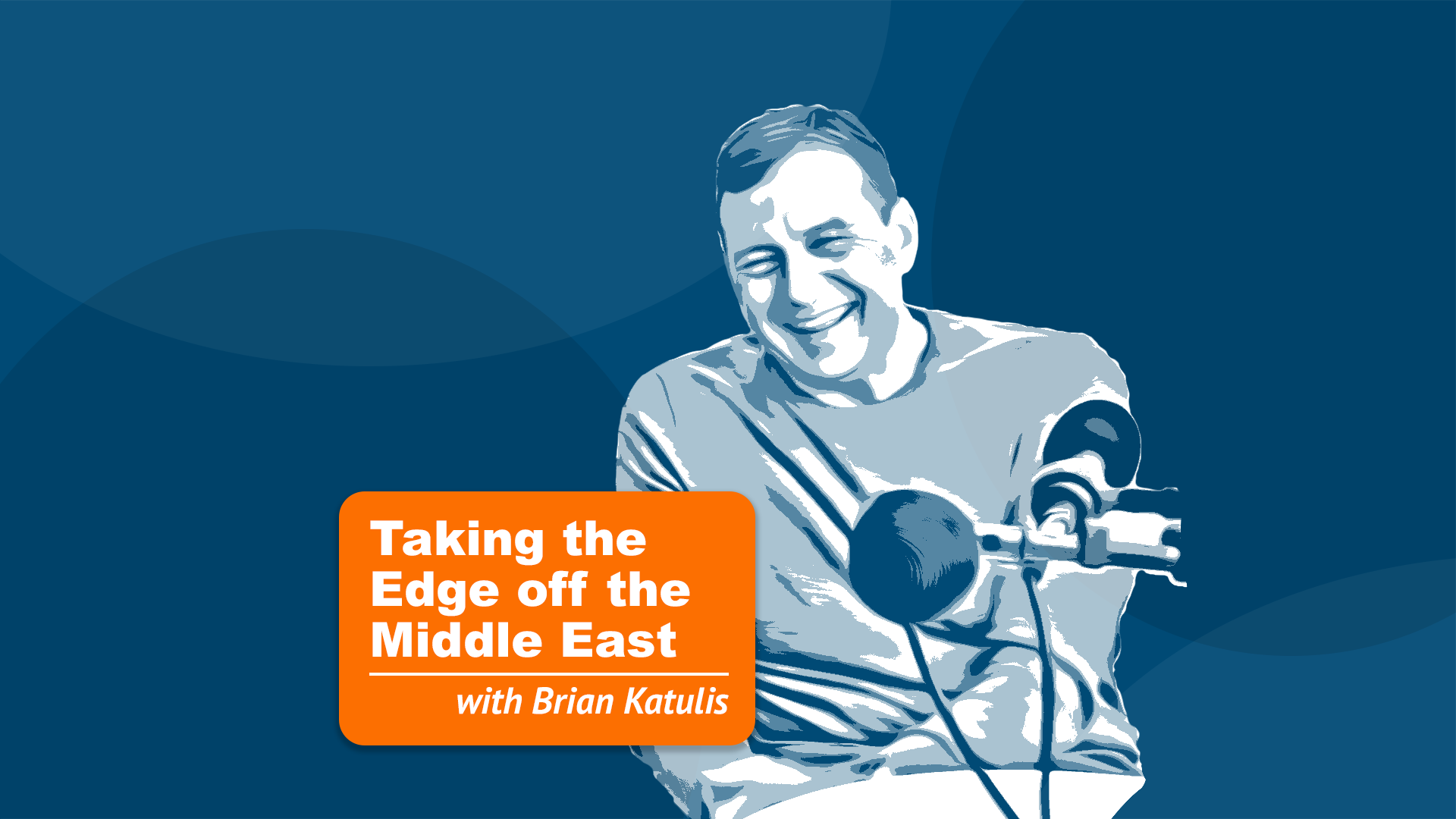
    Taking the Edge Off the Middle East

    MEI Senior Fellow Brian Katulis engages friends, colleagues, and policy experts in casual conversations on the most important happenings in the Middle East. 

    Rethinking Democracy

    MEI Senior Fellow Gonul Tol hosts leading scholars and thought leaders on global democracy trends and the state of the liberal international order. 

    Filter by
    8748 Results
    Environmental Peacebuilding in the Eastern Mediterranean
    Middle East Institute
  • Analysis
  • Environmental Peacebuilding in the Eastern Mediterranean

    Environmental peacebuilding is both the theory and practice of identifying environmental initiatives that promote a sustainable peace between those who have previously been adversaries, and implementing those initiatives. Environmental peacebuilding combines two elements.

    April 8, 2011

    Arava Institute for Environmental Studies: Teaching Environment as a Bridge to Peace & Understanding in the Middle East
    Middle East Institute
  • Analysis
  • Arava Institute for Environmental Studies: Teaching Environment as a Bridge to Peace & Understanding in the Middle East

    The Arava Institute for Environmental Studies (AIES) is the premier environmental studies institute in the Middle East and is accredited under the auspices of the Ben Gurion University (BGU) of the Negev. Since 1996, the Institute has been teaching environmental studies to university students from the Middle East and other parts of the world. The unique approach of the Institute is to teach the environment, in which all share, as a bridge to cooperation and peacebuilding in the Middle East.

    April 8, 2011

    Local Initiatives Prepare the Ground for Sustainable Development in the Middle East: Preliminary Lessons from Egypt
    Middle East Institute
  • Analysis
  • Local Initiatives Prepare the Ground for Sustainable Development in the Middle East: Preliminary Lessons from Egypt

    Using Egypt as a case study, this essay argues that the pathway to sustainability in the Middle East is to gradually reconcile competing economic development and environmental agendas. However, broader economic and political forces are inimical to setting about such a sustainable development trajectory. An exception to this adverse trend is the existence of innovative local development initiatives, which connect the livelihoods of the poor and marginalized with their physical environment in a productive way.

    April 8, 2011

    This Burning Land: Lessons from the Front Lines of the Transformed Israeli-Palestinian Conflict
    Middle East Institute
  • Podcast
  • This Burning Land: Lessons from the Front Lines of the Transformed Israeli-Palestinian Conflict

    The Middle East Institute is proud to host Greg Myre and Jennifer Griffin for a discussion about the ongoing challenges in the Israeli-Palestinian conflict based on their knowledge and experiences recounted in their new book, This Burning Land: Lessons from the Front Lines of the Transformed Israeli-Palestinian Conflict. Myre and Griffin, journalists who are husband and wife, traveled to Jerusalem in 1999 in hopes of finally seeing Middle East peace. Instead, the pair watched as violence in the area escalated and the peace process disintegrated.

    April 6, 2011

    This Burning Land: Lessons from the Front Lines of the Transformed Israeli-Palestinian Conflict
    Middle East Institute
  • Video
  • This Burning Land: Lessons from the Front Lines of the Transformed Israeli-Palestinian Conflict

    The Middle East Institute is proud to host Greg Myre and Jennifer Griffin for a discussion about the ongoing challenges in the Israeli-Palestinian conflict based on their knowledge and experiences recounted in their new book, This Burning Land: Lessons from the Front Lines of the Transformed Israeli-Palestinian Conflict. Myre and Griffin, journalists who are husband and wife, traveled to Jerusalem in 1999 in hopes of finally seeing Middle East peace. Instead, the pair watched as violence in the area escalated and the peace process disintegrated.

    April 6, 2011

    Libyan Intervention: Justified By the Circumstances
    Middle East Institute
  • Analysis
  • Libyan Intervention: Justified By the Circumstances

    It was absolutely predictable that Republicans would attack President Obama whatever he did in Libya, though Newt Gingrich, in his overeagerness, overreached by criticizing him for too explicitly opposite reasons. It was also likely that the anti-interventionist left, which sees (almost?) any use of American military power as imperialistic and unwarranted would likewise be opposed.

    March 30, 2011

    Cyberactivism and the Arab Revolt: Battles Waged Online and Lessons Learned
    Middle East Institute
  • Podcast
  • Cyberactivism and the Arab Revolt: Battles Waged Online and Lessons Learned

    The Middle East Institute is proud to host digital media experts Adel Iskandar and Courtney Radsch for a discussion on the nature of the cyberactivism that is fueling the uprisings spreading throughout the Middle East. Iskandar will examine the battle in Egypt between the government and the protesters to control online discourse, analyzing the obstacles and the successes.

    March 28, 2011

    Cyberactivism and the Arab Revolt: Battles Waged Online and Lessons Learned
    Middle East Institute
  • Video
  • Cyberactivism and the Arab Revolt: Battles Waged Online and Lessons Learned

    The Middle East Institute is proud to host digital media experts Adel Iskandar and Courtney Radsch for a discussion on the nature of the cyberactivism that is fueling the uprisings spreading throughout the Middle East. Iskandar will examine the battle in Egypt between the government and the protesters to control online discourse, analyzing the obstacles and the successes.

    March 28, 2011

    Inside the United Nations Assistance Mission in Afghanistan
    Middle East Institute
  • Podcast
  • Inside the United Nations Assistance Mission in Afghanistan

    The Middle East Institute is proud to host Staffan De Mistura, the Special Representative of the UN Secretary-General for Afghanistan, for a lecture and discussion on the UN's mission in Afghanistan. De Mistura will speak at MEI following the UN Security Council debate on the mandate renewal of the United Nations Assistance Mission in Afghanistan (UNAMA). The Security Council resolution with the new mandate is scheduled to be adopted on March 22, 2011, the day of this event.

    Speaker: Staffan de Mistura

    March 23, 2011

    Inside the United Nations Assistance Mission in Afghanistan
    Middle East Institute
  • Video
  • Inside the United Nations Assistance Mission in Afghanistan

    The Middle East Institute is proud to host Staffan De Mistura, the Special Representative of the UN Secretary-General for Afghanistan, for a lecture and discussion on the UN's mission in Afghanistan. De Mistura will speak at MEI following the UN Security Council debate on the mandate renewal of the United Nations Assistance Mission in Afghanistan (UNAMA). The Security Council resolution with the new mandate is scheduled to be adopted on March 22, 2011, the day of this event.

    March 22, 2011

    A Crisis Squandered
    Middle East Institute
  • Analysis
  • A Crisis Squandered

    Rahm Emanuel famously quipped that a crisis should never go to waste. In his absence, the Administration seems determined not to take sufficient advantage of the ongoing and huge crisis in the Arab world. Its hesitant, uncertain, and (to date) completely ineffectual response to events in Libya sadly make this all too clear.

    March 18, 2011

    Libya: Better Late Than Never, But…
    Middle East Institute
  • Analysis
  • Libya: Better Late Than Never, But…

    It now appears that the US finally has gotten serious about doing something meaningful to assist opposition forces in Libya. Exaggerated fears and an insufficient grasp of the adverse consequences of not taking such action previously paralyzed US (and most European) policymakers with respect to even an eastern no-fly zone, let alone more robust measures. Meanwhile, what is left of the organized Libyan opposition is increasingly hard-pressed.

    March 17, 2011

    US-Syrian Relations: Changing Priorities After Egypt
    Middle East Institute
  • Video
  • US-Syrian Relations: Changing Priorities After Egypt

    The Middle East Institute is proud to host Joshua Landis and Andrew Tabler for a discussion about the current state of US-Syrian relations and the impact the changing regional dynamic will have on the relationship's priorities. How might the revolutionary wave crossing the Middle East effect Washington's discussions with Damascus? Should there be a greater emphasis on reform? Where does the Syrian-Israeli peace track stand and is it more urgent than ever?

    March 16, 2011

    US-Syrian Relations: Changing Priorities After Egypt
    Middle East Institute
  • Podcast
  • US-Syrian Relations: Changing Priorities After Egypt

    The Middle East Institute is proud to host Joshua Landis and Andrew Tabler for a discussion about the current state of US-Syrian relations and the impact the changing regional dynamic will have on the relationship's priorities. How might the revolutionary wave crossing the Middle East effect Washington's discussions with Damascus? Should there be a greater emphasis on reform? Where does the Syrian-Israeli peace track stand and is it more urgent than ever?

    Speakers: Joshua Landis, Andrew Tabler

    March 16, 2011

    Read the Middle East Journal

    The oldest peer-reviewed publication dedicated to the study of the modern Middle East, MEI’s flagship journal covers politics, society, and culture in the region.