Skip to Content

Research & Commentary

Read in-depth research, analysis, and commentary from MEI’s fellows and experts on the Middle East. 

Trump, Syria, and the Hizballah Question
  • Podcast
  • Trump, Syria, and the Hizballah Question

    US President Donald Trump recently proposed that Syria intervene militarily against Hizballah in Lebanon. Is that a good idea? This episode of Middle East Focus features a recent MEI Virtual Briefing. Director of Communications Zeina Al-Shaib is joined by Ambassador David Hale, MEI Distinguished Diplomatic Fellow and Charles Lister, MEI Senior Fellow. Together they examine the prospects and implications of renewed Syrian involvement in Lebanon, the potential impact on US relations with both countries, and how evolving dynamics in Lebanon and Syria could reshape the regional balance of power and affect countries such as Turkey and Israel.

    July 9, 2026

    Trump’s Family Business Deals Risk Further Undermining the Credibility of US Middle East Policy
  • Analysis
  • Trump’s Family Business Deals Risk Further Undermining the Credibility of US Middle East Policy

    President Trump’s family businesses are once again in the spotlight as a new financial disclosure showed they earned $2 billion in income in 2025 — a dramatic increase on the year before, with much of it coming from Gulf entities, raising emoluments concerns. Mounting perceptions of corruption, combined with unresolved crises in Iran and Israel-Palestine, are eroding trust among key partners in the Middle East. With the 2026 midterms approaching, these entanglements could represent a major political vulnerability and further undermine America’s already-strained standing in the region.

    Do the Gulf States Need a New Playbook?
  • Podcast
  • Do the Gulf States Need a New Playbook?

    After the US-Israel-Iran war — and the strikes that followed the cease-fire — the Gulf states find themselves dangerously exposed. Host Alistair Taylor is joined by MEI Associate Fellow Gregory Gause to discuss the war’s impact on the Gulf, their partnership with the United States, and whether the turmoil of recent months will push Gulf leaders to reassess their alliances and international engagement.

    July 2, 2026

    Additional Research & Commentary

    Backgrounders

    The Houthis
  • Backgrounder
  • The Houthis

    The Houthis are a political-military faction and Zaydi religious movement founded in northwestern Yemen in the 1980s. A key member of Iran’s Axis of Resistance with links to other militant organizations in the Arabian Peninsula and the Horn of Africa, the group has continued to pose a threat to Western interests on a global scale.

    May 15, 2026

    The Abraham Accords
    Photo by Alex Wong/Getty Images
  • Backgrounder
  • The Abraham Accords

    This backgrounder provides an overview of how the Abraham Accords came about, the US interests involved, their economic and strategic consequences, and the prospects for further enlargement going forward.

    November 17, 2025

    Turkish Foreign Policy
  • Backgrounder
  • Turkish Foreign Policy

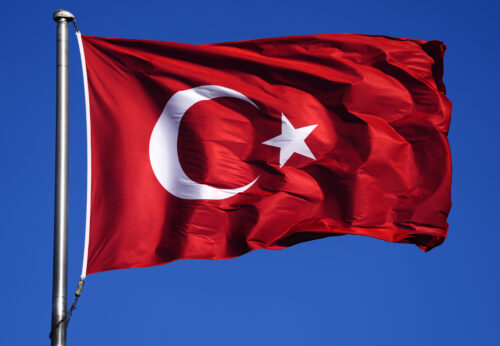
    After a decade of post-Arab Spring isolation, Turkey’s leaders have recognized that their ambition to position the country as an agenda-setter on the world stage requires active engagement in all directions. President Recep Tayyip Erdoğan’s consolidation of executive authority has centralized foreign policy decision-making and tied it to his domestic political priorities, transforming the country’s revisionist approach to one shaped primarily by personal and pragmatic interests.

    April 23, 2026

    Western Sahara: Why the conflict still matters
  • Video
  • Western Sahara: Why the conflict still matters

    As the Western Sahara conflict reaches its fifth decade, the territorial dispute remains unresolved and largely unknown. MEI’s Intissar Fakir unpacks the Western Sahara’s complex history and the rival claims by Morocco and the Sahrawi Arab Democratic Republic. She examines recent developments, such as President Trump’s recognition of Moroccan sovereignty over the territory and the collapse of a 30-year cease-fire, as well as the core questions that remain unanswered after half a century.

    August 7, 2025

    Podcasts

    Middle East Focus

    MEI’s flagship weekly podcast on US foreign policy and contemporary political and social issues in the Middle East.

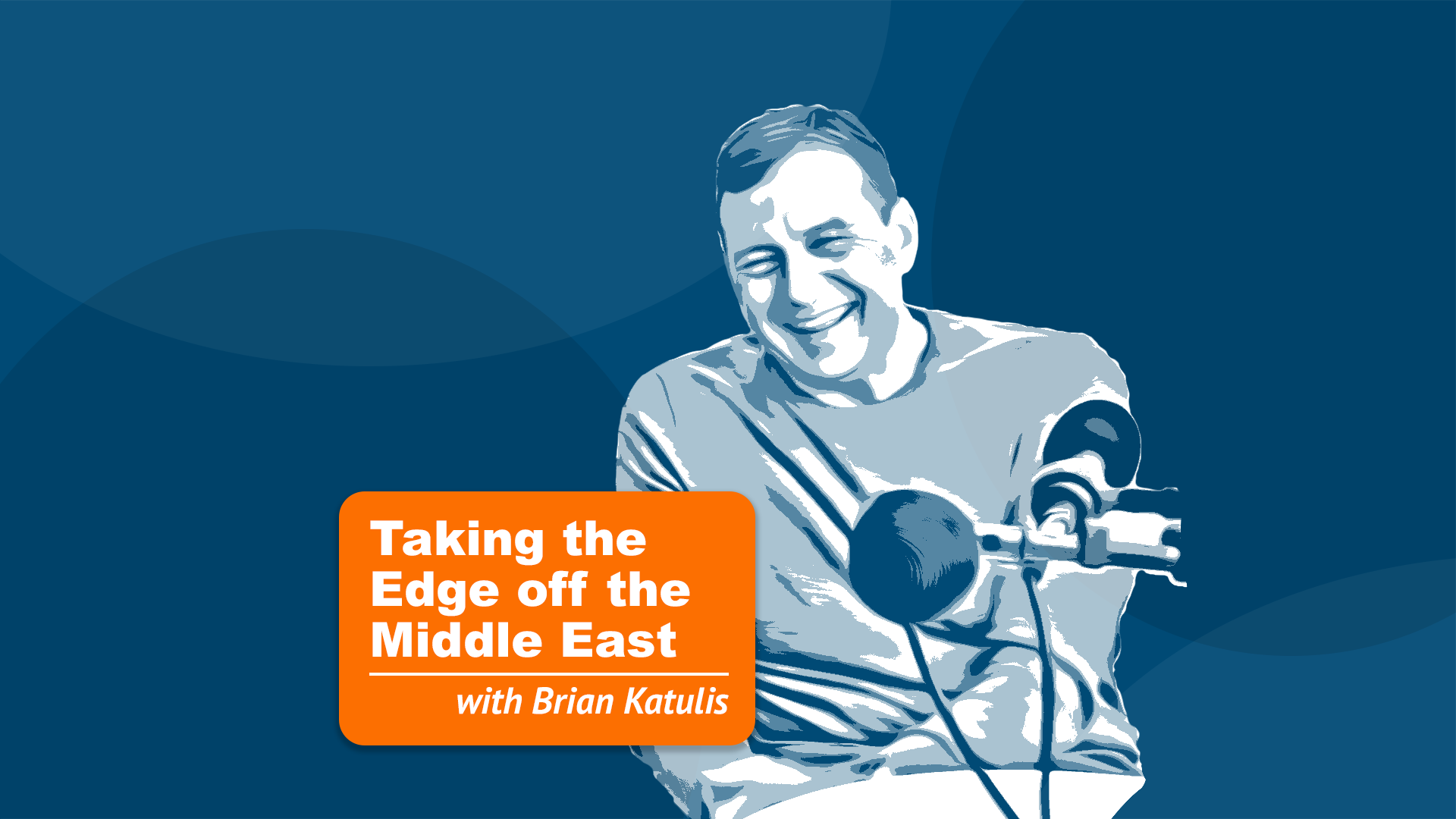
    Taking the Edge Off the Middle East

    MEI Senior Fellow Brian Katulis engages friends, colleagues, and policy experts in casual conversations on the most important happenings in the Middle East. 

    Rethinking Democracy

    MEI Senior Fellow Gonul Tol hosts leading scholars and thought leaders on global democracy trends and the state of the liberal international order. 

    Filter by
    8749 Results
    US-Pakistan Relations: What Trust Deficit?
  • Analysis
  • US-Pakistan Relations: What Trust Deficit?

    Originally posted November 2010

    With Pakistan caught up in four wars during the past nine years — the Afghanistan war, the War on Terror, the insurgency in the tribal areas, and the wave of terrorism unleashed by the Tehrik-i-Taliban (TTP) and the Punjabi Taliban in the rest of the country — it has often been said that the country is facing an existential threat. If this was a cliché before, it is no more so after the catastrophic floods. Pakistan had been living dangerously in the past, but the wars and floods threaten to wash away its future.

    November 1, 2010

    Turkey's Dual Track Approach Toward the Kurdistan Regional Government
    Middle East Institute
  • Analysis
  • Turkey's Dual Track Approach Toward the Kurdistan Regional Government

    Turkey’s policy toward the Kurdistan Regional Government (KRG) in northern Iraq has undergone an important shift since 2009. Only a few years ago, Turkey did not recognize Iraq’s Kurdish Regional Government and refused to meet with its representatives in any official capacity due to its fear that recognition would embolden Turkey's own Kurdish minority to demand similar home-rule status.

    Iran Invests Time and Energy in Africa
    Middle East Institute
  • Analysis
  • Iran Invests Time and Energy in Africa

    *This article was first published in November 2010 by Jane's Islamic Affairs Analyst.

    The second half of 2010 witnessed a flurry of interaction between Iranian diplomats and their African counterparts. Not all the buzz has been beneficial to Tehran, as was most recently demonstrated by the Republic of the Gambia’s 22 November decision to break its ties with Iran, but the overall activity nonetheless reflects the increasing emphasis Tehran is putting on closer relations with countries on the continent.

    A Generation in Crisis: Lebanon's Jobless University Graduates
  • Analysis
  • A Generation in Crisis: Lebanon's Jobless University Graduates

    Unemployment is one of the major manifestations of the global economic crisis that began to plague many countries around the globe, beginning in 2007. Developing nations with weak economies and fragile political states were among the hardest hit. In Egypt, one can find PhDs driving taxies. No country can afford, either politically or economically, such well-educated traffic guides. Higher education graduate unemployment rates in Lebanon are high and are unlikely to be reduced soon.

    October 13, 2010

    Educating the Future of Millenial Muslim Youth
  • Analysis
  • Educating the Future of Millenial Muslim Youth

    In a January 1943 published letter which would ultimately lead to the creation of the historic United Negro College Fund (UNCF), Dr. Frederick Patterson of Tuskegee University wrote that the “nominal contribution of one dollar per person” could be enough to help improve the educational standards of young disenfranchised African-American children around the United States for generations to come.

    October 13, 2010

    Empowering Under-served and Vulnerable Populations: Bidoon and Beyond
    Middle East Institute
  • Analysis
  • Empowering Under-served and Vulnerable Populations: Bidoon and Beyond

    Since the very inception of the United Arab Emirates (UAE) in 1972, education has been viewed as a primary tool for building a knowledge-age economy for this young desert nation.

    October 13, 2010

    Leadership in the Middle East: The Story of Women in Lebanon
    Middle East Institute
  • Analysis
  • Leadership in the Middle East: The Story of Women in Lebanon

    Leila Saad and Emily Nasrallah are Lebanese women whose impact on women has been remarkable and yet not well-known. Leila has established schools on six continents while Emily is the most frequently included female author in Lebanese textbooks. In most regions, leaders in politics, business, education, and literature arise from among those who have the educational qualifications for entry positions. From there, outstanding people demonstrate the ambition, character, and knowledge to move into leadership positions.

    October 13, 2010

    Struggling for the Center: Teacher-Centered vs. Learner-Centered Practices in Palestinian Higher Education
  • Analysis
  • Struggling for the Center: Teacher-Centered vs. Learner-Centered Practices in Palestinian Higher Education

    Alongside the struggle for an independent Palestine, not to mention the internal power struggles between the rival Fatah and Hamas movements, another struggle — largely absent from local news headlines and talk on the streets — is unfolding in classrooms in Palestinian higher education. Faculty are pushing back against the hegemony of teacher-centered instruction and embracing, in principle if not in practice, the global movement toward learner-centered pedagogy.

    October 13, 2010

    Women’s Education in the GCC — The Road Ahead
    Middle East Institute
  • Analysis
  • Women’s Education in the GCC — The Road Ahead

    Women’s education in the Arab world has increased substantially in the last several decades, both in absolute terms and relative to men. However, when looking at the Arab world, understanding that there are vast differences culturally, politically, and socially among the countries is essential. This essay looks at the Gulf Cooperation Council (GCC) countries, where women share a similar cultural and socio-economic context.

    October 13, 2010

    Private Contractors in Conflict Zones: The Good, the Bad and the Strategic Impact
    Middle East Institute
  • Podcast
  • Private Contractors in Conflict Zones: The Good, the Bad and the Strategic Impact

    In Iraq and Afghanistan, the United States has vastly expanded its use of contractors in conflict zones without serious consideration of their strategic impact. While the presnece of contractors is not new, the number and types of tasks they are executing is. This discussion will examine what is good about contractors, what problems they cause and then the largely unexamined strategic impact of contractors — both armed and unarmed — on current and future conflicts. It concludes with policy recommendations for the use of contractors in future conflicts.

    Speaker: Thomas Hammes

    October 12, 2010

    The Israei-Syrian Conflict over the Occupied Golan Heights: Myths and Realities
    Middle East Institute
  • Podcast
  • The Israei-Syrian Conflict over the Occupied Golan Heights: Myths and Realities

    Dr. Yigal Kipnis, an Israeli author, geographer, historian, and leading expert on the Israeli-Syrian conflict over the Golan Heights will discuss the current state of Israeli settlements on the Golan, and related topics.

    October 8, 2010

    Read the Middle East Journal

    The oldest peer-reviewed publication dedicated to the study of the modern Middle East, MEI’s flagship journal covers politics, society, and culture in the region.