Skip to Content

Research & Commentary

Read in-depth research, analysis, and commentary from MEI’s fellows and experts on the Middle East. 

Trump, Syria, and the Hizballah Question
  • Podcast
  • Trump, Syria, and the Hizballah Question

    US President Donald Trump recently proposed that Syria intervene militarily against Hizballah in Lebanon. Is that a good idea? This episode of Middle East Focus features a recent MEI Virtual Briefing. Director of Communications Zeina Al-Shaib is joined by Ambassador David Hale, MEI Distinguished Diplomatic Fellow and Charles Lister, MEI Senior Fellow. Together they examine the prospects and implications of renewed Syrian involvement in Lebanon, the potential impact on US relations with both countries, and how evolving dynamics in Lebanon and Syria could reshape the regional balance of power and affect countries such as Turkey and Israel.

    July 9, 2026

    Trump’s Family Business Deals Risk Further Undermining the Credibility of US Middle East Policy
  • Analysis
  • Trump’s Family Business Deals Risk Further Undermining the Credibility of US Middle East Policy

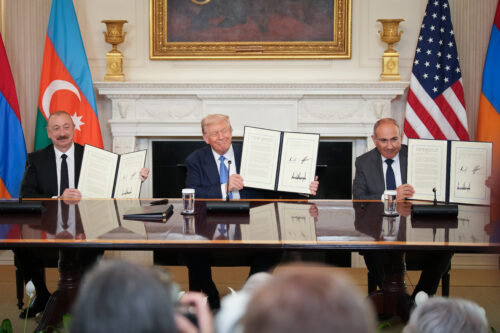
    President Trump’s family businesses are once again in the spotlight as a new financial disclosure showed they earned $2 billion in income in 2025 — a dramatic increase on the year before, with much of it coming from Gulf entities, raising emoluments concerns. Mounting perceptions of corruption, combined with unresolved crises in Iran and Israel-Palestine, are eroding trust among key partners in the Middle East. With the 2026 midterms approaching, these entanglements could represent a major political vulnerability and further undermine America’s already-strained standing in the region.

    Do the Gulf States Need a New Playbook?
  • Podcast
  • Do the Gulf States Need a New Playbook?

    After the US-Israel-Iran war — and the strikes that followed the cease-fire — the Gulf states find themselves dangerously exposed. Host Alistair Taylor is joined by MEI Associate Fellow Gregory Gause to discuss the war’s impact on the Gulf, their partnership with the United States, and whether the turmoil of recent months will push Gulf leaders to reassess their alliances and international engagement.

    July 2, 2026

    Additional Research & Commentary

    Backgrounders

    The Houthis
  • Backgrounder
  • The Houthis

    The Houthis are a political-military faction and Zaydi religious movement founded in northwestern Yemen in the 1980s. A key member of Iran’s Axis of Resistance with links to other militant organizations in the Arabian Peninsula and the Horn of Africa, the group has continued to pose a threat to Western interests on a global scale.

    May 15, 2026

    The Abraham Accords
    Photo by Alex Wong/Getty Images
  • Backgrounder
  • The Abraham Accords

    This backgrounder provides an overview of how the Abraham Accords came about, the US interests involved, their economic and strategic consequences, and the prospects for further enlargement going forward.

    November 17, 2025

    Turkish Foreign Policy
  • Backgrounder
  • Turkish Foreign Policy

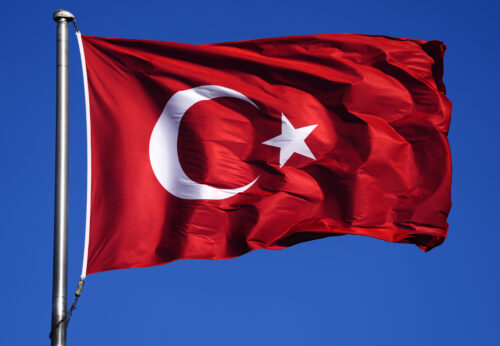
    After a decade of post-Arab Spring isolation, Turkey’s leaders have recognized that their ambition to position the country as an agenda-setter on the world stage requires active engagement in all directions. President Recep Tayyip Erdoğan’s consolidation of executive authority has centralized foreign policy decision-making and tied it to his domestic political priorities, transforming the country’s revisionist approach to one shaped primarily by personal and pragmatic interests.

    April 23, 2026

    Western Sahara: Why the conflict still matters
  • Video
  • Western Sahara: Why the conflict still matters

    As the Western Sahara conflict reaches its fifth decade, the territorial dispute remains unresolved and largely unknown. MEI’s Intissar Fakir unpacks the Western Sahara’s complex history and the rival claims by Morocco and the Sahrawi Arab Democratic Republic. She examines recent developments, such as President Trump’s recognition of Moroccan sovereignty over the territory and the collapse of a 30-year cease-fire, as well as the core questions that remain unanswered after half a century.

    August 7, 2025

    Podcasts

    Middle East Focus

    MEI’s flagship weekly podcast on US foreign policy and contemporary political and social issues in the Middle East.

    Taking the Edge Off the Middle East

    MEI Senior Fellow Brian Katulis engages friends, colleagues, and policy experts in casual conversations on the most important happenings in the Middle East. 

    Rethinking Democracy

    MEI Senior Fellow Gonul Tol hosts leading scholars and thought leaders on global democracy trends and the state of the liberal international order. 

    Filter by
    8749 Results
    Taiwan and the Gulf: The Sky’s the Limit?
    Middle East Institute
  • Analysis
  • Taiwan and the Gulf: The Sky’s the Limit?

    Dubai’s Burj Khalifa and Taiwan’s Taipei 101 tower, the world’s two tallest skyscrapers, differ in height by a stunning 1,076 feet, are separated by nearly 4,000 miles of ocean, and are situated in countries and regions which, linguistically and culturally, have little in common ― except business.

    The Impacts of the Global Economic Crisis on Migration in the Arab World
    Middle East Institute
  • Analysis
  • The Impacts of the Global Economic Crisis on Migration in the Arab World

    Originally posted March 2010

    “The current global financial crisis adds further serious complications…we are concerned about the loss of migrants’ jobs; a decrease in migrant remittances; a reduction in Official Development Assistance (ODA) and Foreign Direct Investment (FDI) and most seriously of all, the stigmatization and scapegoating of migrants tending towards xenophobia.”
    — William Lacy Swing, IOM Director General at 106th Executive Committee Session, Geneva, June 26, 2009

    April 18, 2010

    Turkey and the Middle East: Ambitions and Constraints
    Middle East Institute
  • Video
  • Turkey and the Middle East: Ambitions and Constraints

    Hugh Pope, Turkey/Cyprus Project Director for the International Crisis Group (ICG), discussed the issue of recent speculation regarding Turkey’s “shift away from the West.”

    April 2, 2010

    Terrorist Rehabilitation and Succession Politics in Libya: Opportunities for the United States?
    Middle East Institute
  • Analysis
  • Terrorist Rehabilitation and Succession Politics in Libya: Opportunities for the United States?

    While Washington’s attention was focused on the aftermath of Iraq’s election and a growing confrontation between the Obama Administration and Israel’s Binyamin Netanyahu, another remarkable event was taking place in Libya: the release of hundreds of security prisoners, many with terrorist ties, under the auspices of a rehabilitation program which some in Libya hope could be a model for the rest of the region.

    March 31, 2010

    US Military Assistance to Lebanon: A Discussion of the Pros and Cons
    Middle East Institute
  • Video
  • US Military Assistance to Lebanon: A Discussion of the Pros and Cons

    The Middle East Institute is proud to host Aram Nerguizian and David Schenker for a discussion about the pros and cons of US support to the Lebanese Armed Forces (LAF). In 2005, after the withdrawal of Syrian military forces from Lebanon and the subsequent election of a pro-Western Lebanese government, the Bush Administration pledged to help the LAF bolster domestic security and to strengthen state institutions. Since then, the US has provided more than $530 million in security assistance to the LAF and other Lebanese security forces.

    March 30, 2010

    A window of opportunity and risk in today’s Iraq
    Middle East Institute
  • Analysis
  • A window of opportunity and risk in today’s Iraq

    This Commentary first appeared as an op-ed in the The National, March 14, 2010.

    Iraq’s parliamentary elections have just concluded, but the major political battles are about to begin. At stake is what kind of country Iraq will become. Will Iraq’s progress toward greater stability continue? Will it look east towards Tehran for support and encouragement, or to the United States and its fellow Arabs? The stakes are high, and no one can afford to remain uninterested while Iraq continues its dramatic political evolution.

    March 18, 2010

    The Kurds of Iran: A Look at their Past, Present and Future
    Middle East Institute
  • Video
  • The Kurds of Iran: A Look at their Past, Present and Future

    The Middle East Institute is proud to host Carol Prunhuber, Sharif Behruz and Idris Ahmedi and for a lecture about the political, social and human rights status of Iran's Kurds, one of the country's largest ethnic groups. Iran's Kurdish population has long pushed for autonomy, and in 1979 Ayatollah Ruhollah Khomeini declared a "holy war" against the Kurds in Iran seeking self-rule. Since then the relationship between Iran's Kurds and the Islamic Republic has been characterized by frequent military crackdowns.

    March 16, 2010

    The Arabs: A History
    Middle East Institute
  • Video
  • The Arabs: A History

    The Middle East Institute is proud to host Eugene Rogan for a discussion about his recent book, The Arabs: A History (Basic Books, 2009), which traces Arab political history from the rise of the Ottoman Empire to current times, exploring significant modern themes of nationalism, imperialism, revolution, industrialization, Islamic fundamentalism, migration and women's rights over the past five centuries.

    March 10, 2010

    Inside the Taliban
    Middle East Institute
  • Video
  • Inside the Taliban

    The Middle East Institute is proud to host Kandahar-based writers and researchers Alex Strick van Linschoten and Felix Kuehn for a discussion about the state of the Taliban in Afghanistan and the current situation in Kandahar. Strick van Linschoten and Kuehn translated and edited My Life with the Taliban, an account of the inner workings of the organization from the perspective of former Taliban minister and ambassador to Pakistan, Mullah Abdul Salam Zaeef, who was arrested following the overthrow of the Taliban and spent four years in Guantanamo Bay.

    March 3, 2010

    Introduction to The State of the Arts in the Middle East: Volume IV
  • Analysis
  • Introduction to The State of the Arts in the Middle East: Volume IV

    Literature, visual art, and photography not only serve an aesthetic purpose, but often act as mediums through which their creators explore deeply personal experiences and their broader social implications. In this, the fourth volume of MEI’s “The State of the Arts in the Middle East,” Najat Rahman considers the works of the Palestinian artists Emily Jacir and Eman Haram, and W. Scott Chahanovich (with Pauline Pannier) discusses the memoirs of the Moroccan-born writer Abdellah Taïa.

    March 1, 2010

    Turkey and Israel: What Lies Behind the Recent Volte Face
    Middle East Institute
  • Analysis
  • Turkey and Israel: What Lies Behind the Recent Volte Face

    In recent months, the Israeli-Turkish relationship, strong and stable during the 1990s, has been placed under severe pressure. Tensions began in January 2009 when Israel launched military operations in Gaza, later prompting Turkish Prime Minister Recep Tayyip Erdogan to walk out of a televised debate with Israeli President Shimon Peres following a heated exchange over the issue.

    Does US Policy Hurt or Help Al Qaeda?
    Middle East Institute
  • Analysis
  • Does US Policy Hurt or Help Al Qaeda?

    Al Qaeda has a major, long term, existential problem in the Middle East and the greater Muslim world. It is a problem that it certainly cannot fix on its own. However, America’s counterterrorism policy has given Al Qaeda hope for the short term and if we continue that policy, it may well assist them in their ultimate goal of establishing a hegemonic Caliphate in the Muslim world.

    February 23, 2010

    Writing on Culture: The Missing Factor in Discussions on the Middle East
    Middle East Institute
  • Video
  • Writing on Culture: The Missing Factor in Discussions on the Middle East

    The Middle East Institute is proud to host MEI scholar Andrea Rugh for a discussion about Middle Eastern culture and her most recent book, Simple Gestures: A Cultural Journey Into the Middle East. Since US involvement in Iraq and Afghanistan, the importance of culture has become all too clear. Yet, although most scholars agree on its importance, few address culture in ways that provide better understanding to audiences who might benefit, such as policy makers, the media and the American public.

    February 23, 2010

    Read the Middle East Journal

    The oldest peer-reviewed publication dedicated to the study of the modern Middle East, MEI’s flagship journal covers politics, society, and culture in the region.