Skip to Content

Research & Commentary

Read in-depth research, analysis, and commentary from MEI’s fellows and experts on the Middle East. 

Trump’s South Caucasus Peacemaking Is His Most Successful, but It Remains Unfinished
  • Commentary
  • Trump’s South Caucasus Peacemaking Is His Most Successful, but It Remains Unfinished

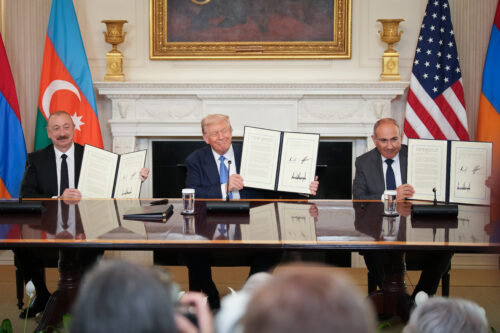
    Of all the fronts in President Trump’s peacemaking agenda, the South Caucasus has delivered the most concrete results. The August 2025 Washington Declaration, signed between Armenia and Azerbaijan and witnessed by Trump, marked an important step toward peace in the region. The two sides initialed a peace agreement and advanced plans to unblock regional connectivity, including through the establishment of the Trump Route for International Peace and Prosperity (TRIPP), which would connect Azerbaijan to its Nakhijevan exclave through southern Armenia. Implementation of TRIPP has since made notable progress, but construction has yet to start. A breakthrough on those two tracks would, in turn, unlock Armenia–Türkiye normalization, transforming a long-fractured region into an area of trade and interdependence.
    The Iran War Was Always About Regime Change
  • Commentary
  • The Iran War Was Always About Regime Change

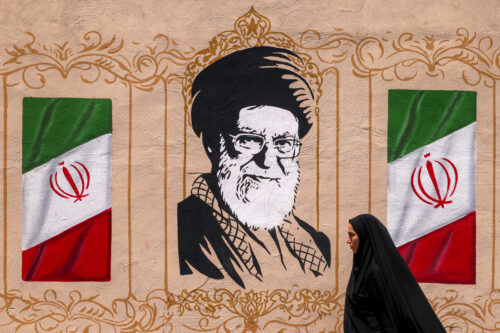
    Wars don’t just end. They get interpreted, reinterpreted, and turned into strategic doctrine. That is what happened after the Iran-Iraq War of the 1980s, a conflict that saw the United States back Tehran’s Iraqi adversaries. The war taught Tehran three lessons it never unlearned: that Washington wants the Islamic Republic gone, that Iran stands essentially alone in the world, and that it cannot survive a direct, overt fight with the U.S. and Israel.

    Iran’s New War Cabinet Is Really an Old One
  • Analysis
  • Iran’s New War Cabinet Is Really an Old One

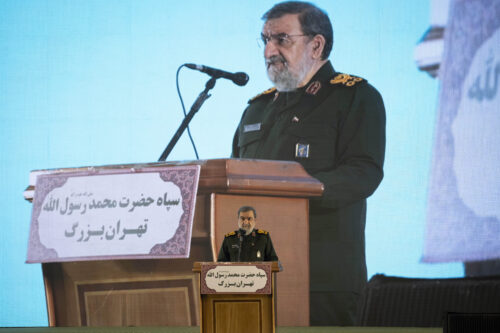
    Within 48 hours this week, Iran filled six of the most important posts in its battered military and security establishment. Read together with the biographies and mandates behind them, the appointments show how Tehran is drawing lessons from successive wars and preparing for a prolonged period of insecurity, without proving it has abandoned negotiation.

    Additional Research & Commentary

    Backgrounders

    Israeli Settlements in the West Bank
  • Backgrounder
  • Israeli Settlements in the West Bank

    Since 1967, Israeli settlements in the West Bank have been a contested feature of the Israeli-Palestinian conflict. The ultimate disposition of the settlements and ongoing activity related to their growth have repeatedly defied agreement in negotiations over a resolution to the conflict.

    June 9, 2026

    The Houthis
  • Backgrounder
  • The Houthis

    The Houthis are a political-military faction and Zaydi religious movement founded in northwestern Yemen in the 1980s. A key member of Iran’s Axis of Resistance with links to other militant organizations in the Arabian Peninsula and the Horn of Africa, the group has continued to pose a threat to Western interests on a global scale.

    May 15, 2026

    The India-Middle East-Europe Economic Corridor
  • Backgrounder
  • The India-Middle East-Europe Economic Corridor

    The India-Middle East-Europe Economic Corridor (IMEC) is a proposed multinational infrastructure initiative aimed at upgrading connectivity between the three regions through integrated trade, energy, and digital networks. Announced at the G20 summit in New Delhi in September 2023, IMEC is envisioned partially as a counterweight to China’s international infrastructure project, the Belt and Road Initiative.

    June 3, 2026

    Turkish Foreign Policy
  • Backgrounder
  • Turkish Foreign Policy

    After a decade of post-Arab Spring isolation, Turkey’s leaders have recognized that their ambition to position the country as an agenda-setter on the world stage requires active engagement in all directions. President Recep Tayyip Erdoğan’s consolidation of executive authority has centralized foreign policy decision-making and tied it to his domestic political priorities, transforming the country’s revisionist approach to one shaped primarily by personal and pragmatic interests.

    April 23, 2026

    Podcasts

    Middle East Focus

    MEI’s flagship weekly podcast on US foreign policy and contemporary political and social issues in the Middle East.

    Taking the Edge Off the Middle East

    MEI Senior Fellow Brian Katulis engages friends, colleagues, and policy experts in casual conversations on the most important happenings in the Middle East. 

    Rethinking Democracy

    MEI Senior Fellow Gonul Tol hosts leading scholars and thought leaders on global democracy trends and the state of the liberal international order. 

    Filter by
    8783 Results
    Preface to Iraq's Refugee and IDP Crisis: Human Toll and Implications
    Middle East Institute
  • Analysis
  • Preface to Iraq's Refugee and IDP Crisis: Human Toll and Implications

    Originally posted July 2008

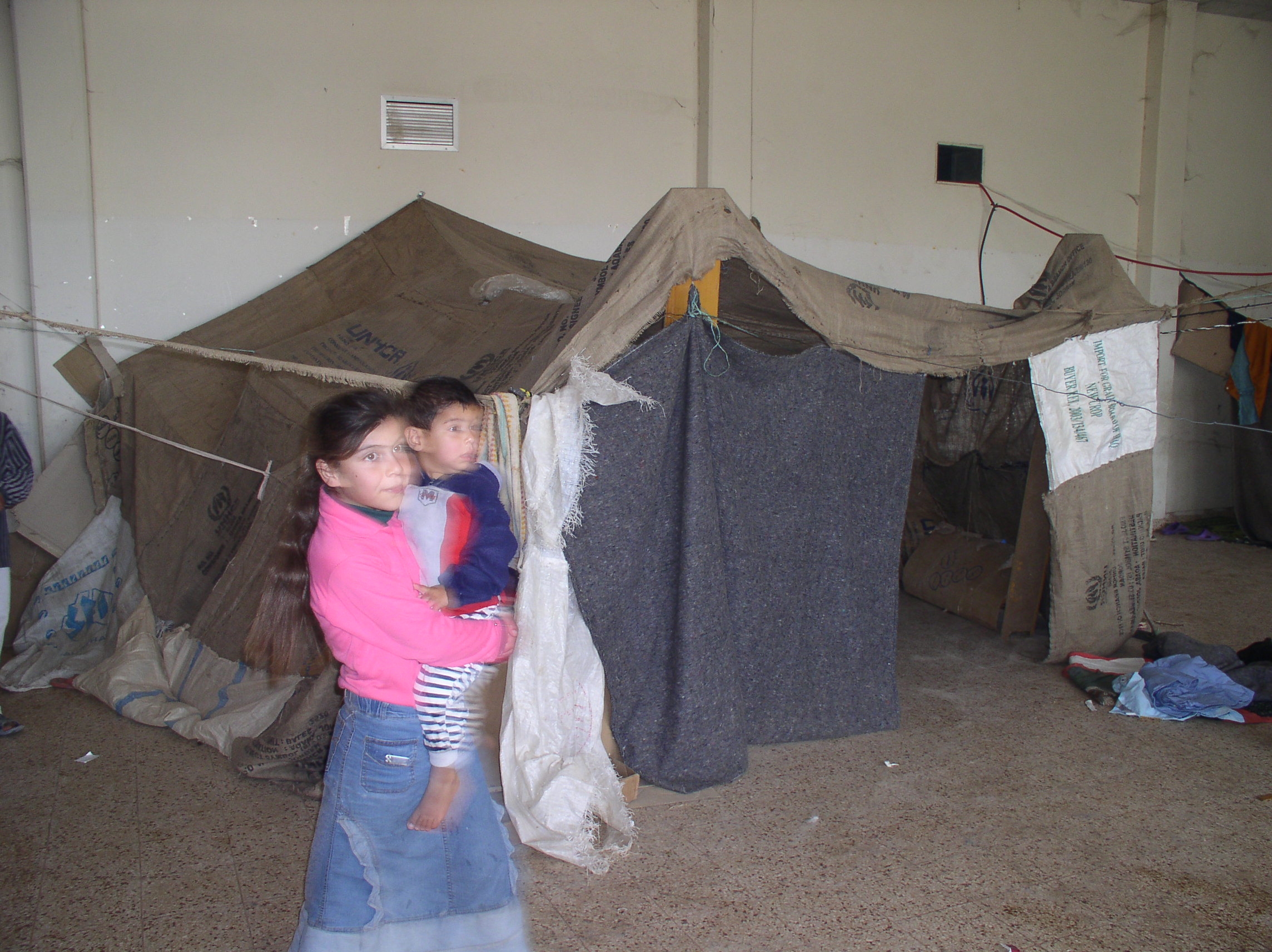
    In the comparatively short time since the establishment of the Iraqi state in 1920, the country has experienced successive waves of forced migration. Yet the magnitude of the forced displacement of Iraqis from their homes since 2003 is unprecedented. In addition to the still dire humanitarian situation are the potentially far-reaching negative implications of the refugee/IDP crisis for the future of Iraq and the Middle East as a whole.

    July 1, 2008

    Affirming the Saudi Will to Power: Domestic Challenges to King ‘Abdullah
    Middle East Institute
  • Analysis
  • Affirming the Saudi Will to Power: Domestic Challenges to King ‘Abdullah

    Over a single week in late 2007, the Custodian of the Two Holy Mosques, King ‘Abdullah bin ‘Abd al-‘Aziz, authorized the establishment of a Supreme Court, issued by-laws for his 2006 succession edict that named its permanent members, and ordered his foreign minister to take necessary steps to counter the rise of the kingdom’s regional hegemonic foe, Iran.

    June 19, 2008

    From Conflict Transformation to Conflict Resolution?
    Middle East Institute
  • Analysis
  • From Conflict Transformation to Conflict Resolution?

    Originally posted June 2008

    Intra-basin dynamics amongst the Euphrates and Tigris co-riparians — Iraq, Syria, and Turkey — are better described as leading to conflict transformation rather than conflict resolution. The process of interaction has effectively seen the de-securitization of water issues, but the roots of the conflict have not yet been fully addressed.

    June 18, 2008

    The Jordan River
    Middle East Institute
  • Analysis
  • The Jordan River

    Originally posted June 2008

    The Jordan Valley is a lush, wetland ecosystem that is the biological heart of the Middle East region at large. As the meeting point of the Asian, African, and European continents, the valley is at the crossroads of biodiversity. In addition to the unique flora and fauna, the valley is one of the world’s most important migratory pathways for birds. Over 500 million birds migrate from Europe to Africa twice a year, dependent on the Jordan Valley as a stopping ground on their long journey.

    June 18, 2008

    US Relations with Pakistan: The Need for a Strategic Shift
    Middle East Institute
  • Analysis
  • US Relations with Pakistan: The Need for a Strategic Shift

    Originally posted May 2008

    Pakistan has come to reflect and affect many of the critical issues in South Asia that worry the US foreign policy establishment, the media, and the public. But US officials are crafting policy responses to deal with Pakistan that are focused excessively narrowly on a single issue — the war on terrorism. In addition to exacerbating Pakistan’s own problems, these efforts have undermined Pakistan’s capacity and political will to fight this war. As a consequence neither America’s nor Pakistan’s best interests are being served.

    May 1, 2008

    Israel: Growing Pains at 60
    Middle East Institute
  • Analysis
  • Israel: Growing Pains at 60

    Preface by Paul Scham

    Within a mere few years after World War II the Middle East was remade. The creation of the State of Israel in 1948 and its consequences helped propel that part of the world to what seems to be a permanent and unenviable spot on any list of world crises.

    May 1, 2008

    Western Sahara: Self-Determination and International Law
  • Analysis
  • Western Sahara: Self-Determination and International Law

    Originally posted April 2008

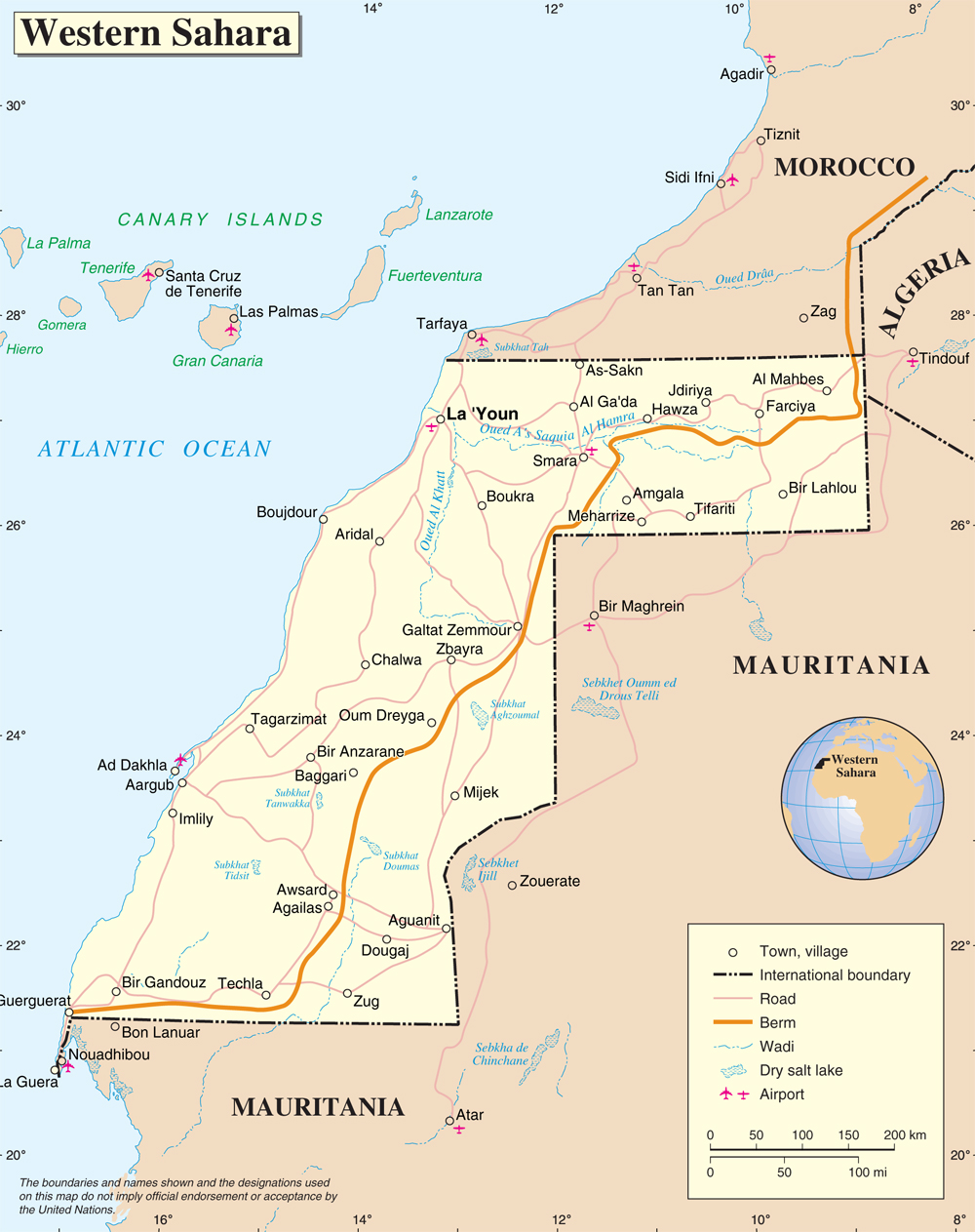
    The failure of the Kingdom of Morocco and the Polisario Front to agree on the modalities of the long-planned United Nations-sponsored referendum on the fate of Western Sahara, combined with a growing nonviolent resistance campaign within the territory against Morocco’s 31-year occupation, has led Morocco to propose granting the former Spanish colony special autonomous status within the kingdom.

    April 2, 2008

    Climate Change Threats, Opportunities, and the GCC Countries
    Middle East Institute
  • Analysis
  • Climate Change Threats, Opportunities, and the GCC Countries

    Originally posted April 2008
     

    Oil and gas revenues for GCC countries have enabled exceptional and accelerated development in all aspects of life. These countries have become a hub of intense activity in many spheres—geopolitical, military, economic, industrial, construction, and tourism, to name a few. However, the scale of oil and gas production and use has also led to severe environmental problems.

    April 1, 2008

    Read the Middle East Journal

    The oldest peer-reviewed publication dedicated to the study of the modern Middle East, MEI’s flagship journal covers politics, society, and culture in the region.