Skip to Content

Israel-Palestine

Can Hamas Be Disarmed?
  • Podcast
  • Can Hamas Be Disarmed?

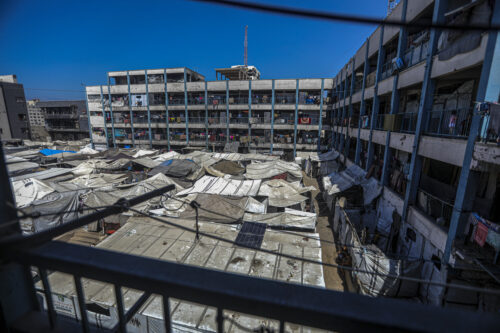
    As the world’s attention shifts to the Iran war, Gaza is increasingly disappearing from the international spotlight. But more than six months after the United Nations endorsed a peace plan for Gaza, the humanitarian catastrophe continues. Israeli strikes remain relentless, while major international NGOs and aid groups say critical supplies are still not entering Gaza at anywhere near the scale needed.
    Violence, Settlements, and Creeping Annexation in the West Bank
  • Podcast
  • Violence, Settlements, and Creeping Annexation in the West Bank

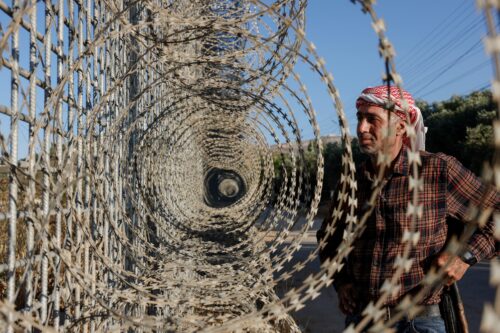
    As international attention remains fixed on the fallout from the Iran war, conditions in the West Bank continue to deteriorate. Hosts Alistair Taylor and Matthew Czekaj speak with MEI Senior Fellow Lucy Kurtzer-Ellenbogen about the sharp rise in settler violence, expanding settlement activity, and growing Palestinian displacement across the territory. They examine how recent Israeli legal and administrative measures are reshaping realities on the ground, the implications for Israeli-Palestinian relations, and what the United States should do to play a constructive mediator role.

    April 30, 2026

    As Iran Weakens, Can Hamas Survive?
  • Podcast
  • As Iran Weakens, Can Hamas Survive?

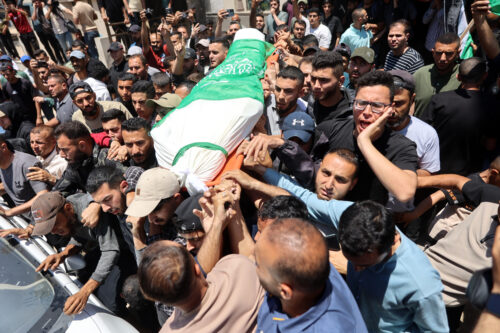
    MEI Senior Fellow Jaser AbuMousa joins hosts Alistair Taylor and Matthew Czekaj to unpack how Hamas is navigating the US-Israel conflict with Iran and its impact on Gaza. Nearly two and a half years after the start of the Gaza war, international attention has shifted away from the humanitarian crisis in the devastated coastal strip. Meanwhile, Hamas’ primary state sponsor, Iran, has been severely weakened by US-Israeli military strikes and the death of former Supreme Leader Ayatollah Ali Khamenei. AbuMousa examines how this could affect Hamas’ trajectory moving forward and its place within the Axis of Resistance, as well as what it all means for the Palestinian people.

    March 26, 2026

    Filter by
    314 Results
    Why Jordan was so quick to reject Trump’s peace plan
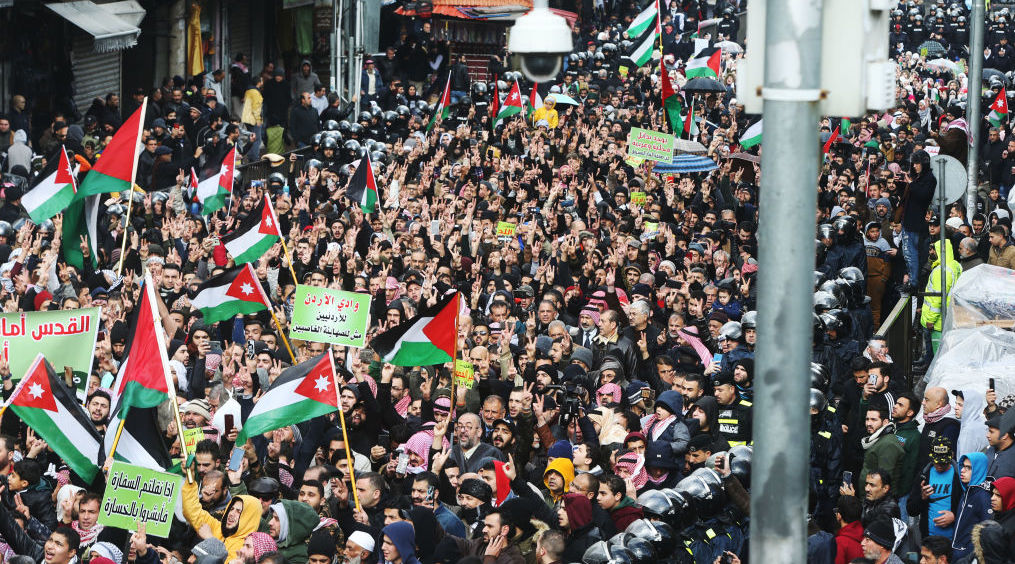
    Thousands of Jordanians protested on Friday against President Trump's Middle East Peace Plan on January 31, 2020 in Amman, Jordan.
  • Analysis
  • Why Jordan was so quick to reject Trump’s peace plan

    Jordan’s response to President Donald Trump’s so-called “deal of the century” has been quick and unequivocal. Less than an hour after the release of the peace plan at a White House ceremony on Jan. 28, Jordanian Foreign Minister Ayman Safadi issued a statement in which he reiterated Amman’s support for the two-state solution and the Arab Peace Initiative (API) as the only path to a just and lasting settlement to the Israeli-Palestinian conflict, without referring directly to the Trump proposal.

    February 3, 2020

    Arab states unanimously reject Trump plan
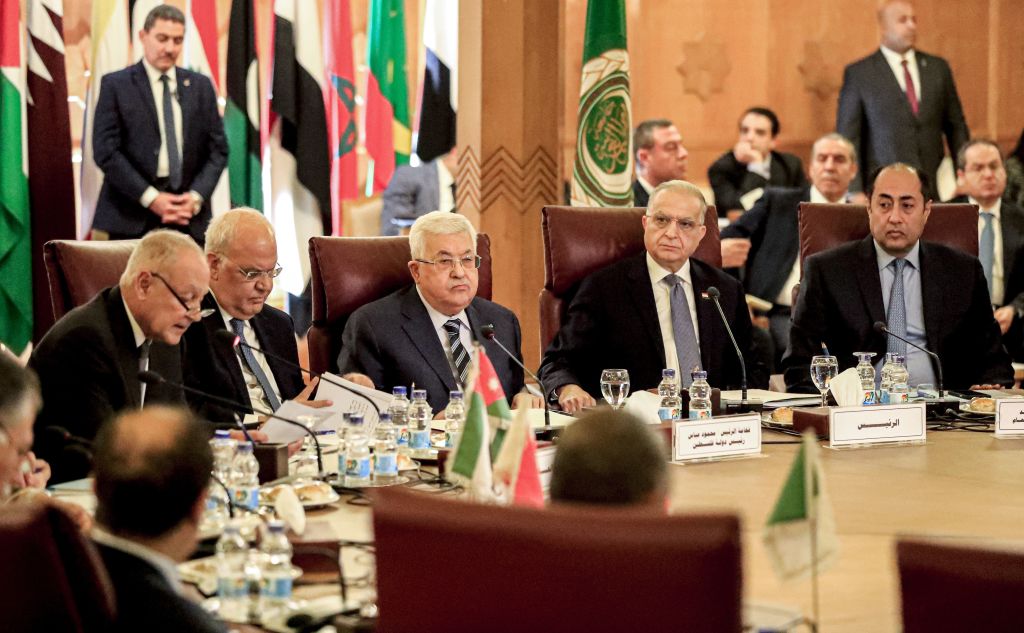
    Palestinian president Mahmud Abbas (3rd-L) and Palestine Liberation Organisation (PLO) Secretary-General Saeb Erekat (2nd-L) look on as Arab League Secretary-General Ahmed Aboul Gheit (L) reads a statement during an Arab League emergency meeting discussing the US-brokered proposal for a settlement of the Middle East conflict, at the league headquarters in the Egyptian capital Cairo on February 1, 2020.
  • Commentary
  • Arab states unanimously reject Trump plan

    The communiqué, while largely symbolic, was nonetheless a major victory for Abbas’ beleaguered leadership.

    February 3, 2020

    Trump's "Peace Plan"
    Middle East Institute
  • Podcast
  • Trump's "Peace Plan"

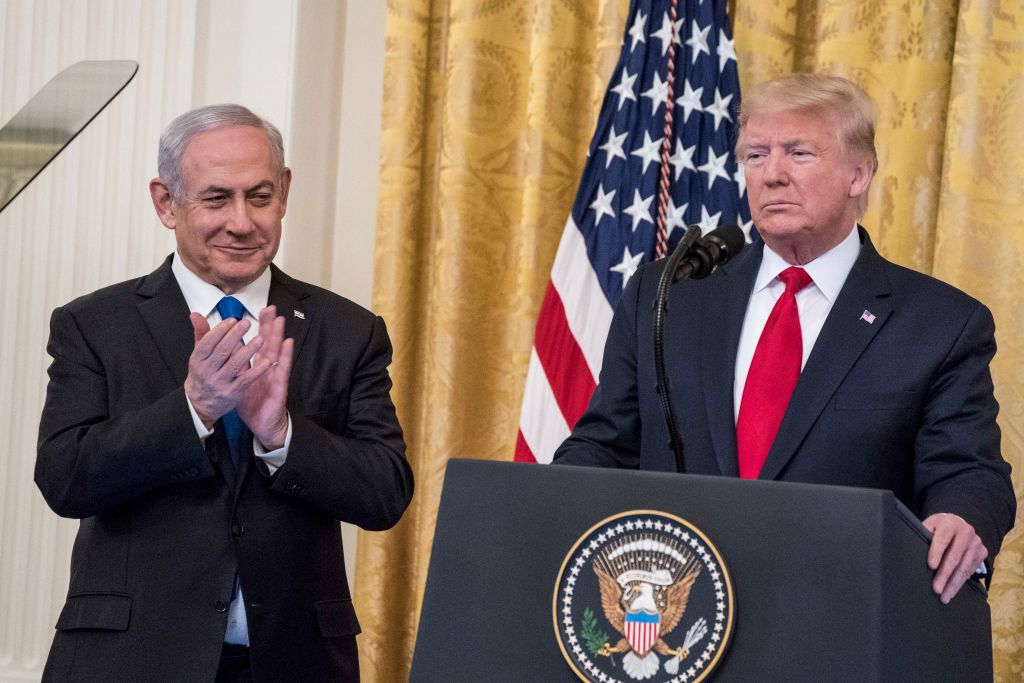
    Khaled Elgindy and Michael Koplow join host Alistair Taylor to discuss the long-awaited “deal of the century” Middle East peace plan. President Trump rolled the plan out at the White House on Tuesday with Israeli Prime Minister Benjamin Netanyahu in attendance, while the Palestinians, who have refused to deal with the administration since it recognized Jerusalem as Israel’s capital at the end of 2017, were not there – and not invited. How has it been received so far, and where might things go from here?

    January 31, 2020

    Trump’s “peace plan” aims to bury the two-state solution
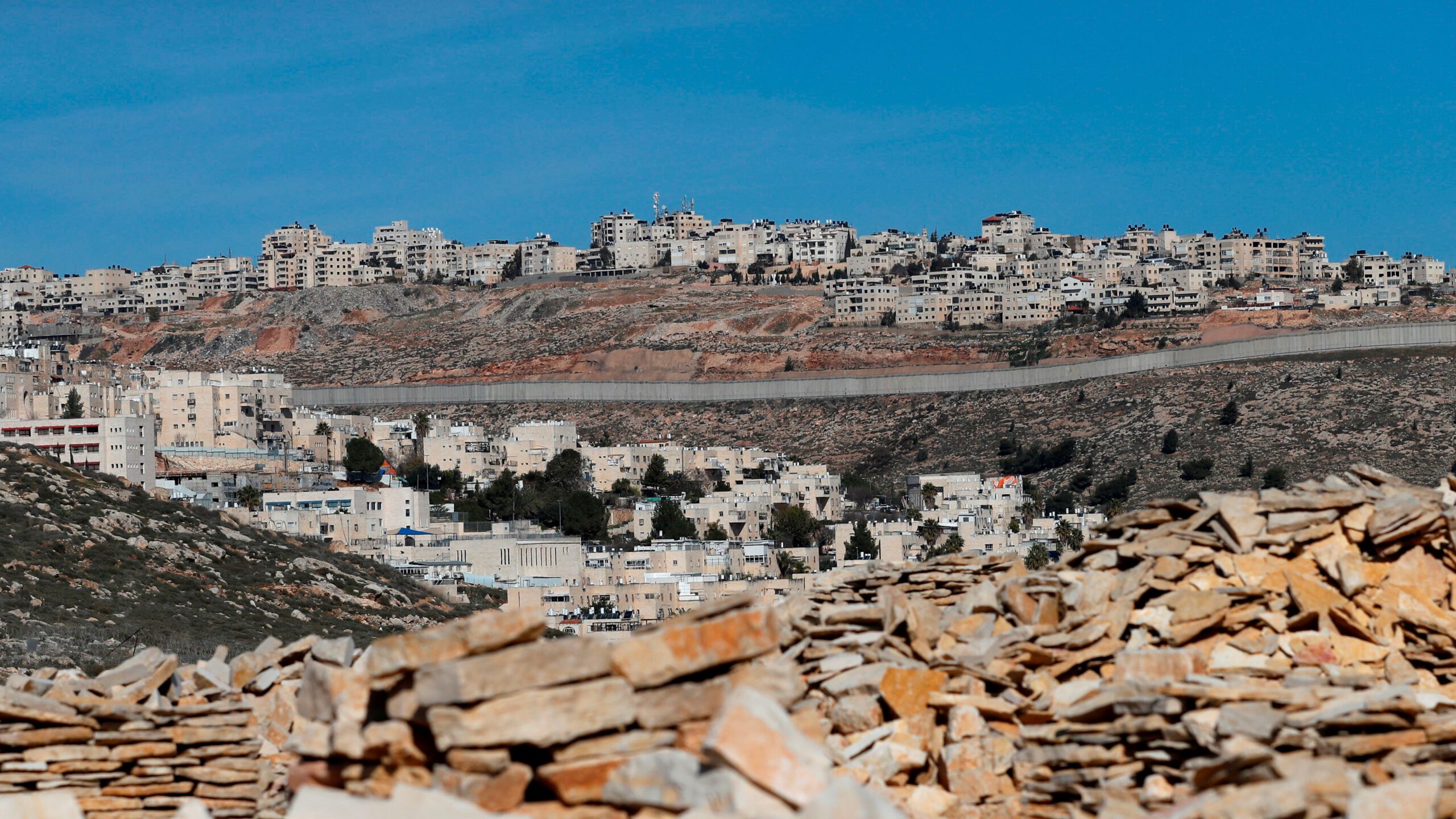
    A picture taken on January 27, 2020 shows Israel's controversial concrete barrier (C) separating the Jewish settlement of Neve Yaakov (foreground) in the northern part of east Jerusalem and the Palestinian area of al-Ram (background) in the occupied West Bank.
  • Commentary
  • Trump’s “peace plan” aims to bury the two-state solution

    The notion that an American president, in consultation with two Israeli leaders, could decide on the future of Palestinians without any Palestinian involvement seems to epitomize Trump’s overall approach to the conflict.

    January 27, 2020

    It’s shameful to use Palestinians as props in Israel’s election
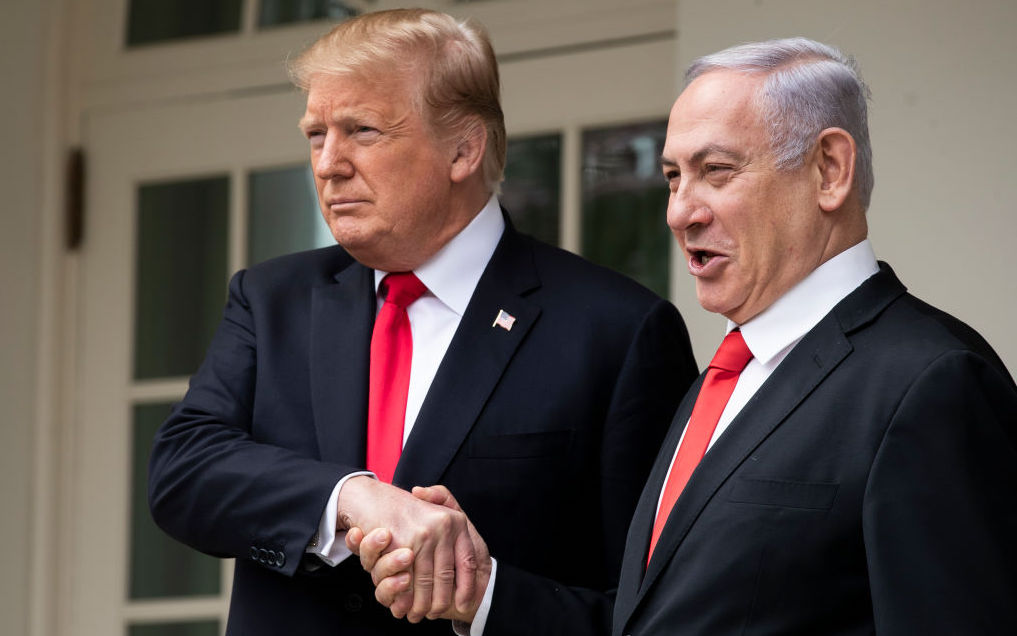
    U.S. President Donald Trump and Prime Minister of Israel Benjamin Netanyahu shake hands while walking through the colonnade prior to an Oval Office meeting at the White House March 25, 2019 in Washington, DC.
  • Analysis
  • It’s shameful to use Palestinians as props in Israel’s election

    The upcoming visit to the White House by Israel’s caretaker prime minister has nothing to do with the Middle East conflict and everything to do with giving yet another political favor to Benyamin Netanyahu. While the Jan. 28 visit may be all about the Israeli elections, it is shameful and dangerous for American officials to be giving time and space for discussions that affect the Palestinian people without their involvement.

    January 27, 2020

    Stalemate and violence in Israel-Palestine
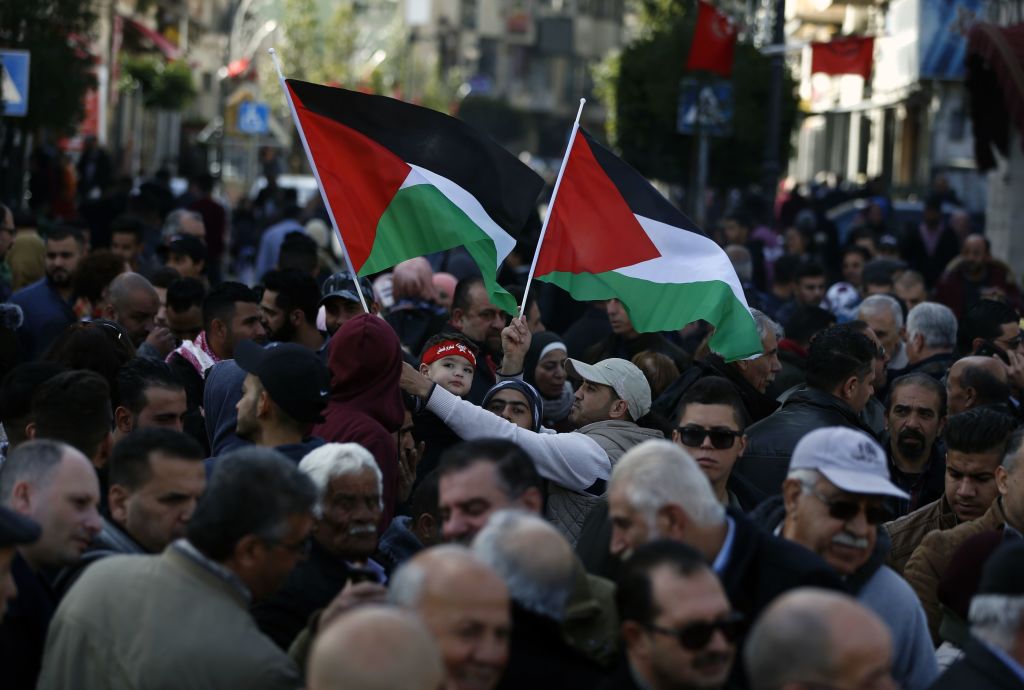
    Palestinians wave national flags as they march in the streets of the occupied West Bank city of Ramallah, calling for the cessation of divisions between Fatah and Hamas and the unification of the West Bank and Gaza Strip, on January 12, 2019.
  • Commentary
  • Stalemate and violence in Israel-Palestine

    Holding long overdue elections for the Palestinian presidency and the legislative arm of the Palestinian Authority could be a step toward redressing the Fatah-Hamas conflict.

    January 6, 2020

    The intra-GCC competition over the Palestinian heart
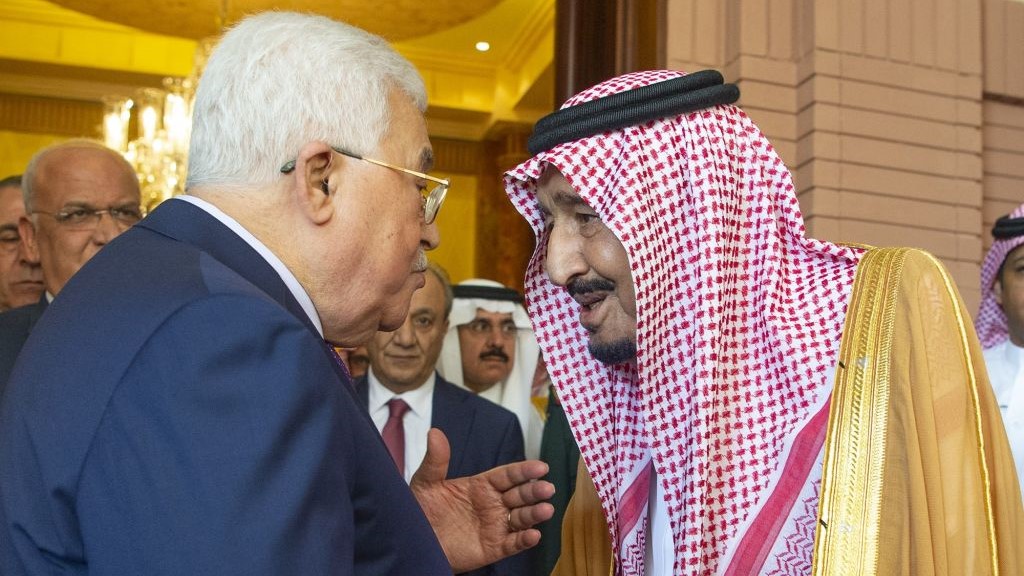
    Palestinian President Mahmoud Abbas (L) meets Saudi Arabian King Salman bin Abdulaziz al-Saud (R) in Riyadh, Saudi Arabia on October 15, 2019.
  • Analysis
  • The intra-GCC competition over the Palestinian heart

    Since 2017 three separate blocs have emerged within the Gulf. Driven by the region’s divisions, rival power centers, and conflicting interests, the Gulf states are playing an ever-greater role in Palestinian affairs.

    December 18, 2019

    Escalation in Gaza tests Israel-Hamas détente
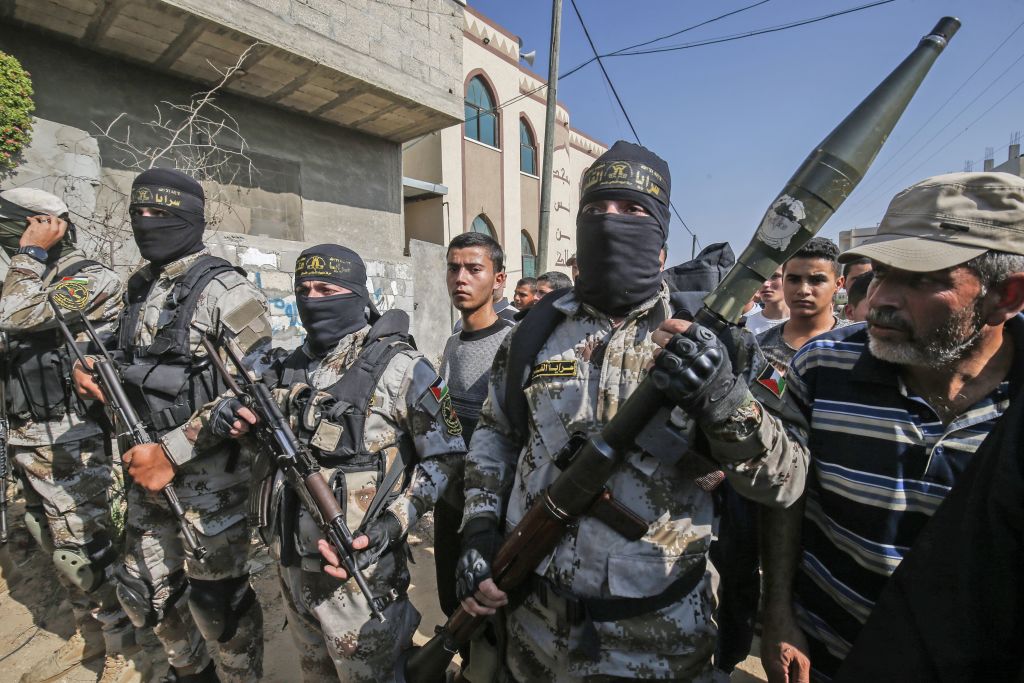
    Palestinian Islamic Jihad militants attend the funeral of a comrade in Khan Yunis in the southern Gaza Strip November 14, 2019.
  • Commentary
  • Escalation in Gaza tests Israel-Hamas détente

    A Nov. 12 Israeli airstrike on the Gaza Strip killed Baha Abu al-Ata, a commander with the Palestinian Islamic Jihad (PIJ) militant group. Over the ensuring 48 hours, the PIJ launched some 450 rockets from Gaza into southern and central Israel. Hamas, the Palestinian political party/militant group that acts as the de facto government of Gaza, stayed out of the fighting — despite relatively high civilian casualties and the killing of one of its fighters.

    November 18, 2019

    Disrupting a delicate status quo: The Hamas crackdown on Salafi-jihadists
    Security forces loyal to Palestinian Islamist movement Hamas stop a vehicle at a checkpoint in Khan Yunis in the southern Gaza Strip on August 28, 2019.
  • Analysis
  • Disrupting a delicate status quo: The Hamas crackdown on Salafi-jihadists

    Reports of a secret war being waged by Hamas against Salafi-jihadist groups in the Gaza Strip are indicative of increasing challenges to the former’s security control within the enclave. Hamas’ current approach to violent Salafist cells in Gaza is equally demonstrative of an ongoing warming of relations between Cairo and Hamas, and one that has afforded Hamas international legitimacy and an ease in border restrictions.

    October 22, 2019

    There Is No "Status Quo": Drivers of Violence in the Israeli-Palestinian Conflict
    A picture taken on February 1, 2019 from Jabel Mukaber, a Palestinian neighbourhood in Israeli-occupied East Jerusalem shows the Dome of the Rock mosque (golden dome) and al-Aqsa Mosque (silver dome) at the al-Aqsa Mosque compound in Jerusalem's Old City.
  • Analysis
  • There Is No "Status Quo": Drivers of Violence in the Israeli-Palestinian Conflict

    The Israeli-Palestinian conflict remains a destabilizing element in an already volatile Middle East. The Palestinians are too weak to wrest their independence from Israel. But as long as their right to self-determination is denied, they are likely to engage in regular violence targeting Israel. Absent outside intervention, Israel is powerful enough that it can suppress Palestinian demands for freedom — but it is not able to completely pacify the Palestinians. Thus, the conflict continues, punctuated every few years by rounds of more significant violence.

    August 20, 2019

    Ambassador Friedman: Palestinians already have autonomy
    A Palestinian protester waves a Palestinian flag during a demonstration in the village of Ras Karkar west of Ramallah in the occupied West Bank on September 4, 2018.
  • Analysis
  • Ambassador Friedman: Palestinians already have autonomy

    Autonomy is normally given to a specific cultural or national group as part of a political agreement. For Palestinians, the idea that autonomy is the goal of talks is unhelpful because they already have autonomy.

    August 15, 2019

    Oman's new embassy in Palestine
    In this handout from the Palestinian Press Office, Palestinan President Mahmoud Abbas (R) meets with Oman's Sultan Qaboos bin Said on January 14, 2010 in Muscat, Oman.
  • Analysis
  • Oman's new embassy in Palestine

    The news came eight months after Israeli Prime Minister Benjamin Netanyahu paid a visit to the Omani capital for surprise talks with Sultan Qaboos in October 2018, and four months after Minister Responsible for Foreign Affairs Yusuf bin Alawi bin Abdullah met with Netanyahu in Poland during the Trump administration’s “Peace and Security in the Middle East” summit.

    August 12, 2019

    Read the Middle East Journal

    The oldest peer-reviewed publication dedicated to the study of the modern Middle East, MEI’s flagship journal covers politics, society, and culture in the region.