Over the past several weeks, the Houthis have seized the port city of Mokha, Yemen’s western coastline, and several islands in the Bab el-Mandeb Strait, and they are now massing around Marib and Taiz in the first major frontline shift since 2022. MEI Associate Fellow Nadwa Al-Dawsari joins host Matthew Czekaj to unpack the latest developments. Together, they discuss what has allowed the Houthis to advance against Yemeni government forces, the role the militant group plays in Iran’s regional strategy, and what it will take to contain the threat.
Though it has fallen out of the headlines because of the Iran war, Syria has had a dramatically consequential summer. Hosts Alistair Taylor and Matthew Czekaj are joined by MEI Senior Fellow Charles Lister to take stock of recent developments: the dissolution of the Kurdish-led Syrian Democratic Forces, Israeli strikes and the friction with Turkey they have exposed, the standoff in Sweida, as well as Damascus’s bid to turn Syria into a trade corridor between the Mediterranean and the Gulf. Is the transition consolidating or fragmenting nearly two years after the fall of the Assad regime?
As the US-Israel-Iran war enters its sixth month, the conflict has taken a sharp turn. After a brief lull in the fighting, Iran launched a surprise ballistic missile attack on US forces on July 28, and the US and Saudi Arabia struck back at Iran-backed militias in Iraq, marking Riyadh’s entry into the war. MEI Senior Fellow Alex Vatanka joins host Alistair Taylor to discuss the escalation, what may come next, and the state of talks over sharing the Strait of Hormuz.
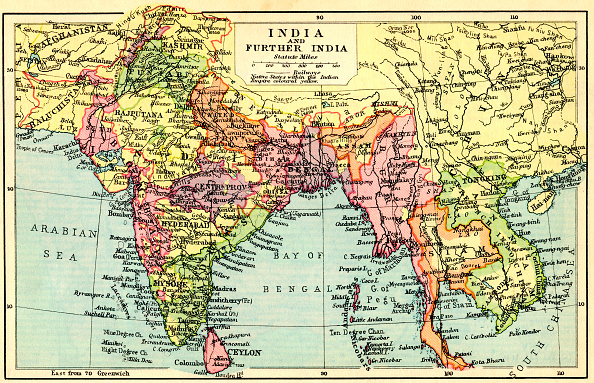
Anti-India Sentiments in South Asia: Terrorist Recruitment Narratives
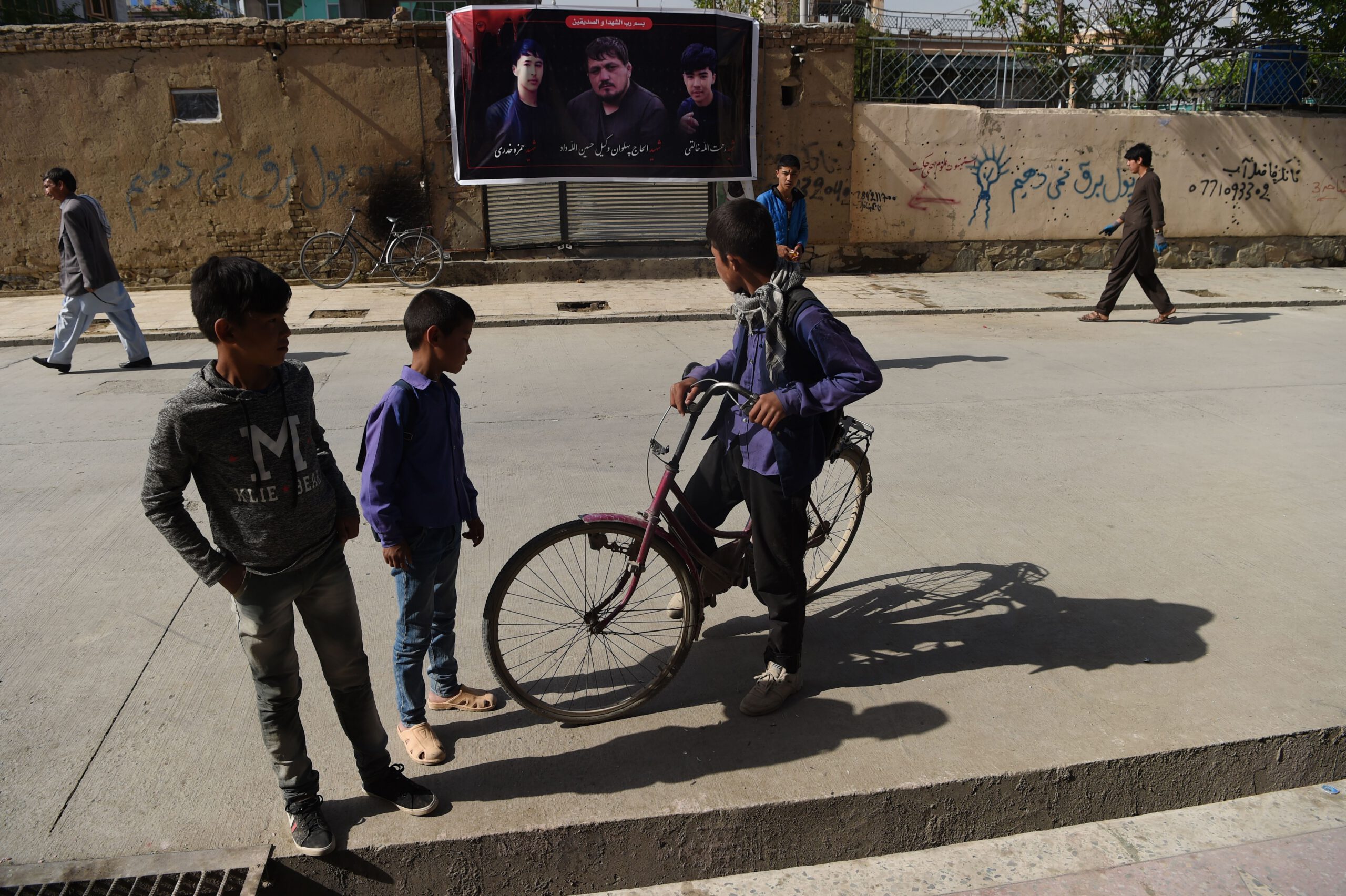
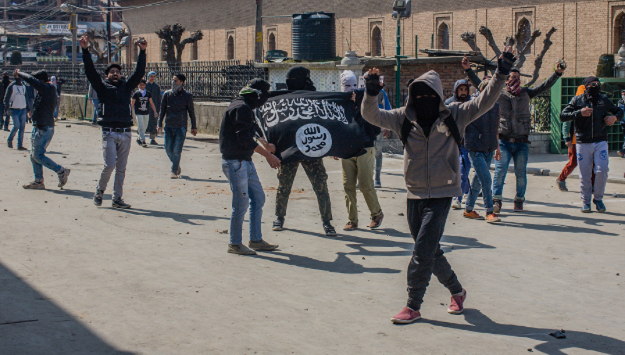
India’s strategic choices in South Asia have prompted it to interfere in the domestic affairs of some of its neighbors. As a result, India has become a part of domestic politics of most of its neighboring states where anti-India sentiment is often used to bolster the nationalist credentials of various political formations. Importantly, such sentiments have been leveraged by Jihadist groups — especially those operating in Pakistan and Bangladesh — to shore up support for themselves.
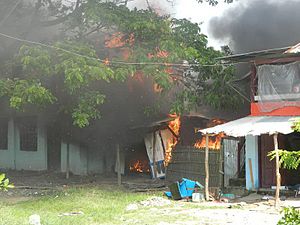
Sectarian-based conflicts — or at any rate, spasms of intercommunal violence characterized as such — are certainly not new. Nor is Iraq or, for that matter, the Middle East as a whole, the only locus of conflict depicted as being sectarian in nature, as the disturbing events in Burma/Myanmar, as well as in the Central African Repubic (CAR) and Nigeria clearly illustrate. With increasing frequency, media accounts of the civil war in Syria describe it in sectarian terms and report that the violence there has inflamed “sectarian tension” throughout the Gulf and beyond.
Last week, rebel forces in southwestern Syria agreed to a Russia-brokered deal to surrender Deraa province and lay down their arms, possibly securing strategic victory for the Assad regime in the long-running Syrian conflict. MEI’s Robert Ford and Charles Lister join guest host Gerald Feierstein to discuss the significance of these developments and whether the United States is preparing to withdraw from Syria in a broader agreement with Russia.
In this week’s Monday Briefing, MEI experts Charles Lister, Alex Vatanka, Randa Slim, and Marvin G. Weinbaum provide analysis on the US’s silence amid the Assad regime’s expansion, the Iranian president’s trip to Europe, the uptick in violence after Iraq’s elections, and the upcoming Pakistani parliamentary elections.
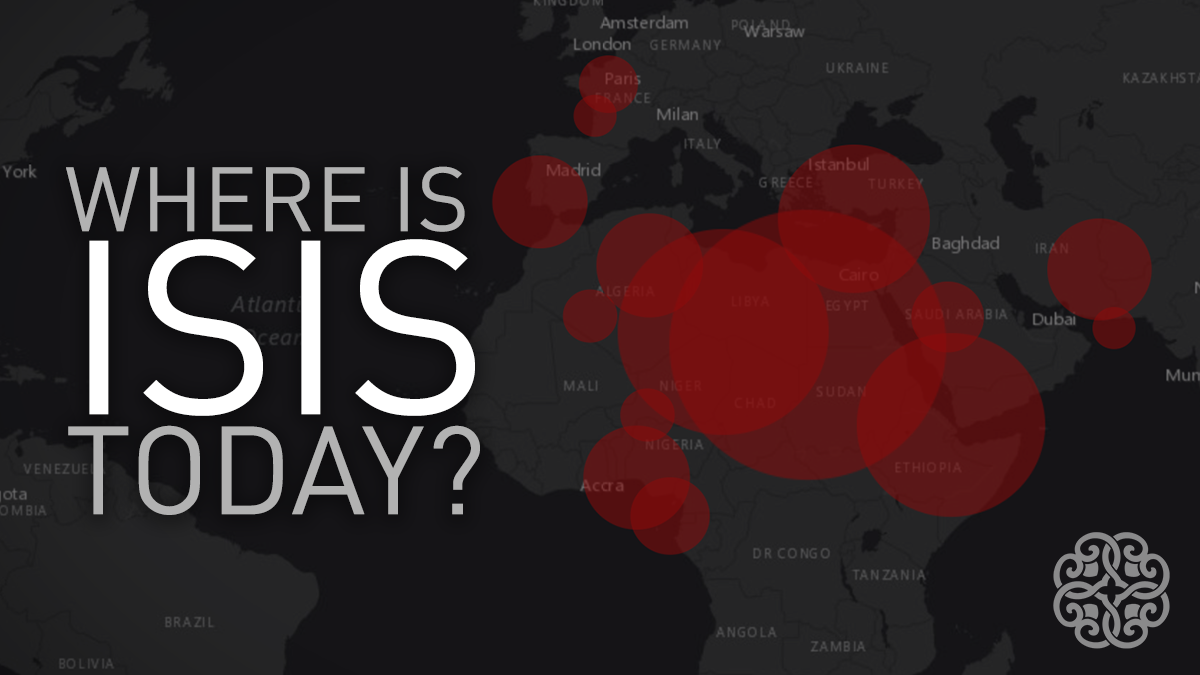
After years of international intervention, ISIS was routed from its Iraqi stronghold in Mosul and from its so-called capital in the Syrian city of Raqqa last year. However, the group remains dangerous both in the region and globally. Charles Lister discusses how ISIS is operating today, and what the international community must do to combat it.
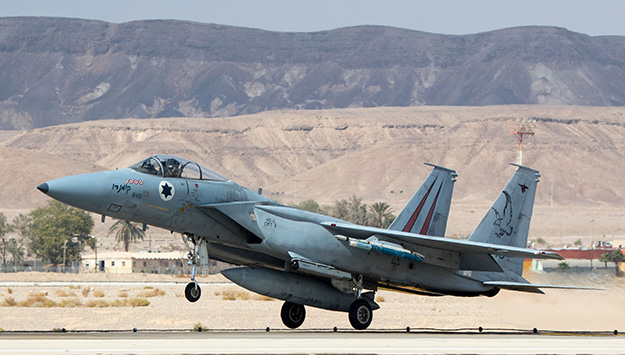
Amb. Robert Ford and Charles Lister join host Paul Salem to discuss last week’s U.S. airstrikes in Syria in response to the Assad government’s ongoing use of chemical weapons, what the Trump administration is signaling about America’s plans there, and the escalating standoff between Israeli and Iranian forces in the country.
Violent extremism: historical patterns and precedents, ancient and modern
Middle Eastern history is often portrayed as a succession of empires and political orders harassed and occasionally brought down by violent opponents–usually labeled as terrorists at the time. This was true in ancient times as well as modern. And today’s violent extremist groups resurrect historical narratives and grievances to fuel contemporary conflict.
The humanitarian disaster in Syria’s eastern Ghouta
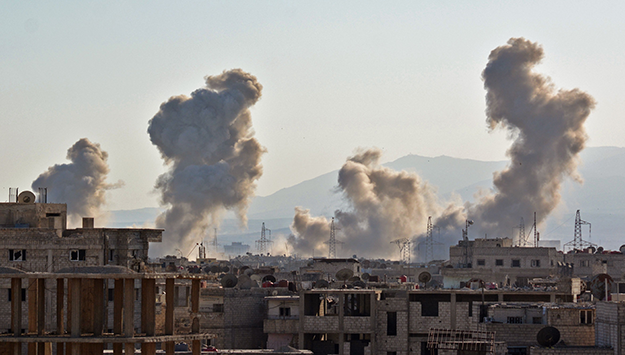
The Damascus suburb of eastern Ghouta is the site of a humanitarian disaster unfolding day by day as the Syrian regime and its Russian and Iranian backers have maintained a massive aerial assault that has killed hundreds. MEI Fellows Ibrahim al-Assil and Charles Lister join host Paul Salem to discuss the conditions on the ground and what led to the campaign that has turned Ghouta into a “Hell on Earth.”
The oldest peer-reviewed publication dedicated to the study of the modern Middle East, MEI’s flagship journal covers politics, society, and culture in the region.