Reflections on a Diplomatic Career in the Middle East: A Conversation With Ambassador Yael Lempert
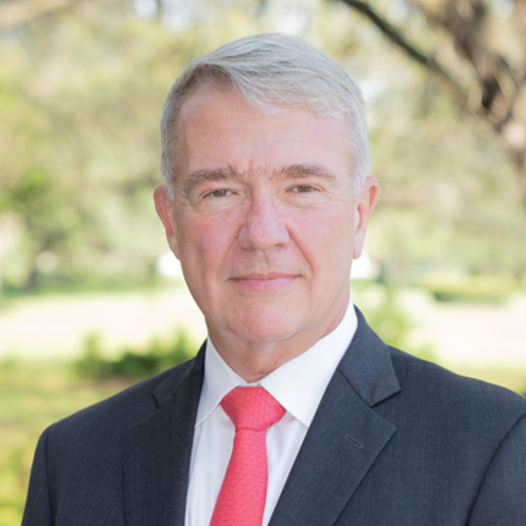
Brian is joined by Amb. (ret.) Yael Lempert, Vice President for Outreach at MEI, to discuss her career in diplomacy and the importance of US diplomatic efforts abroad. She shares stories from postings across the Middle East in Baghdad, Cairo, Tripoli, Jerusalem, and Amman and examines how her personal and professional experiences shaped her approach to the work. Together, Brian and Yael discuss the realities of life in the Foreign Service, the core tenets of American diplomacy, and why it matters in today’s Middle East.
Trump’s South Caucasus Peacemaking Is His Most Successful, but It Remains Unfinished
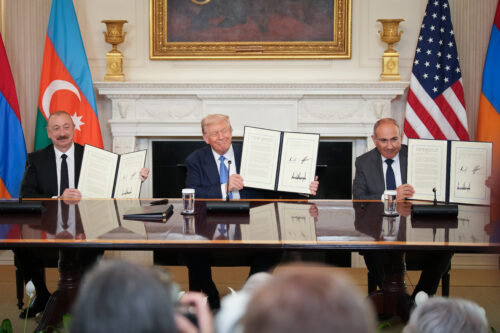
Of all the fronts in President Trump’s peacemaking agenda, the South Caucasus has delivered the most concrete results. The August 2025 Washington Declaration, signed between Armenia and Azerbaijan and witnessed by Trump, marked an important step toward peace in the region. The two sides initialed a peace agreement and advanced plans to unblock regional connectivity, including through the establishment of the Trump Route for International Peace and Prosperity (TRIPP), which would connect Azerbaijan to its Nakhijevan exclave through southern Armenia. Implementation of TRIPP has since made notable progress, but construction has yet to start. A breakthrough on those two tracks would, in turn, unlock Armenia–Türkiye normalization, transforming a long-fractured region into an area of trade and interdependence.
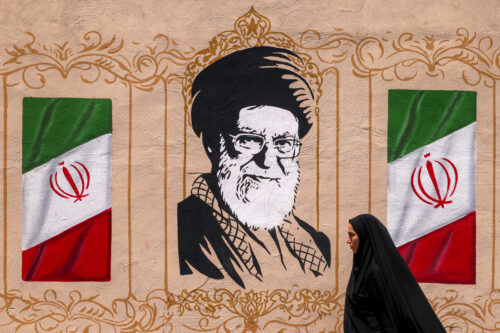
Wars don’t just end. They get interpreted, reinterpreted, and turned into strategic doctrine. That is what happened after the Iran-Iraq War of the 1980s, a conflict that saw the United States back Tehran’s Iraqi adversaries. The war taught Tehran three lessons it never unlearned: that Washington wants the Islamic Republic gone, that Iran stands essentially alone in the world, and that it cannot survive a direct, overt fight with the U.S. and Israel.
How Iraq’s vote will shape the next phase of US-Iran competition
For Iran, Iraq is strategic depth, political sanctuary, and economic lifeline all at once. The results of the November 11 Iraqi elections will decide who in Baghdad controls the budgetary levers, internal security appointments, and committees that could codify, or constrain, Iraq’s Iran-backed militias.
This backgrounder provides an overview of the history of Hamas, its ideology and leadership, military capabilities and goals, the October 7 attack, relevant US government policies and legislation, and the group’s future in Gaza.
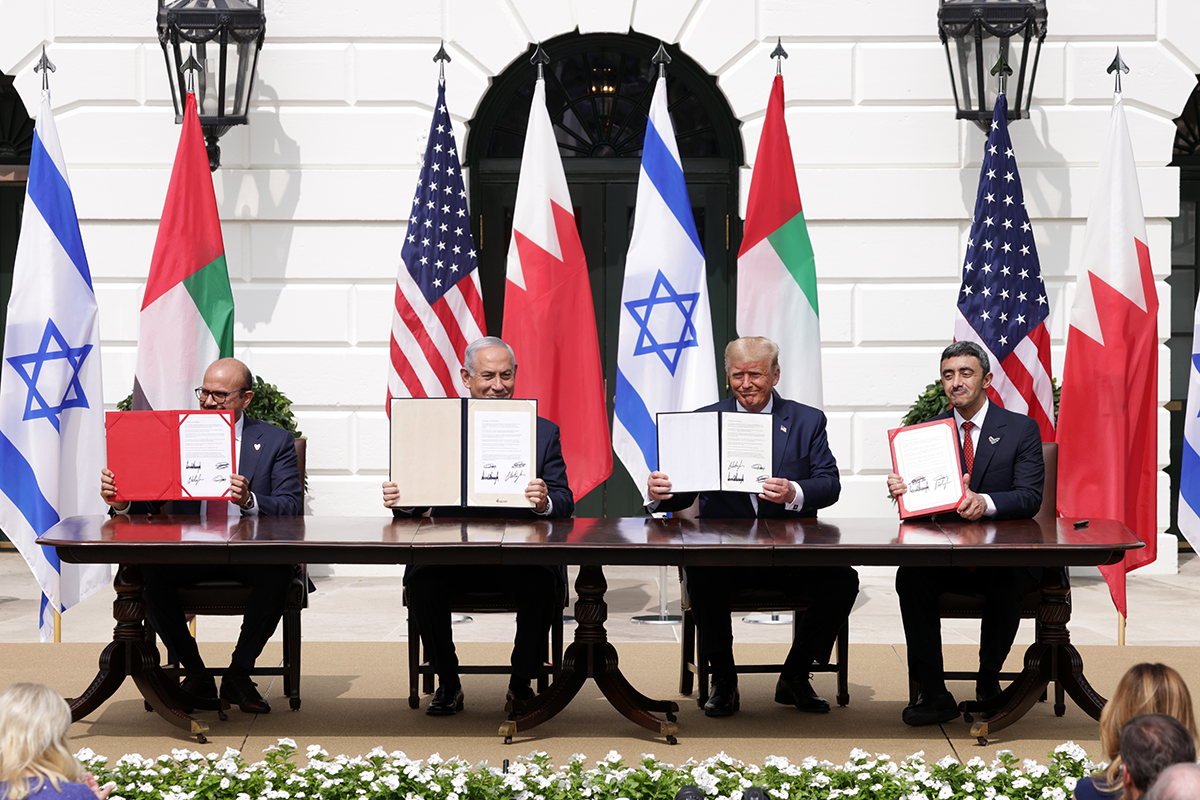
This backgrounder provides an overview of how the Abraham Accords came about, the US interests involved, their economic and strategic consequences, and the prospects for further enlargement going forward.
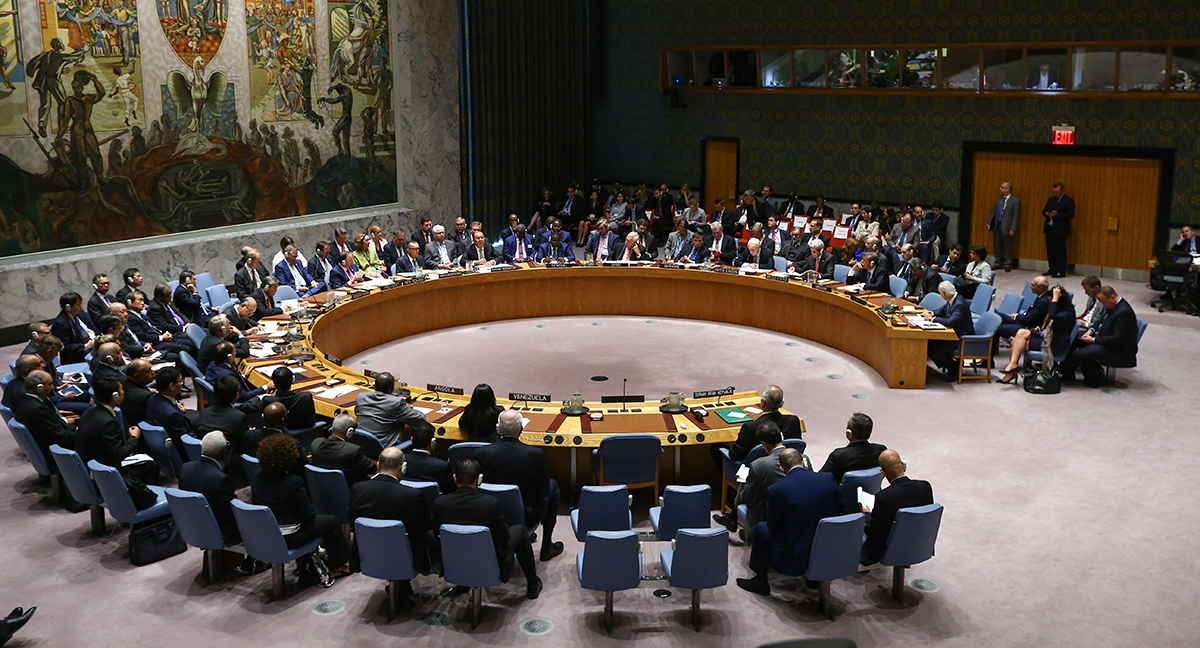
The United States plans to submit a resolution on Gaza to the United Nations Security Council by the end of November. Reportedly, the latest draft endorses President Donald Trump’s 20-point plan, recognizes the Board of Peace as a “transitional governance administration,” and authorizes the BoP to establish an International Stabilization Force. In a new MEI Policy Memo, Lucy Kurtzer-Ellenbogen breaks down why it matters for the US and the relevant policy considerations.
Help Syria move forward — Repeal the Caesar Act sanctions
By repealing the 2019 Caesar Act sanctions, the United States today can take a meaningful, achievable step to reverse the Assads’ damaging legacy, supporting the emergence of a unified and integrated Syria that engenders peace and prosperity both at home and in the wider region.
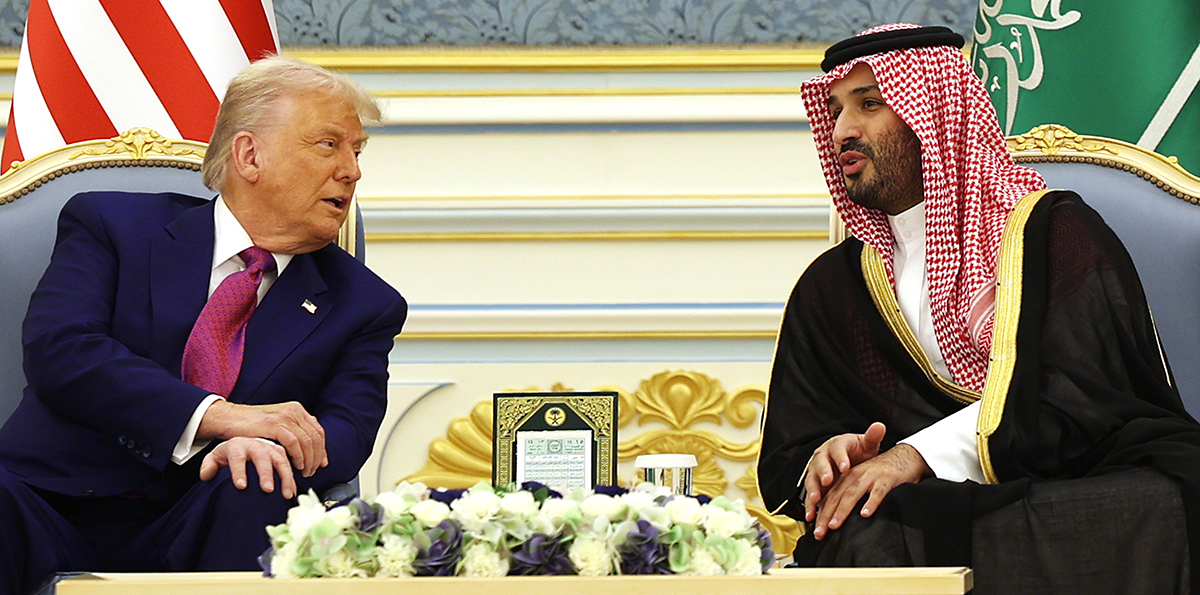
On November 18, Saudi Crown Prince Mohammed bin Salman is scheduled to make his first trip to Washington since 2018. In a new MEI Policy Memo, Daniel Benaim breaks down why it matters for the US and the relevant policy considerations.
On November 18, Saudi Crown Prince Mohammed
bin Salman (MBS) is scheduled to make his first trip to Washington since 2018. President Donald Trump has doubled down on the Gulf from the outset of his second term, making Riyadh his first planned overseas trip and reorienting ties around major artificial intelligence (AI) and investment deals. MBS’s visit will test whether both sides can translate ambitious pledges into concrete outcomes. Significant upgrades in defense and security are expected, with movement possible on semiconductor sales and nuclear cooperation. Behind the ambitions, harder questions about Saudi-Israeli normalization and alignment in a rapidly changing region loom as important Oval Office topics.
Morocco-Algeria: The case for ambitious reconciliation
On October 31, the United Nations Security Council passed a resolution centering Morocco’s autonomy plan as the basis for resolving the Western Sahara conflict. The UN vote and comments from United States Special Envoy Steve Witkoff suggest President Donald Trump wants another headline foreign policy “peacemaking” win. But the opportunity for the Trump administration is bigger than just resolving the Western Sahara issue. It could unlock an opportunity for Morocco-Algeria reconciliation that could integrate the wider Maghreb economy, reduce migration into Europe, expand energy cooperation, and enable stronger Sahel counter-terrorism coordination.
Divisions at home hinder America’s ambitions abroad
Over the past week, US President Donald Trump made an extended trip to Asia and threatened military actions against Latin American and African countries. But despite his administration’s continuing ambitions in the Middle East region, few major breakthroughs are expected there in the immediate future due to the government shutdown and unilateral cuts to national security infrastructure.
The legitimacy trap: How international institutions sustain the Houthis’ hold on Yemen
For years, the prevailing assumption was that the Houthis’ survival depended on battlefield victories and Iranian support. Both are essential, but there is a third critical and often overlooked factor: the weaponization of international engagement. In a pattern that continues to repeat itself, engagement without accountability strengthens rather than moderates Houthi behavior.
The oldest peer-reviewed publication dedicated to the study of the modern Middle East, MEI’s flagship journal covers politics, society, and culture in the region.