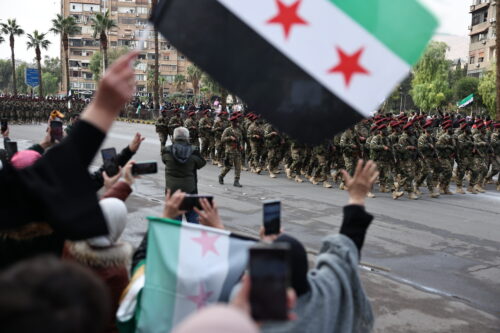
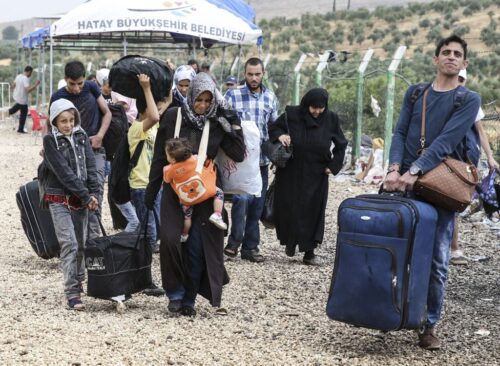
Freedom’s arrival in Syria remains deeply fragile. Even as the country’s new rulers gain diplomatic recognition, goodwill, and early relief from Western sanctions, Syria itself is still fractured—geographically, socially, and institutionally. Millions are trying to rebuild their lives amid ruins. U.N. Secretary-General António Guterres recently praised Syrians’ “resilience and courage,” reflected in the dramatic “return wave” since December 8, 2024—encompassing 1.2 million refugees and 1.9 million internally displaced persons (IDPs).
Officials in Damascus have seized on the moment, with Central Bank governor Abdulkader Husrieh promoting plans to revive the Syrian pound and develop the country into a “regional financial hub.” Yet the surge in returns reflects pressure as much as promise, driven by uneven recovery across Syria, deteriorating conditions in host countries, and waning international attention. Without a coordinated and forward-looking global strategy, these returns may signal not the end of Syria’s crisis but the onset of a new, complex phase.
Photo by Cem Genco via Getty Images
The Middle East Institute (MEI) is an independent, non-partisan, not-for-profit, educational organization. It does not engage in advocacy and its scholars’ opinions are their own. MEI welcomes financial donations, but retains sole editorial control over its work and its publications reflect only the authors’ views. For a listing of MEI donors, please click here.