
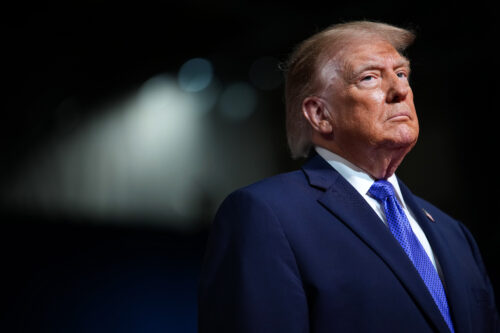
Eight months after launching the war alongside Israel, Trump has yet to explain what an American victory would look like or how much longer the United States must keep fighting to achieve it. While Americans opted to vote for the Democratic Party, which is preparing to challenge the logic of the war, Trump retains much executive power to stay in the war. Going forward, this means the political risks for him and his party will be high.
This predicament could explain the sudden surge in diplomacy. For their part, Qatar, Turkey, Pakistan, Saudi Arabia, and other regional governments are involved in efforts to bring the two sides closer together. For the first time since the Islamabad Memorandum of Understanding was signed in June (which the US effectively walked away from), there are compelling political reasons on both sides to wrap up the war. The question is whether the US and Iran can turn that recognition into a compromise, or continue the status quo which oscillates between sporadic kinetic attacks and diplomacy.
Photo by Andrew Harnik via Getty Images
The Middle East Institute (MEI) is an independent, non-partisan, not-for-profit, educational organization. It does not engage in advocacy and its scholars’ opinions are their own. MEI welcomes financial donations, but retains sole editorial control over its work and its publications reflect only the authors’ views. For a listing of MEI donors, please click here.


The Unavoidable Neighbor: Managing Iran Beyond the War

Recent Elections and What They May Mean for the Middle East
