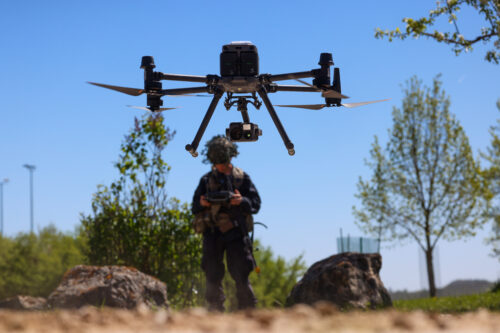
For two decades, U.S. drones hunting terrorists across the mountains of South Asia were the symbol of American military power: precise, lethal, and unmatched. That era is now over. Drones are no longer exquisite tools of counterterrorism and have evolved into something far more common and destabilizing: cheap, expendable, and mass-produced tools of attrition. Despite pioneering the technology, the United States is now poorly positioned for the version that matters most. Critical mass is being replaced by a strategy of ‘death by a thousand cuts,’ as quantity assumes a quality all of its own.
From Ukraine to the Persian Gulf, and increasingly along America’s own borders, expendable drones are reshaping battlefields and quickly rewriting how modern wars are waged. These platforms aren’t winning wars outright, but they are doing something just as important: straining defenses, exhausting budgets, and outlasting the very systems that were designed to counter them. Right now, the United States is least prepared for that reality, and its adversaries know it.
But two things can be true at once: the United States still leads in advanced conventional military power, and cheap drones aren’t necessarily subject to those rules. They don’t need to be sophisticated, just cheap and in constant supply. That alone is enough to upend long-held assumptions about how wars are fought and won. Today, America’s adversaries — state and non-state alike — are using drones more effectively while Washington has yet to fully reckon with what that portends, both in the short and long term.
The Middle East Institute (MEI) is an independent, non-partisan, not-for-profit, educational organization. It does not engage in advocacy and its scholars’ opinions are their own. MEI welcomes financial donations, but retains sole editorial control over its work and its publications reflect only the authors’ views. For a listing of MEI donors, please click here.