Washington’s Four Wrong Assumptions About the Iran War
External Publication
August 13, 2026
Share
Washington keeps making four false assumptions about Iran. First, U.S. officials assume that the regime is a rational actor weighing costs and benefits. Tehran has shown caution when facing existential threats, scaling back its ambitions and accepting soft compromises on its nuclear program. But it is also a revolutionary state, sustained since 1979 by ideological conviction as much as calculation. Washington holds vastly superior firepower. It can’t outmuscle the regime’s self-image as leader of an “axis of resistance,” a role its own founding myths assign it, an identity that makes ordinary compromise feel like apostasy, not prudence.
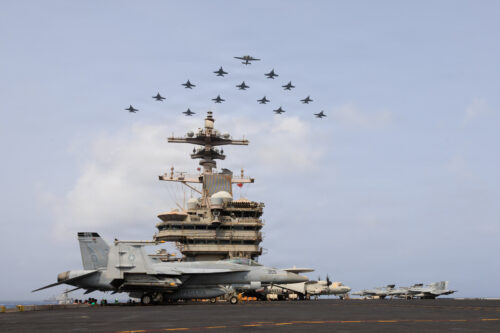
Second, American negotiators assume that there is a fixed pain threshold at which the regime will break. That may hold some truth, but it is undercut by Washington’s impatience. The naval blockade the U.S. launched against Iranian oil exports on April 13 is a case in point: It cost Tehran an estimated $500 million a day, according to the Trump administration, yet it was paused in June before any meaningful concession had been extracted. The problem may not be that Tehran’s threshold is unreachable but that Washington keeps stopping short of it.
The Middle East Institute (MEI) is an independent, non-partisan, not-for-profit, educational organization. It does not engage in advocacy and its scholars’ opinions are their own. MEI welcomes financial donations, but retains sole editorial control over its work and its publications reflect only the authors’ views. For a listing of MEI donors, please click here.