This individual is a guest contributor. MEI is not able to assist with contact requests.
Attiya Ahmad is Georgetown University’s 2009-10 Center for International and Regional Studies Post-Doctoral Fellow. She recently completed her PhD in Cultural Anthropology at Duke University. Dr. Ahmad’s work brings together scholarship on Islamic studies, globalization, diaspora and migration studies, economic anthropology, and political economy.
Iran’s coming reckoning: Regime collapse is likely — democracy is not
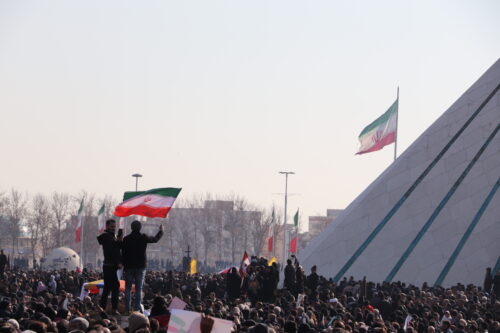
The collapse of the Iranian regime in its present form now seems more plausible than its survival as a functioning state. Yet the emergence of a democratic Iran remains far from certain. Between these two outcomes lies a volatile and dangerous middle ground. But much will depend on four factors.
What Ankara sees in Riyadh — and why it still needs Abu Dhabi
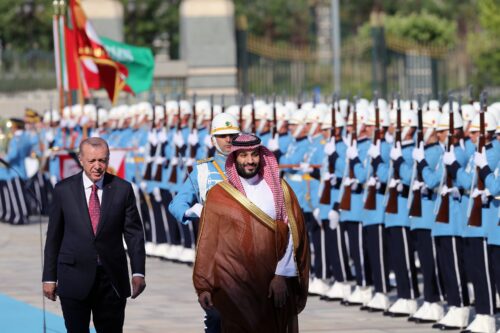
As the rivalry between Riyadh and Abu Dhabi sharpens in Yemen and beyond, Turkey has begun edging closer to Saudi Arabia, sparking claims that a new regional order is taking shape: a Turkey-Saudi axis backed by a NATO-like defense architecture, implicitly aligned against Israel and the United Arab Emirates. This reading overstates the case.
From Peripheries to Tehran: Iran’s New Geography of Protest
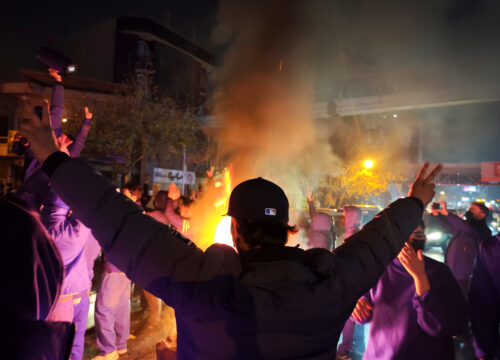
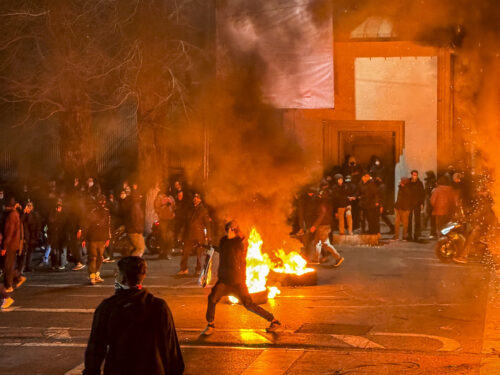
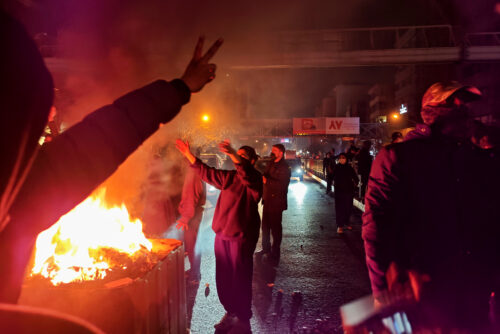
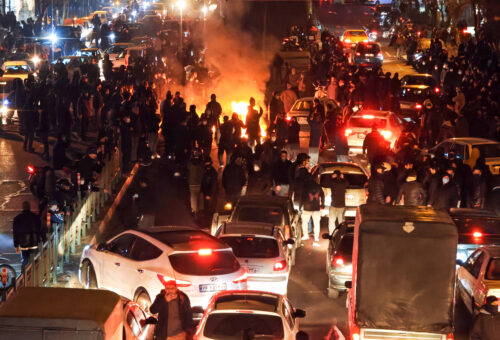
Iran is once again in the midst of nationwide unrest. Protests that erupted in late 2025—initially driven by an acute economic crisis rapidly spreading across the entire country—are ongoing. Whether this latest wave culminates in revolutionary rupture, regime adaptation, or a familiar cycle of repression and exhaustion remains uncertain. What is already clear, however, is that the structural forces animating the unrest extend far beyond the present.
At the heart of Iran’s protests lies a set of sharp and enduring regional disparities that have long shaped patterns of development, political control, and social mobilization. These center–periphery divides have repeatedly rendered Iran’s border provinces more vulnerable to deprivation, marginalization, and protest, while allowing the political and economic core to absorb shocks with greater resilience. Today, those divides are under unprecedented strain, as economic hardship is no longer confined to the margins but increasingly shared across the country.
Potential US military strikes on Iran: This won’t be another 12-Day War
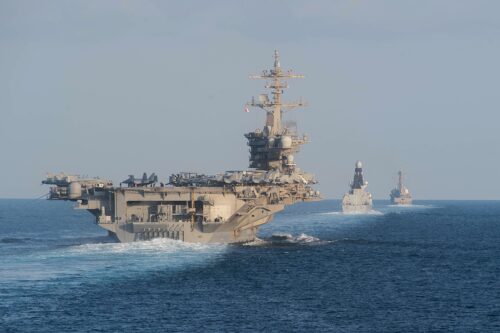
President Donald Trump has sharply warned the Iranian regime to halt its brutal crackdown on protesters. Amid speculation that the US is preparing for military action in Iran, Washington should take the lessons and fundamentally different context of its successful June 2025 operation against the Islamic Republic into account as it plans for how to respond.
Iran protests seem different. They may lead to real change.
People are not protesting because they suddenly discovered activism. They are protesting because the habits of coping and waiting for conditions to improve have finally stopped working.
The Middle East Institute invites you to an on-the-record briefing examining what comes next for Iran's leadership and the protest movement. To unpack these issues, we will be joined by MEI Distinguished Military Fellow Vice Admiral Kevin Donegan, USN (Ret.), former senior advisor at the World Bank Nadereh Chamlou, and MEI Senior Fellow Alex Vatanka.
Venezuela’s Shadow Over MENA: Perceptions and Precedents
MEI Vice President for Policy Ken Pollack joins hosts Alistair Taylor and Matthew Czekaj to explore what the precedent set by the Trump administration’s military capture of Venezuelan President Nicolás Maduro could mean for US policy in the Middle East — particularly in light of ongoing anti-regime protests in Iran. The conversation unpacks the reverberations of Operation Absolute Resolve, Washington’s options for and potential consequences of responding to the Iranian regime’s brutal crackdown, regional perceptions of recent US actions and stated objectives, and broader questions around the direction of the Trump administration’s evolving grand strategy.
Khamenei did this to himself. The US can help — without another Middle East quagmire
Last week, Iran’s Supreme Leader Ali Khamenei effectively greenlit mass killing to save his regime. His message was blunt: blood would be spilled to preserve the system. His security forces followed through, unleashing a level of violence against protesters that even by the Islamic Republic’s grim standards marks a dangerous escalation.
Balancing on a Fault Line: Turkey Between Russia, Ukraine, and the US
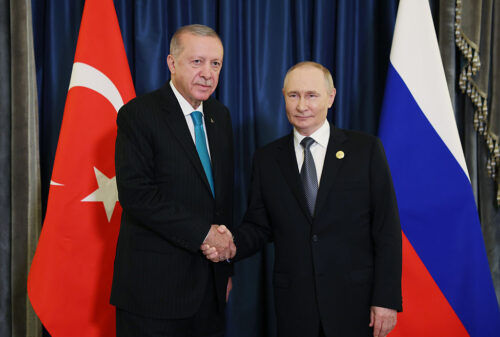
This webinar discussed the following looming questions: Can Turkey sustain a three-way balancing act between Russia, Ukraine, and the US? Where does Ankara stand on Trump’s peace plan, which would require Ukraine to cede territory to Russia? How does Moscow view Turkey’s S-400 dilemma? And what would the continuation of the Russia-Ukraine war mean for Turkey’s security—and for its already strained relations with the West?
Iran is facing the largest demonstrations since 2022, when the death of Mahsa Amini in police custody ignited a nationwide uprising. This time, the unrest comes as the Islamic Republic is unusually exposed—still reeling from a bruising 12-day war with Israel last summer. What does this moment mean for the regime’s survival? How is this wave of protests different from those that came before? And is there anything the outside world can do to support Iran’s pro-democracy movement without backfiring?
How Damascus and the SDF came to blows in Aleppo — and what might come next
After months of building tensions, full-blown hostilities erupted between Syria’s transitional government and militia fighters linked to the Syrian Democratic Forces (SDF) in Aleppo on January 6. Through four days of fighting, government forces have now assumed full control of Syria’s second city, after expelling SDF-linked forces from its northwestern districts.
A New Phase in Vision 2030: From Strategic Exemptions to Broad Ownership
Saudi Arabia is making a bold push to rewire the rules of the game for foreign investment within the Kingdom. The proposed lifting of the 49 percent foreign‐ownership cap in publicly listed companies is emerging as the next frontier of that effort. This reform, scheduled to take effect on February 1, could change the calculus for active and passive global capital, drive fresh scrutiny of regulatory constraints, and test the Kingdom’s ability to follow through in what may prove to be a tight balance between opening up and preserving sovereign control.
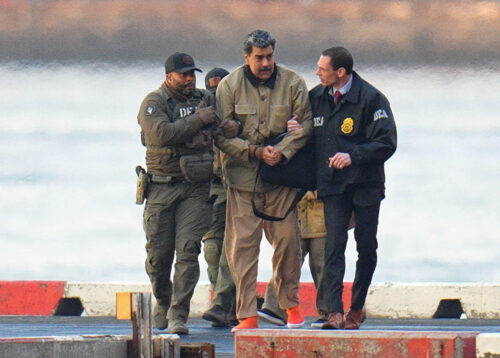
America’s dramatic capture of Venezuelan dictator Nicolas Maduro has set the stage for the conduct of America’s national security strategy in 2026. It has also raised questions.
This bonus episode of Middle East Focus features a conversation from MEI’s Virtual Briefing Series. Director of Communications Zeina Al-Shaib is joined by Distinguished Diplomatic Fellow Alan Eyre and Senior Fellow Alex Vatanka to discuss the ongoing protests in Iran. The street demonstrations, sparked by the country’s economic nosedive and at times turning violent, are the largest in three years. As regime arrests and killings of protesters have intensified, US President Donald Trump has threatened to intervene, his remarks potentially taking on a more vivid significance in light of the American military extraction over the weekend of Venezuela’s President Nicolás Maduro, an ally of Tehran. Eyre and Vatanka discuss what these latest developments mean for an Iranian regime already under intense internal and international pressure; the political impact of President Trump’s threats; the limits of Iranian President Masoud Pezeshkian’s power to de-escalate the situation at home; and how the instability inside Iran may affect the wider region.
Yemen’s Southern Front: Strategic Leverage, Fragmentation, and Regional Risk
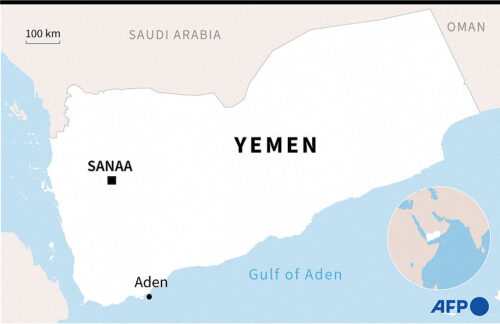
Beginning in early December 2025, UAE-backed Southern Transitional Council (STC) forces launched an offensive in eastern Yemen, seizing Seiyun and key military and administrative sites across Wadi Hadhramaut before advancing into al-Mahrah, as Saudi-aligned tribal and government units withdrew under mounting political and military pressure.