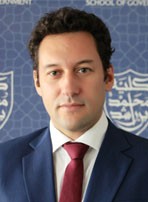
Guy Burton is a Visiting Fellow at the LSE Middle East Centre and (as of January 2019) an Adjunct Professor of International Relations at Vesalius College in Brussels. Previously, he was Assistant Professor at the Mohammed bin Rashid School of Government (2016-18). Before that, he was Assistant Professor at the School of Politics, History and International Relations at the University of Nottingham, Malaysia Campus (2013-16); Lecturer at the University of Kurdistan-Hewler in the Kurdistan Region of Iraq (2012-13); and Research Fellow (2010-12) and Acting Director (2011-12) at the Center for Development Studies at Birzeit University in occupied Palestine.
Dr. Burton’s research interests are wide ranging. He covers comparative politics, international relations, the politics of development and public policy and has regional specialism in the Middle East and Latin American areas. He is the author, most recently of Rising Powers and the Arab–Israeli Conflict since 1947 (Lexington Books, 2018). His publications also include co-authorship and authorship of Presidential Leadership in the Americas since Independence (Lexington Books, 2016) and Policy-making and education reform in the development of Latin American social democracy(Edwin Mellen, 2011) respectively. His work has also published in peer-reviewed journals such as Third World Quarterly, Conflict Security & Development, Middle East Critique, International Review of Education and Latin American Perspectives. He received his PhD in Government from the London School of Economics in 2009.
India’s “Look West” Policy in the Middle East under Modi
This article discusses the implications of Narendra Modi’s May 2019 election to a second term as prime minister and its implications for India’s foreign policy, especially regarding the Middle East. The article begins with a review of India’s strategy in the region, demonstrating that Modi has built on and intensified efforts begun under previous governments. The central argument is that Indian policy has benefited from the current state of international politics in the Middle East.
China’s footprint in the Middle East has grown significantly over the past two decades. China’s widening and deepening relations with the region has coincided with a change in the international environment. China’s increasingly extensive diplomatic, commercial and cultural activities in the Middle East has drawn this distant and unfamiliar country into the daily lives of the people of the region to a degree that is unprecedented and likely irreversible. This, then, begs the question: What views do the people of the Middle East hold regarding this rising global power and relative “newcomer” to the region? Drawing on Zogby/University of Maryland and Pew Research Center survey data, this article offers some preliminary observations that address this question.
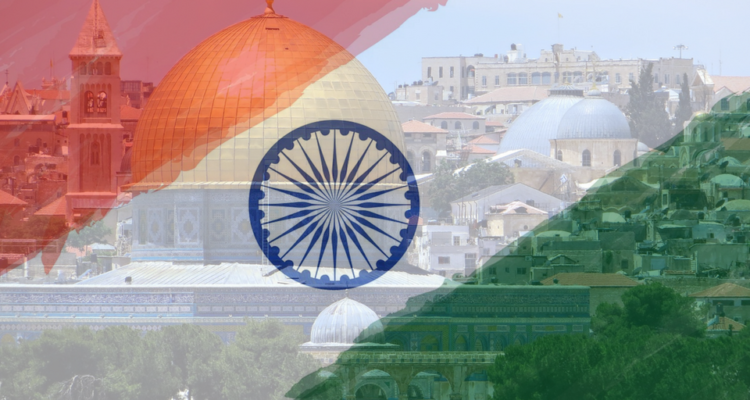
Explaining India’s Position on Jerusalem and the Israeli-Palestinian Conflict
When President Donald Trump announced that the United States would move its embassy to Jerusalem on December 6, 2017, he effectively recognized Jerusalem as the capital of Israel. This essay examines India’s response to this development, in the broader context of its evolving relationship with Israel and with the United States.
China, Jerusalem and the Israeli-Palestinian Conflict
On the surface, the Chinese reaction to the US decision to effectively recognize Jerusalem as the capital of Israel was clear. Following President Trump’s announcement to transfer the US embassy to the Holy City on December 6, 2017. Several days later, China voted with every other member on the UN Security Council (UNSC) to uphold the international consensus and previous UN decisions on Jerusalem. By going against world opinion, the US arguably looked out of step in relation to the conflict. By contrast, China’s alignment with international public opinion gave it the aura of a potential mediator. This essay considers whether Beijing has the political will and capacity to make a significant positive impact on the Israeli-Palestinian conflict.
This essay discusses China’s responses to the jihadi threat. It shows that Chinese strategies have been influenced by whether the terrorist threat is perceived to be domestic or foreign. Internally, the Chinese approach has focused on protection and policing, resulting in confrontation with the Uighur minority in the far western province of Xinjiang. Externally, it has been less confrontational, with a preference for political and peace-building approaches.