I-wei Jennifer Chang is a Research Fellow at the Global Taiwan Institute in Washington, D.C. Previously, she was Senior Program Specialist in the China Program at the United States Institute of Peace, where she examined China’s economic, diplomatic, and security role in conflict-affected countries in the Middle East, Africa, and the Indo-Pacific region. She also worked as a Research Assistant at the Embassy of India in Washington, D.C., and as a researcher at the United States Commission on International Religious Freedom. She has written for several publications including 9DashLine, Foreign Policy, Jadaliyya, Middle East Research and Information Project, ISLAMiCommentary, and the Middle East Institute’s Middle East-Asia Project. She wrote a book chapter on “Chinese Policies on the Arab Uprisings” in Popular Unrest and Foreign Policy: The International Politics of the Arab Spring, edited by Robert Mason (Palgrave Macmillan, December 2014), and another book chapter on “The Chinese Perspective on the Yemen Crisis” in The Global, Regional, and Local Dynamics in the Yemen Crisis, edited by Stephen W. Day and Noel Brehony (Palgrave Macmillan, February 2020). She holds two Master’s degrees in International Relations and Journalism from the University of Maryland and a Bachelor’s degree in Asian Studies from Georgetown University’s School of Foreign Service. She is fluent in Mandarin Chinese and has studied Arabic.
Taiwan’s Model for Combating COVID-19: A Small Island with Big Data
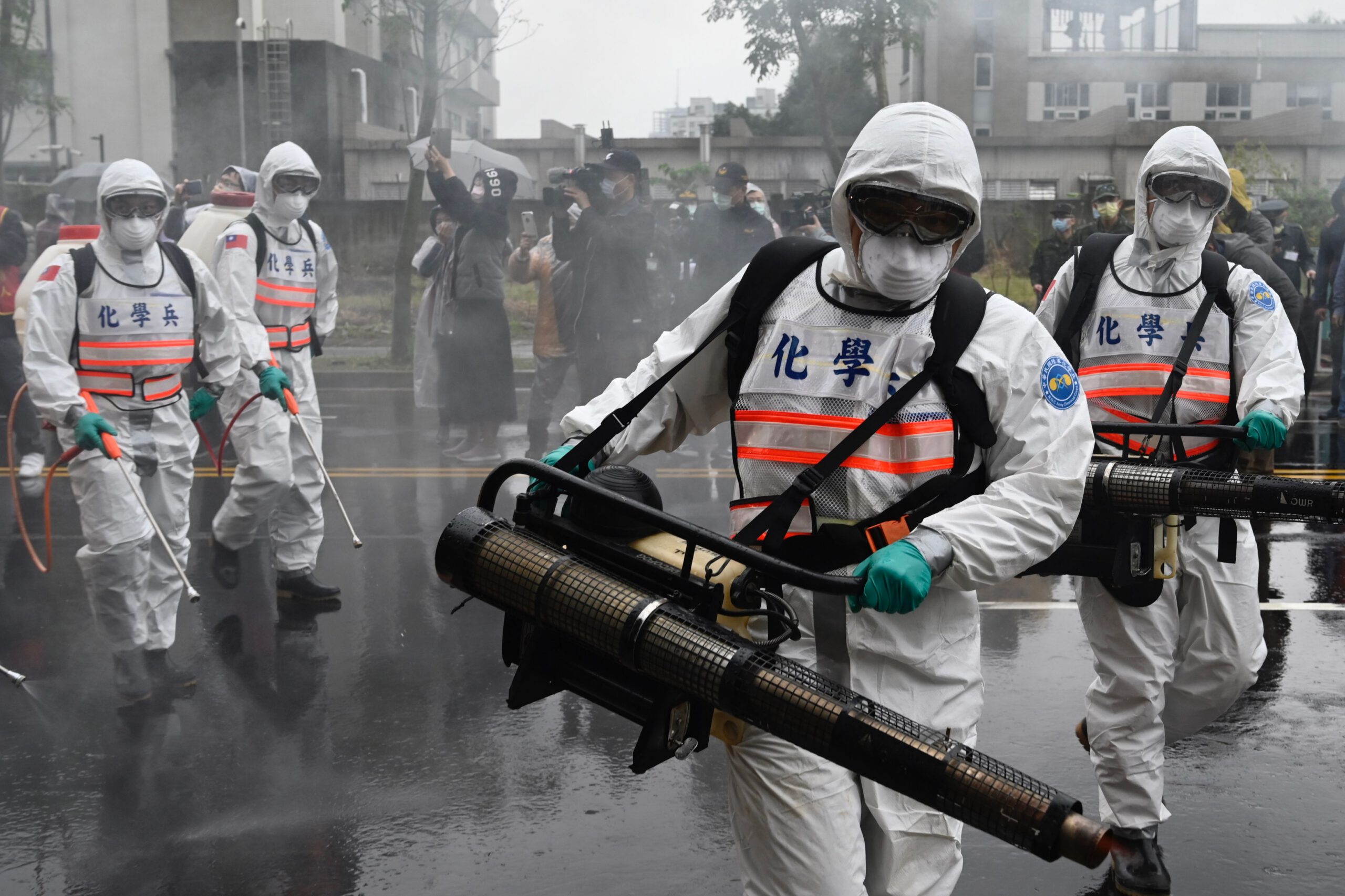
As the global number of confirmed COVID-19 cases surpasses 30 million, Taiwan has been one of the few success stories of containing the novel coronavirus. In what has become known as the “Taiwan Model” for managing the coronavirus outbreak, Taipei took early measures to control the spread of the coronavirus, including closing its borders to China and harnessing the power of digital technology to conduct efficient contact tracing and enforce mass quarantines. Taiwan notably was able to control the spread of the virus without resorting to a nation-wide lock-down, a path taken by China in the early months of 2020.
The Middle East in China’s Silk Road Visions: Business as Usual?
Chinese President Xi Jinping’s 2013 proclamation of the Silk Road Economic Belt (“One Belt, One Road”) and Twenty-First Century Maritime Silk Road initiatives provided an overarching framework for understanding China’s strategic priorities over the coming decade. The land-based and sea-based Silk Roads will link Asia and Europe via the Middle East and Central Asia through a series of transcontinental railroads, pipelines, ports, airports, and other infrastructure projects.
The Iran Sanctions and South Korea’s Balancing Act
Following the recent progress on the Iranian nuclear issue and the subsequent easing of sanctions, South Korean businesses are reengaging the Iranian market. A South Korean trade delegation visited Iran on March 9, 2014 to expand bilateral trade ties in the mining, industrial, and food sectors. On March 17, South Korea’s Finance Ministry lifted a ban, allowing South Korean auto, construction, pharmaceutical, and telecommunications industries to resume trade with Iran, though sanctions remained in the shipbuilding, shipping, and harbor sectors.
Never before have China’s Middle East policies been less motivated by direct economic interests than by Beijing’s desire to prevent foreign (namely, Western) military intervention and forcing regime change in the region, even for the sake of humanitarian intervention.