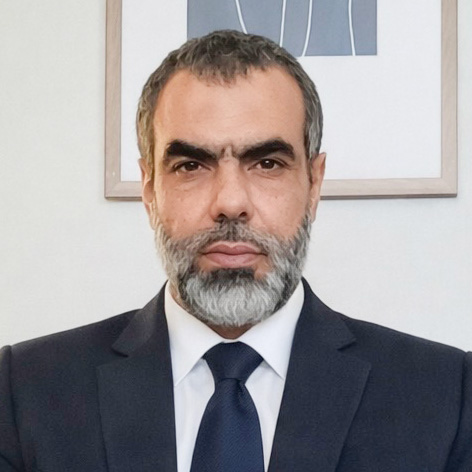
Nabil Mohsen is an Intern at the Middle East Institute’s Oman Library. He is a determined learner who enjoys his studies in politics and is interested in Islamic history, architecture, and ceramics.
The Latest from Nabil Mohsen


Economic Effects of the Arab Spring: Policy Failures and Mounting Challenges

Challenging Stereotypes: Educational Aspirations of Emirati and Indian Muslim Women
Many Muslim women do not choose to forego education, but rather are unable to access this basic right mainly due to a lack of opportunity and socio-political constraints. The sharply contrasting cases of India and the United Arab Emirates (UAE) are illuminating in this respect. While the Indian case presents a stark picture, the Emirati case presents a bright and more hopeful one.
Economic Effects of the Arab Spring: Policy Failures and Mounting Challenges
Thu, 2/28/2013 12:00 pm to 1:00 pm The Middle East Institute is proud to host economists Andreas Bauer and Dr. Zubair Iqbal for an examination of the economic impact of the upheavals affecting Arab Spring countries, including Egypt and Tunisia. Since the 2011 uprisings, growth in the MENA region has slowed, inequality worsened, and unemployment increased, thus weakening the popular support needed for new governments to introduce difficult, but necessary, economic reforms.
Economic Effects of the Arab Spring: Policy Failures and Mounting Challenges
Thu, 2/28/2013 12:00 pm to 1:00 pm The Middle East Institute is proud to host economists Andreas Bauer and Dr. Zubair Iqbal for an examination of the economic impact of the upheavals affecting Arab Spring countries, including Egypt and Tunisia. Since the 2011 uprisings, growth in the MENA region has slowed, inequality worsened, and unemployment increased, thus weakening the popular support needed for new governments to introduce difficult, but necessary, economic reforms.
Economic Effects of the Arab Spring: Policy Failures and Mounting Challenges
Thu, 2/28/2013 12:00 pm to 1:00 pm The Middle East Institute is proud to host economists Andreas Bauer and Dr. Zubair Iqbal for an examination of the economic impact of the upheavals affecting Arab Spring countries, including Egypt and Tunisia. Since the 2011 uprisings, growth in the MENA region has slowed, inequality worsened, and unemployment increased, thus weakening the popular support needed for new governments to introduce difficult, but necessary, economic reforms.
Economic Effects of the Arab Spring: Policy Failures and Mounting Challenges
Thu, 2/28/2013 12:00 pm to 1:00 pm The Middle East Institute is proud to host economists Andreas Bauer and Dr. Zubair Iqbal for an examination of the economic impact of the upheavals affecting Arab Spring countries, including Egypt and Tunisia. Since the 2011 uprisings, growth in the MENA region has slowed, inequality worsened, and unemployment increased, thus weakening the popular support needed for new governments to introduce difficult, but necessary, economic reforms.
Economic Effects of the Arab Spring: Policy Failures and Mounting Challenges
Interview with Indian Ambassador (ret.) Ranjit Gupta: Cairo, Egypt — The First Posting (1965-1968)
Even before I left India for Cairo, I had the impression that there was a special relationship between India and Egypt. Indeed, within a few weeks of my arrival in Cairo, I found tangible manifestations that it was indeed so and discovered many more in due course.
Egypt Turns Quietly to Asia
Beneath the din and clamor of political clashes and violent street protests, Egypt has been quietly turning to Asia in the form of a flurry of diplomatic activity. In addition to having far-reaching ramifications for Egyptian politics and society, the political ascendancy of the Muslim Brotherhood has also raised important questions regarding the evolution of Egyptian foreign policy.
The 7th Asian Political and International Studies Association (APISA) Annual Congress for 2013
Socializing Islamic Capital Market Products through Public Education Events: The Case of Indonesia
The Islamic capital market (ICM) in Indonesia is not a stand-alone capital market which has its own system. Nor is the ICM separated from the country’s capital market system as a whole. In fact, ICM instruments use the same mechanism as the conventional market for their underwriting and trading. Indonesia, with the world’s largest Muslim population, would seem to have great potential to develop ICM, whether in the form of fatwa, regulations¸ products, or other initiatives.
Investing in Iraq: Prospects and Challenges
Companies from Asia are beating their European and American rivals in investments in Iraq. Being more prone to risk-taking, they are cashing in on the opportunity to establish businesses that would be profitable in the long-term.
China's Evolving Stance on Syria
Never before have China’s Middle East policies been less motivated by direct economic interests than by Beijing’s desire to prevent foreign (namely, Western) military intervention and forcing regime change in the region, even for the sake of humanitarian intervention.
India and the Middle East and North Africa (MENA) Region: A Bibliography
This bibliography is not intended to be exhaustive. The 300 entries contained herein were compiled mainly by employing two search tools, namely, Academic Search Premier and Google Scholar. Where complete tables of contents were available, book chapters include page citations.