Rebecca Anne Proctor is an independent journalist, editor, author, and broadcaster based in Dubai and Rome, from where she covers the Middle East and North Africa. She is the former editor-in-chief of Harper’s Bazaar Art and Harper’s Bazaar Interiors.
The Latest from Rebecca Anne Proctor
The legitimacy trap: How international institutions sustain the Houthis’ hold on Yemen
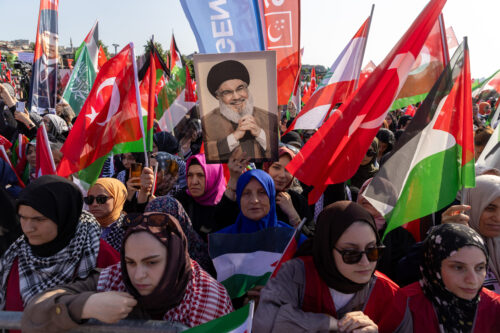
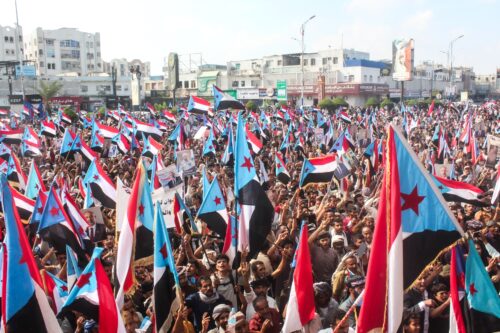
For years, the prevailing assumption was that the Houthis’ survival depended on battlefield victories and Iranian support. Both are essential, but there is a third critical and often overlooked factor: the weaponization of international engagement. In a pattern that continues to repeat itself, engagement without accountability strengthens rather than moderates Houthi behavior.
The taboo of regret: Iranian reflections on the seizure of the US embassy in 1979
For decades, the 1979 takeover of the US Embassy in Tehran has symbolized the righteousness of the Islamic Republic of Iran’s revolutionary defiance and the legitimacy of “resistance” as state ideology. To question it is to pry open the logic of the entire enterprise.
The 12-Day War: Iran's Leaders Face Narrowing Choices
The 12-day conflict with Israel was brief, yet it left a scar. It was a war marked by unprecedented strikes deep inside Iranian territory that jolted the leadership in Tehran into confronting realities they had long sought to avoid.
Can Morocco Placate Its Frustrated Youth?
In this episode of Middle East Focus, hosts Alistair Taylor and Matthew Czekaj are joined by MEI Senior Fellow Intissar Fakir to discuss Morocco’s recent “GenZ 212” protest movement, which gripped multiple cities around the country for weeks. What prompted young Moroccans to take to the streets? Fakir breaks down the underlying drivers, protesters’ demands, and the government’s response. The conversation then delves more deeply into Morocco’s rising generation and how it perceives its future prospects.
Lebanon and Syria October 2025: A Snapshot
Ambassador Ryan Crocker reports on his visit to Lebanon and Syria on October 12-17 as part of a small delegation organized by the Washington office of the United Nations High Commissioner for Refugees (UNHCR).
Will Syria join the Global Coalition to Defeat ISIS?
The joint al-Dumayr operation in mid-October was the fifth instance of coordination between the Global Coalition to Defeat ISIS and the Syrian government to confront the Islamic State, amid Western calls for Damascus to officially join the international effort. What’s at stake and what are the potential scenarios moving forward?
US Policy in the Middle East: Third Quarter 2025 Report Card
President Donald Trump continued to rewrite the playbook of US foreign policy this summer and early fall, with mixed results on the global stage but producing some important openings for progress in the Middle East due to a negotiated Gaza cease-fire and hostage-release deal.
Trump 2.0 and the Middle East: Taking Stock of the First Nine Months
In this episode of Middle East Focus, hosts Alistair Taylor and Matthew Czekaj speak with MEI Senior Fellow Brian Katulis about US policy in the Middle East under Donald Trump’s second administration. Nine months into Trump 2.0, how much has really changed? Katulis breaks down the administration’s approach to major issues, including the cease-fire in Gaza and broader prospects for peace, the aftermath of the 12-Day War with Iran, and how Washington is managing ties with regional partners.
A Passion for Policy: Marvin Weinbaum on Afghanistan, Pakistan, and U.S. Engagement Abroad
Brian Katulis speaks with Dr. Marvin Weinbaum—senior fellow at the Middle East Institute, professor emeritus of political science at the University of Illinois at Urbana-Champaign, and former Department of State analyst—about his remarkable career spanning more than five decades in academia, government, and policy analysis. Drawing on his deep expertise in Afghanistan and Pakistan, Weinbaum reflects on the evolution of U.S. foreign policy, the lessons learned from state-building efforts, and how personal conviction and intellectual curiosity have shaped his life’s work.
An Israeli-Palestinian Conversation on Gaza's Uncertain Endgame
The US Role in Democracy Promotion: Continuity or Collapse?
For much of the past eighty years, the United States has seen itself — and often acted — as a global champion of democracy. Through the power of example, and through its diplomacy, security alliances, and aid programs, Washington has sought to strengthen democratic institutions and push back against authoritarianism.
The record, of course, has never been perfect. The US has at times backed autocratic leaders in pursuit of strategic or economic gain. But overall, it has been a net force for democracy worldwide.
A realistic, step-by-step approach to restoring Lebanese sovereignty
Seizing Lebanon’s once-in-a-generation opportunity hinges on its ability to resolve its core dysfunction: reclaiming the state’s monopoly on force and its exclusive authority to determine matters of war and peace. Beirut, backed by deepening US support, must focus on achieving tangible milestones and strategic victories that momentum, making Hizballah’s disarmament unstoppable and the state’s reassertion of authority irreversible.
Lebanon’s judicial independence and the end of impunity
Judicial independence is at the core of any successful democracy, and for decades, this issue has been a matter of public concern in Lebanon. At a time when a credible window of opportunity for change has opened in Lebanon, restoring judicial independence is both a necessity and a prerequisite to enable the judiciary to carry out its duties and end the impunity under which it has historically operated.
Priority policies for an economic recovery in Lebanon
The current government in Lebanon is keen to encourage financial recovery and find a new path to economic growth. A thorough understanding of the causes behind the country’s recession and the factors constraining a recovery are necessary to shape policy priorities. These are also important as an input into the discussions of the 2026 budget and to the ongoing negotiations with the International Monetary Fund (IMF). Using the wrong framework for these decisions could yield low economic growth, which would be harmful for a quick and decisive economic recovery. Conversely, improved economic outcomes and broad buy-in, following public consultations, will ease the implementation of politically difficult reforms. Thus, policymakers must take great care to develop a narrative about how to achieve progress in the short and medium terms that is adjusted to local circumstances.