Skip to Content

Afghanistan-Pakistan

Countries

The Mecca Joint Défense Agreement: A New Geometry of Middle Eastern Power?
  • Analysis
  • The Mecca Joint Défense Agreement: A New Geometry of Middle Eastern Power?

    On August 7, 2026, Saudi Arabia, Turkey, and Pakistan signed the Mecca Joint Défense Agreement, a collective-defense pact widely compared to NATO’s Article 5. This essay argues that the comparison is misleading. Mecca borrows NATO’s language of solidarity without yet possessing NATO’s institutional machinery, and the Houthi offensive against Saudi Arabia in September 2026 provided an early and revealing test of what the agreement actually means in practice. Neither Pakistan nor Turkey automatically entered the fight on Saudi Arabia’s behalf, and Washington, despite an initial reluctance to strike directly, remained indispensable through intelligence support and a major proposed F-35 sale. Drawing on realist alliance theory — Hans Morgenthau, Kenneth Waltz, Stephen Walt, Glenn Snyder, and Steven David — and on the precedent of the Central Treaty Organization (CENTO), the essay contends that the Middle East is not dividing into rival blocs but moving from hierarchy toward a looser, overlapping geometry of hedged partnerships, in which American exclusivity is eroding considerably faster than American primacy.

    The Mecca Alliance Meets the Red Sea – Saudi Arabia’s New Defense Pact Faces Its First Major Test
  • Commentary
  • The Mecca Alliance Meets the Red Sea – Saudi Arabia’s New Defense Pact Faces Its First Major Test

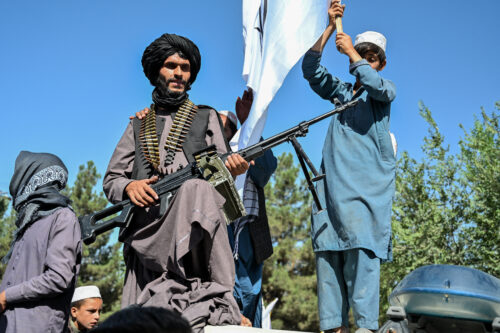
    When Saudi Arabia, Turkey and Pakistan agreed to a mutual defense pact in August, it was principally seen as a political commitment. The “Mecca alliance,” as it was dubbed, stipulated that an armed attack on one would be treated as an attack on all three, accompanied by deeper military cooperation.

    The Case for a Middle Course in Afghanistan
  • Commentary
  • The Case for a Middle Course in Afghanistan

    I was a teenage Afghan refugee in Pakistan’s tribal areas when the Twin Towers fell. Almost nobody around us understood the politics of what had happened, but we knew that something had changed for good. Afghanistan, which until then had been our private tragedy and our first exile from Taliban rule, had suddenly become the world’s concern, with the United States leading the response.

    The Latest

    Filter by
    1194 Results
    Iran Admits over 1,000 Combat Fatalities in Syrian Conflict
  • Analysis
  • Iran Admits over 1,000 Combat Fatalities in Syrian Conflict

    On November 22, a senior Iranian official admitted that more than 1,000 combatants dispatched by Iran to fight alongside President Bashar al-Assad’s forces have been killed in the Syrian war.  

    November 23, 2016

    Tension Brewing between Iran, Afghanistan amid Allegations of Tehran Aiding Taliban
  • Analysis
  • Tension Brewing between Iran, Afghanistan amid Allegations of Tehran Aiding Taliban

    On November 15, Iranian Foreign Ministry Spokesman Bahram Qasemi refuted allegations by Afghan media and government officials that Tehran harbored Taliban leaders on its soil. “The presence of Taliban elements in Iran is baseless and unfounded,” he said, adding that Iran and Afghanistan had friendly relations and cooperated to ensure security and stability in the two countries.

    November 15, 2016

    The Art of Immigration: How Immigrant Artists Enrich America
    Middle East Institute
  • Arts & Culture
  • The Art of Immigration: How Immigrant Artists Enrich America

    October 19 – January 1, 1970, October 19 - 12:00 PM – 12:00 AM
    January 1 - 12:00 PM – 12:00 AM

    Carnegie Endowment for International Peace- Root Room, 1779 Massachusetts Ave NW, Washington, District of Columbia 20036

    Monday Briefing: Russian Escalation in Syria
    Middle East Institute
  • Analysis
  • Monday Briefing: Russian Escalation in Syria

    In this week’s Monday Briefing, MEI experts Robert S. Ford, Paul Salem, and Marvin G. Weinbaum provide analysis on recent and upcoming events including Russia’s recent escalation of military force in Syria, deteriorating Saudi-Iranian relations, and an escalation in the Kashmir between India and Pakistan.

    Russia’s Sharp Escalation in Syria
    Robert S. Ford, Senior Fellow

    Afghanistan's Terrorist Insurgencies

    Afghanistan's Terrorist Insurgencies

    September 16 – January 1, 1970, September 16 - 12:00 PM – 12:00 AM
    January 1 - 12:00 PM – 12:00 AM

    Carnegie Endowment for International Peace-Choate Room, 1779 Massachusetts Ave NW, Washington, District of Columbia 20036

    Monday Briefing: Cessation of Hostilities Deal in Syria Reached … Now What?
  • Analysis
  • Monday Briefing: Cessation of Hostilities Deal in Syria Reached … Now What?

    [Oops!: If our weekly e-mail sent you here by mistake, please click here for the Sept. 19 Monday Briefing.]

    In this week’s Monday Briefing, MEI experts Robert S. Ford, Charles Lister, and Marvin G. Weinbaum provide analysis events including the announced cessation of hostilities in Syria, the Syrian rebels’ resonse to the deal, and the Afghan president’s upcoming visit to India.

    After 9/11, We Thought It Would Be a Generation-Long Struggle; We Were Wrong
  • Analysis
  • After 9/11, We Thought It Would Be a Generation-Long Struggle; We Were Wrong

    Read the full article on ABC News

    In the days after the attacks of 9/11, Americans asked fundamental questions such as “Who did this?” and “Why do they hate us?” As a nation, we were eager for a fight, for revenge, but some had another question: “How long will this war go on?”

    September 8, 2016

    Monday Briefing: India FM to Visit Iraq and Syria; Iran-Turkey Relations After the Failed Coup; Afghanistan's Fractured Government
  • Analysis
  • Monday Briefing: India FM to Visit Iraq and Syria; Iran-Turkey Relations After the Failed Coup; Afghanistan's Fractured Government

    In this week’s Monday Briefing, MEI experts Zubair Iqbal, Alex Vatanka, and Marvin G. Weinbaum provide analysis on issues including India’s Middle East policy as its foreign minister is set to visit Iraq and Syria, the opening of relations between Iran and Turkey following the latter’s recent failed coup, and the latest signs of tension within Afghanistan’s shaky unity government.

    Monday Briefing: Erdogan Reaching Out to Russia; Update on Battle for Aleppo
  • Analysis
  • Monday Briefing: Erdogan Reaching Out to Russia; Update on Battle for Aleppo

    In this week’s Monday Briefing MEI experts provide analysis on recent and upcoming events including Turkish President Erdogan’s trip to Russia tomorrow, Iranian President Rouhani’s upcoming meeting with President Putin in Baku, the ongoing battle for Aleppo, strains in U.S.-Pakistan relations over the Haqqani Network, and what’s next for Tunisia’s political transition following the vote of no confidence in the current government.

    Monday Briefing: After Turkey's Failed Coup, How Far Will the Crackdown Go?
  • Analysis
  • Monday Briefing: After Turkey's Failed Coup, How Far Will the Crackdown Go?

    In this week’s Monday Briefing, MEI expert W. Robert Pearson provides analysis on the failed coup in Turkey and the impending crackdown on opposition. Marvin Weinbaum considers whether the unpopularity of Pakistan’s government could put it at risk of a military coup of its own. And Charles Lister looks at how ISIS is adapting in the face of territorial losses in Iraq and Syria.

    Read the Middle East Journal

    The oldest peer-reviewed publication dedicated to the study of the modern Middle East, MEI’s flagship journal covers politics, society, and culture in the region.