Skip to Content

Afghanistan-Pakistan

Countries

The Mecca Joint Défense Agreement: A New Geometry of Middle Eastern Power?
  • Analysis
  • The Mecca Joint Défense Agreement: A New Geometry of Middle Eastern Power?

    On August 7, 2026, Saudi Arabia, Turkey, and Pakistan signed the Mecca Joint Défense Agreement, a collective-defense pact widely compared to NATO’s Article 5. This essay argues that the comparison is misleading. Mecca borrows NATO’s language of solidarity without yet possessing NATO’s institutional machinery, and the Houthi offensive against Saudi Arabia in September 2026 provided an early and revealing test of what the agreement actually means in practice. Neither Pakistan nor Turkey automatically entered the fight on Saudi Arabia’s behalf, and Washington, despite an initial reluctance to strike directly, remained indispensable through intelligence support and a major proposed F-35 sale. Drawing on realist alliance theory — Hans Morgenthau, Kenneth Waltz, Stephen Walt, Glenn Snyder, and Steven David — and on the precedent of the Central Treaty Organization (CENTO), the essay contends that the Middle East is not dividing into rival blocs but moving from hierarchy toward a looser, overlapping geometry of hedged partnerships, in which American exclusivity is eroding considerably faster than American primacy.

    The Mecca Alliance Meets the Red Sea – Saudi Arabia’s New Defense Pact Faces Its First Major Test
  • Commentary
  • The Mecca Alliance Meets the Red Sea – Saudi Arabia’s New Defense Pact Faces Its First Major Test

    When Saudi Arabia, Turkey and Pakistan agreed to a mutual defense pact in August, it was principally seen as a political commitment. The “Mecca alliance,” as it was dubbed, stipulated that an armed attack on one would be treated as an attack on all three, accompanied by deeper military cooperation.

    The Case for a Middle Course in Afghanistan
  • Commentary
  • The Case for a Middle Course in Afghanistan

    I was a teenage Afghan refugee in Pakistan’s tribal areas when the Twin Towers fell. Almost nobody around us understood the politics of what had happened, but we knew that something had changed for good. Afghanistan, which until then had been our private tragedy and our first exile from Taliban rule, had suddenly become the world’s concern, with the United States leading the response.

    The Latest

    Filter by
    1194 Results
    Kalaam-e-Arifaan: Poetry of Mystics and Sufis

    Kalaam-e-Arifaan: Poetry of Mystics and Sufis

    April 16 – January 1, 1970, April 16 - 6:00 PM – 12:00 AM
    January 1 - 6:00 PM – 12:00 AM

    The Oman Library at the Middle East Institute, 1761 N Street NW, Washington, District of Columbia 20036

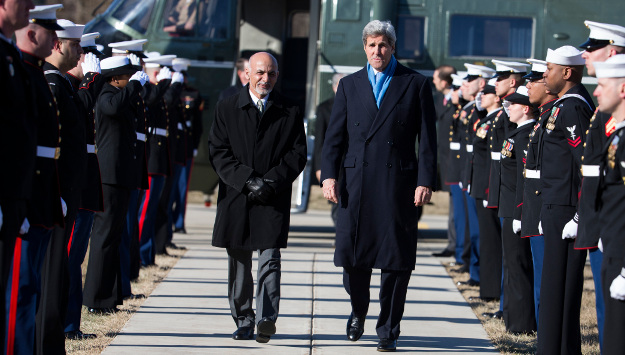
    America's Future Role in Afghanistan

    America's Future Role in Afghanistan

    April 2 – January 1, 1970, April 2 - 12:30 PM – 12:00 AM
    January 1 - 12:30 PM – 12:00 AM

    SEIU Conference Center, 1800 Massachusetts Ave NW, Washington, District of Columbia 20036

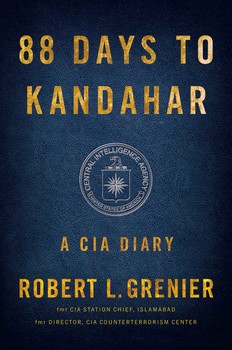
    88 Days to Kandahar: A CIA Diary

    88 Days to Kandahar: A CIA Diary

    February 5 – January 1, 1970, February 5 - 12:00 PM – 12:00 AM
    January 1 - 12:00 PM – 12:00 AM

    The Middle East Institute, 1761 N Street NW, Washington, District of Columbia 20036

    Time for Pakistan to Get Tough on Terrorism
  • Analysis
  • Time for Pakistan to Get Tough on Terrorism

    This article, co-written by James P. Farwell, was first published by The National Interest.

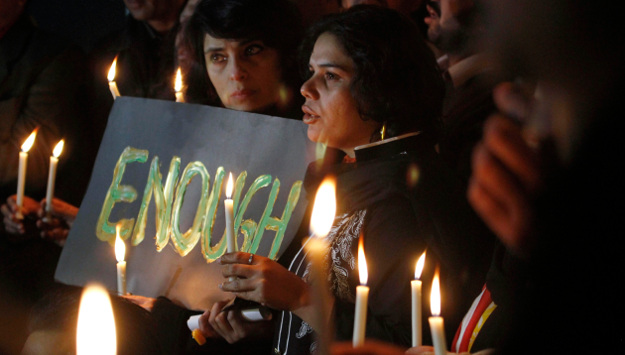
    Shot in both legs, Shahruh Khan survived the Taliban attack on the Army Public School in Peshawar, Pakistan. “The man with big boots,” Al Jazeera quoted Khan as saying, “kept on looking for students and pumping bullets into their bodies.”

    Vulnerabilities and Resistance to Islamist Radicalization in India
  • Analysis
  • Vulnerabilities and Resistance to Islamist Radicalization in India

    India has long remained an enigma within the discourse on the Islamist extremism and terrorism that have afflicted widening areas of the world. The emergence of the Islamic State (ISIS) and its appeal to significant numbers of radicalized Muslims have highlighted ambiguities surrounding the role of these ideologies in India. Fighters from at least 82 countries are said to have joined ISIS. Western countries with tiny Muslim populations and long-standing programs intended to counter the trends toward radicalization of Muslims have found that scores—even hundreds—of their citizens are involved in the fighting in Iraq and Syria. By comparison, India, with a Muslim population of about 176 million (well over twice the total population of Europe), has seen an estimated 18 radicalized Muslims join ISIS in Iraq-Syria.

    January 12, 2015

    Why Should Iran Accept U.S. Presence in Afghanistan?
    Middle East Institute
  • Analysis
  • Why Should Iran Accept U.S. Presence in Afghanistan?

    Read the full article on Al-Monitor. 

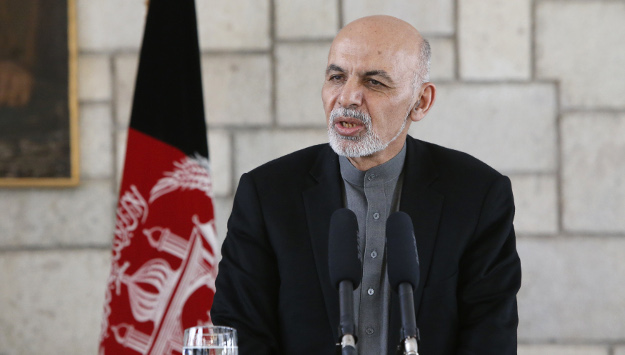
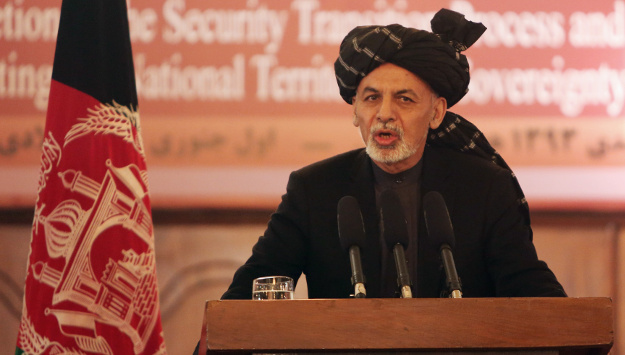
    At first glance, Iran appears to be unconvinced about Afghanistan’s new President Ashraf Ghani, and the feeling is probably mutual. Ghani chose Saudi Arabia, China and then Pakistan as the first countries to visit as president, and has yet to visit Tehran. 

    Report: Sunni Deobandi-Shi'i Sectarian Violence in Pakistan
  • Analysis
  • Report: Sunni Deobandi-Shi'i Sectarian Violence in Pakistan

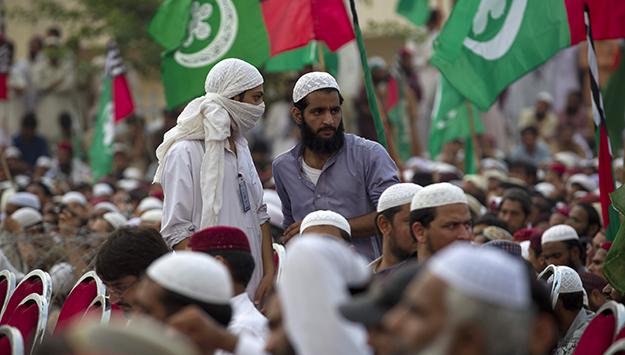
    In both general and more informed discussions in Pakistan and beyond, sectarian violence in Pakistan between Sunni and Shi‘i groups is almost without exception referred to simply as Sunni-Shi‘i violence. But such a characterization is a misnomer. Two of Pakistan’s three major Sunni subsects, the Ahl-e-Hadis, and to a lesser extent, the Barelvis, may have antipathy toward the Shi‘a, but rarely express such sentiments through violent activity.

    December 11, 2014

    Obama's Legacy in Afghanistan
  • Analysis
  • Obama's Legacy in Afghanistan

    This paper is part of an MEI scholar series, titled “Obama’s Legacy in the Middle East: Passing the Baton in 2017.” Click here to view the full project, or navigate using the table of contents to the right.

    Iran-Pakistan: Will Border Tensions Boil Over?
  • Analysis
  • Iran-Pakistan: Will Border Tensions Boil Over?

    This article was first published on BBC News.

    There have been a number of rounds of border skirmishes between Iran and Pakistan since the first week of October. However, reports that Pakistani forces have returned mortar fire is highly unusual and represents an increase in tensions that have marred this region for years.

    The Afghan Unity Government: A Victory for Democracy
  • Analysis
  • The Afghan Unity Government: A Victory for Democracy

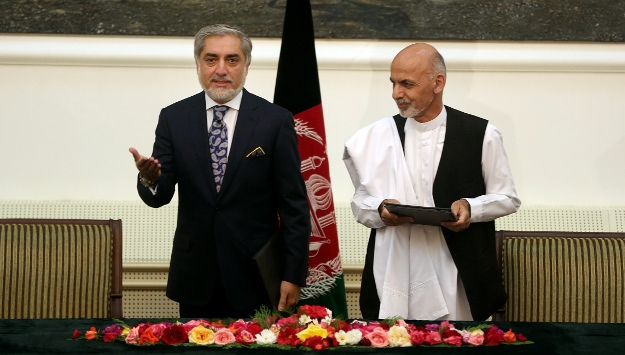
    Afghanistan is often thought of as a place where some of the world’s most dangerous Islamists have taken refuge, been nurtured, and been allowed to launch regional and global jihad. Yet, with the agreement to form a unity government, the nation has provided an answer to extremism. Admittedly, the presidential election results were so riddled with fraud that it is probably impossible to determine who actually won. But it may nevertheless result in a victory for democracy. Seven million people risked their lives to vote.

    The Future of Democracy in Pakistan and Afghanistan
    Middle East Institute

    The Future of Democracy in Pakistan and Afghanistan

    September 19 – January 1, 1970, September 19 - 12:00 PM – 12:00 AM
    January 1 - 12:00 PM – 12:00 AM

    The Carnegie Endowment for International Peace, 1779 Massachusetts Avenue NW, Washington, District of Columbia 20036

    Pakistan's Political Turmoil: Interview with Dr. Marvin Weinbaum
  • Analysis
  • Pakistan's Political Turmoil: Interview with Dr. Marvin Weinbaum

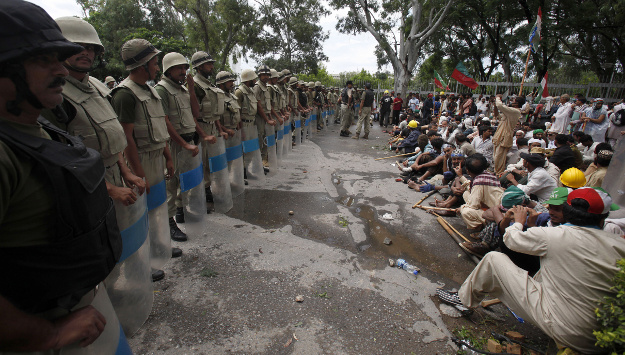
    The crisis in Pakistan is coming to a head. Of course it’s been building since the 15th of August, but now we’re faced with a situation in which this government is either going to survive or, very likely, were going to see a military takeover.

    The big question is where does the military stand, because everybody realizes that ultimately the outcome will depend on what the military is willing to accept or, indeed, what the military wants.

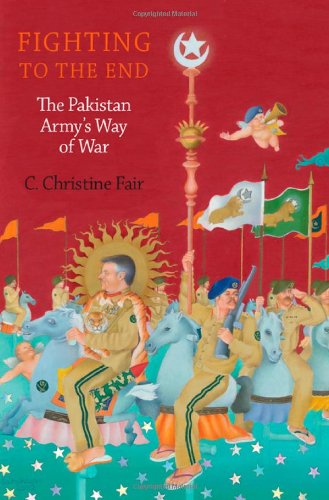
    Fighting to the End: The Pakistan Army's Way of War

    Fighting to the End: The Pakistan Army's Way of War

    August 13 – January 1, 1970, August 13 - 12:00 PM – 12:00 AM
    January 1 - 12:00 PM – 12:00 AM

    The Middle East Institute, 1761 N St NW, Washington, District of Columbia 20036

    Read the Middle East Journal

    The oldest peer-reviewed publication dedicated to the study of the modern Middle East, MEI’s flagship journal covers politics, society, and culture in the region.