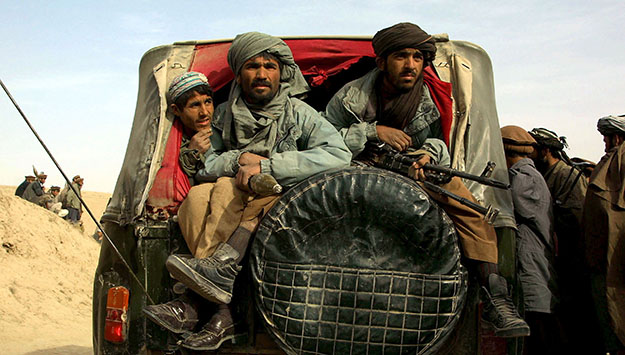
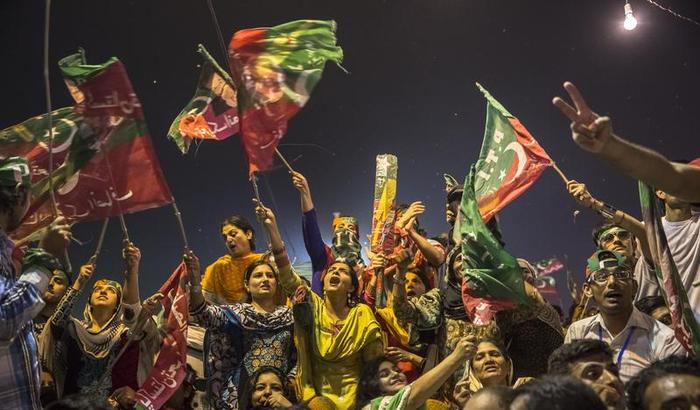
As it fights on four separate but connected fronts, Pakistan’s military is employing more force and less tolerance for public dissent. The result is not strength, but instead a widening set of vulnerabilities that will undermine Pakistan.
The Mecca Joint Défense Agreement: A New Geometry of Middle Eastern Power?
On August 7, 2026, Saudi Arabia, Turkey, and Pakistan signed the Mecca Joint Défense Agreement, a collective-defense pact widely compared to NATO’s Article 5. This essay argues that the comparison is misleading. Mecca borrows NATO’s language of solidarity without yet possessing NATO’s institutional machinery, and the Houthi offensive against Saudi Arabia in September 2026 provided an early and revealing test of what the agreement actually means in practice. Neither Pakistan nor Turkey automatically entered the fight on Saudi Arabia’s behalf, and Washington, despite an initial reluctance to strike directly, remained indispensable through intelligence support and a major proposed F-35 sale. Drawing on realist alliance theory — Hans Morgenthau, Kenneth Waltz, Stephen Walt, Glenn Snyder, and Steven David — and on the precedent of the Central Treaty Organization (CENTO), the essay contends that the Middle East is not dividing into rival blocs but moving from hierarchy toward a looser, overlapping geometry of hedged partnerships, in which American exclusivity is eroding considerably faster than American primacy.
The Mecca Alliance Meets the Red Sea – Saudi Arabia’s New Defense Pact Faces Its First Major Test
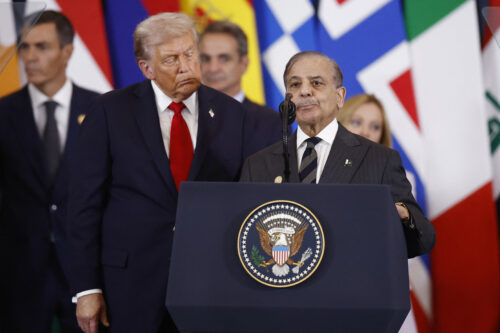
When Saudi Arabia, Turkey and Pakistan agreed to a mutual defense pact in August, it was principally seen as a political commitment. The “Mecca alliance,” as it was dubbed, stipulated that an armed attack on one would be treated as an attack on all three, accompanied by deeper military cooperation.
Assessing the Past, Informing the Future: U.S. Aid Policy in Afghanistan & Pakistan
Thu, 9/19/2013 12:00 pm to 1:30 pmThe Middle East Institute is pleased to welcome Vanda Felbab-Brown, senior fellow with the Center for 21st Century Security and Intelligence in the Foreign Policy program at Brookings, independent consultant Polly Nayak, Amb. Robin Raphel, U.S. Coordinator for Non-Military Assistance to Pakistan, and Alex Thier, assistant to the Administrator for Policy, Planning, and Learning at USAID, for a panel discussion examining how the US can contribute to the stability of post-2014 Afghanistan and Pakistan through economic and development assistance.
In the wake of Pakistan’s recently concluded elections, this panel will offer insight and analysis into what the results are likely to mean for the future of the country and region. The speakers will reflect on the possible composition of a new government and the implications of the election for the future of Pakistan’s democratic system.
In the wake of Pakistan’s recently concluded elections, this panel will offer insight and analysis into what the results are likely to mean for the future of the country and region. The speakers will reflect on the possible composition of a new government and the implications of the election for the future of Pakistan’s democratic system.
In the wake of Pakistan’s recently concluded elections, this panel will offer insight and analysis into what the results are likely to mean for the future of the country and region. The speakers will reflect on the possible composition of a new government and the implications of the election for the future of Pakistan’s democratic system.
In the wake of Pakistan’s recently concluded elections, this panel will offer insight and analysis into what the results are likely to mean for the future of the country and region. The speakers will reflect on the possible composition of a new government and the implications of the election for the future of Pakistan’s democratic system.
In the wake of Pakistan’s recently concluded elections, this panel will offer insight and analysis into what the results are likely to mean for the future of the country and region. The speakers will reflect on the possible composition of a new government and the implications of the election for the future of Pakistan’s democratic system.
What Pakistan’s Democratic Future Holds for the United States
With elections set to take place on May 11, Pakistan stands at an important juncture of its history. The Election Commission of Pakistan, arguably the most independent and impartial that the country has had, is working diligently to ensure that the electoral process is free and fair. A democratically elected government could, for the first time in Pakistan’s history, relinquish power to another civilian government. Such a development, which marks a new phase in the Pakistan’s democratic struggle, indicates the need for a reassessment of U.S.
Along with countries such as Syria and Iraq, Pakistan has become a theater of doctrinal differences between Shia and Sunni Muslims, signifying that rifts between local groups have become linked to the wider violent sectarianism in the Middle East.
The Blasphemy Case Against Ambassador Sherry Rehman
The dust of speculation on the Supreme Court’s role during populous cleric Tahir-ul-Qadri’s recent march in Islamabad had hardly settled down when it lent itself to more speculation. A two-member bench of the Supreme Court has admitted for hearing the petition of a citizen against Pakistan’s Ambassador to the US Sherry Rehman for allegedly making blasphemous remarks during a television program in 2010. This petition had earlier been rejected by the session court as well as the Multan bench of the Lahore High Court.
The oldest peer-reviewed publication dedicated to the study of the modern Middle East, MEI’s flagship journal covers politics, society, and culture in the region.